

Introduction from Zach Rausch:
One of the puzzles we’ve been piecing together here on After Babel is to what extent the youth mental health crisis extends beyond the United States. (We previously published a four-part series on the topic looking at the five major Anglo countries — the Nordic nations, Europe, and beyond. We found that, yes, it does appear to be an international phenomenon.) An important set of metrics in this story (though not the only one) is suicide rates.
In today’s cross-post, Jean Twenge, psychologist, author, and our frequent collaborator and contributor to After Babel, digs into the latest international data on suicide trends. She finds that suicide rates have been rising among adolescents, especially girls, in Europe, Japan, and South Korea from the early 2010s into the early 2020s. Her examination of this new data points to the important fact that the youth suicide rates are rising internationally, particularly among girls, and therefore are not well explained by factors unique to the United States.
Thank you to Jean for allowing us to share this research directly with our readers. You can find more of Jean’s work over on her Substack, Generation Tech, and through her new book, 10 Rules for Raising Kids in a High-Tech World.
– Zach
Teen Girls’ Suicide Rates Are Rising In Many Countries Around The World
By Jean M. Twenge
As countries around the world consider social media bans for kids under 16, the question has come up again: Is the teen mental health crisis confined to the U.S., or is it international?
There are many reasons to support a social media ban that have nothing to do with mental health. Many parents don’t want their kids using TikTok at 2am, buying drugs or exchanging explicit photos on Snapchat, or comparing themselves to the perfect bodies on Instagram. There are also many reasons to care about the teen mental health crisis apart from the role of social media.
But understanding the scope of the mental health crisis is useful for knowing where teens are suffering more than in generations past and for determining the cause of the crisis. If school shootings were the primary driver of the teen mental health crisis, for example, we would expect depression, anxiety, and suicide to rise in the U.S. but not in countries without the same level of school violence. The same goes for other U.S.-specific explanations, such as the opioid epidemic.
We already have solid data from many sources that anxiety, low life satisfaction, emotional distress, poor mental health, and loneliness have increased among adolescents and/or young adults in many countries around the world.
But what about suicide rates? Critics like Chris Ferguson have often argued that suicide data, in particular, do not fit the narrative of an international crisis in youth mental health. Others have made this argument as well. In his review of The Anxious Generation, for example, Tobias Dienlin writes, “the mental health crisis Haidt describes appears to be more specific to certain regions, particularly the United States, rather than a global phenomenon. Data from large-scale international sources show no consistent decline in youth well-being (Marquez et al., 2024) or suicides (Michalek et al., 2024). This discrepancy suggests that the mental health issues Haidt highlights are influenced by regional factors rather than being universally applicable.”
As we’ve already covered, youth well-being is indeed down (including in most of the datasets discussed in Marquez et al., 2024, the report Dienlin cites). And the source Dienlin cites for suicides uses the Global Burden of Disease database, which relies on estimates rather than actual data.
What happens if researchers look at actual suicide data, not modeled estimates?
Several articles published in the last year have taken a more detailed look at suicide rates in many countries across the globe. These analyses have taken two steps that many previous analyses did not: 1) they gathered actual suicide mortality data instead of using the Global Burden of Disease or WHO Global Estimates and 2) they report suicide rates broken down by gender and age group. This is crucial, since the rise of social media impacted teen girls and young women the most; looking at overall suicide rates isn’t good enough.
A caveat: More than other mental health indicators, suicide rates can be influenced by many factors, including access to firearms, the availability of mental health treatment, and suicide prevention programs and helplines. There are also cultural differences and developments unique to certain countries or regions. Thus, we wouldn’t expect suicide rates to show similar trends in all countries. If we can discern a pattern, though, it’s worth paying attention to, as suicide is the most tragic outcome of poor mental health. From a methods standpoint, suicide rates are the mental health indicator least likely to be influenced by self-report issues.
To try to find as many relevant articles as possible, I searched all EBSCO databases (including Medline and PsycInfo) for articles published in the last year with “suicide” in the title and the words “youth” or “adolescents” and the word “trend” anywhere in the article record. I focus here on articles presenting suicide data on adolescents and young adults from Europe and Asia; in a future post I’ll cover four English-speaking countries with larger populations (England and Wales, Australia, Canada, and the U.S.). I’m most interested in data from 2010 to the present, given the rise of social media during that time period.
Let’s start with Spain. Below is the authors’ graph of suicide rates by gender (males on the left, females on the right) and age group.
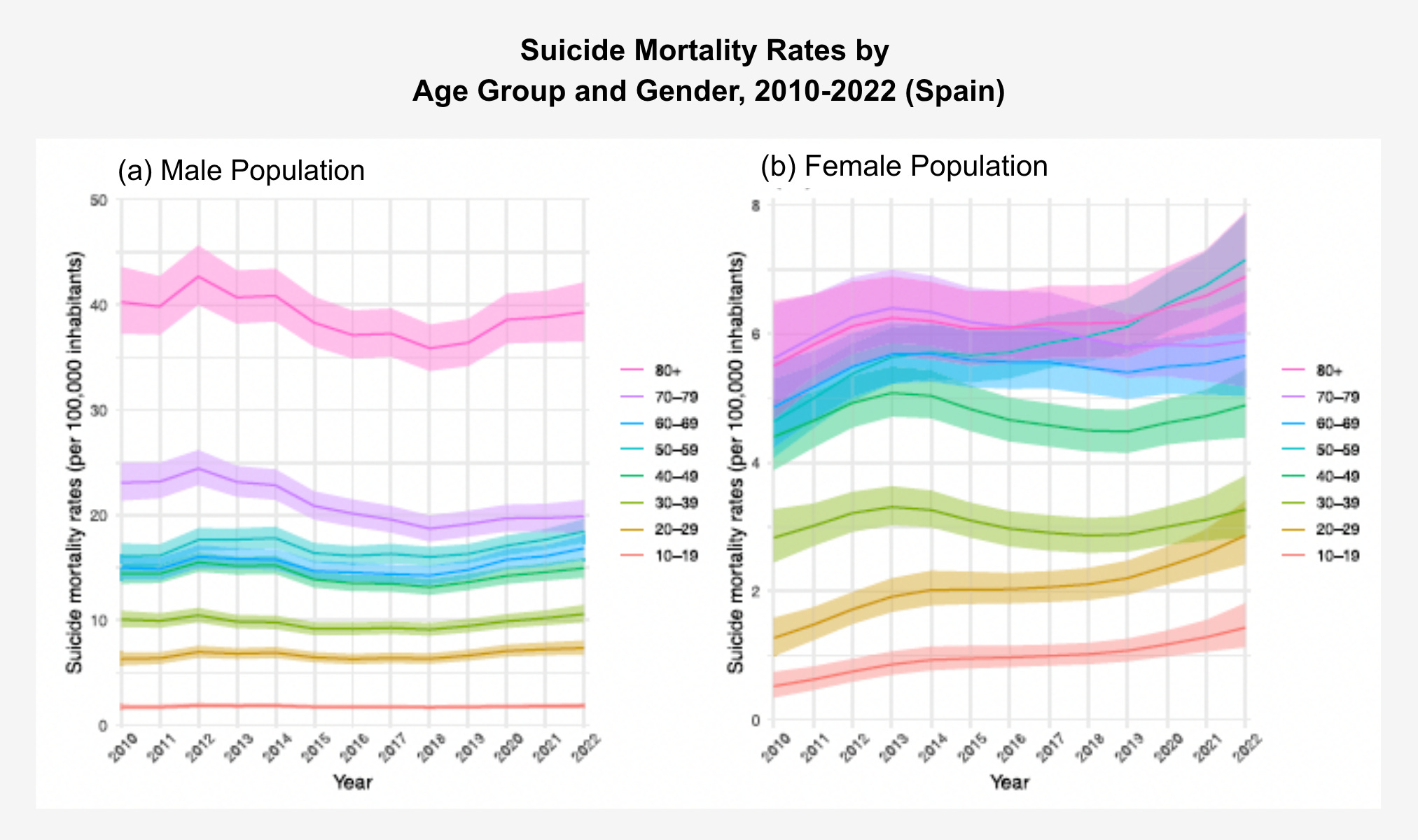
It appears that not much happens for the male suicide rate among adolescents (10-19, red line) or young adults (20-29, orange line) before 2018, though there is an uptick among young men since about 2018 and the low base rate makes it difficult to see changes. But check out the graph for females, on the right: Suicide rates nearly double among 10- to 19-year-old girls and increase even more among young women in their 20s. The increase for young women is so large it comes close to equaling the suicide rate for women in their 30s. It’s also worth noting that most of the increase took place before 2020 — and thus before the impacts of the COVID-19 pandemic.
A major recent international study looked at suicide rate trends across Europe. (This article uses the WHO Mortality Database, which is different from the WHO Global Health Estimates; the authors specifically say they relied only on official statistics.) For male adolescents or young adults, they find increases from 2010-2014 to 2020-2022 in Italy, Spain, and the UK in their country-specific analysis and in North Europe in their regional analysis. That’s still noteworthy, given that these are places without the U.S.-specific issues, such as school shootings, often mentioned as a cause of the adolescent mental health crisis. But in many European countries, the suicide rate for teen boys and young men has not increased.
For girls and young women, however, the authors find increases between 2010 and 2022 (the green bars) much more broadly. Below is their graph for trends in the suicide rate for females by region:
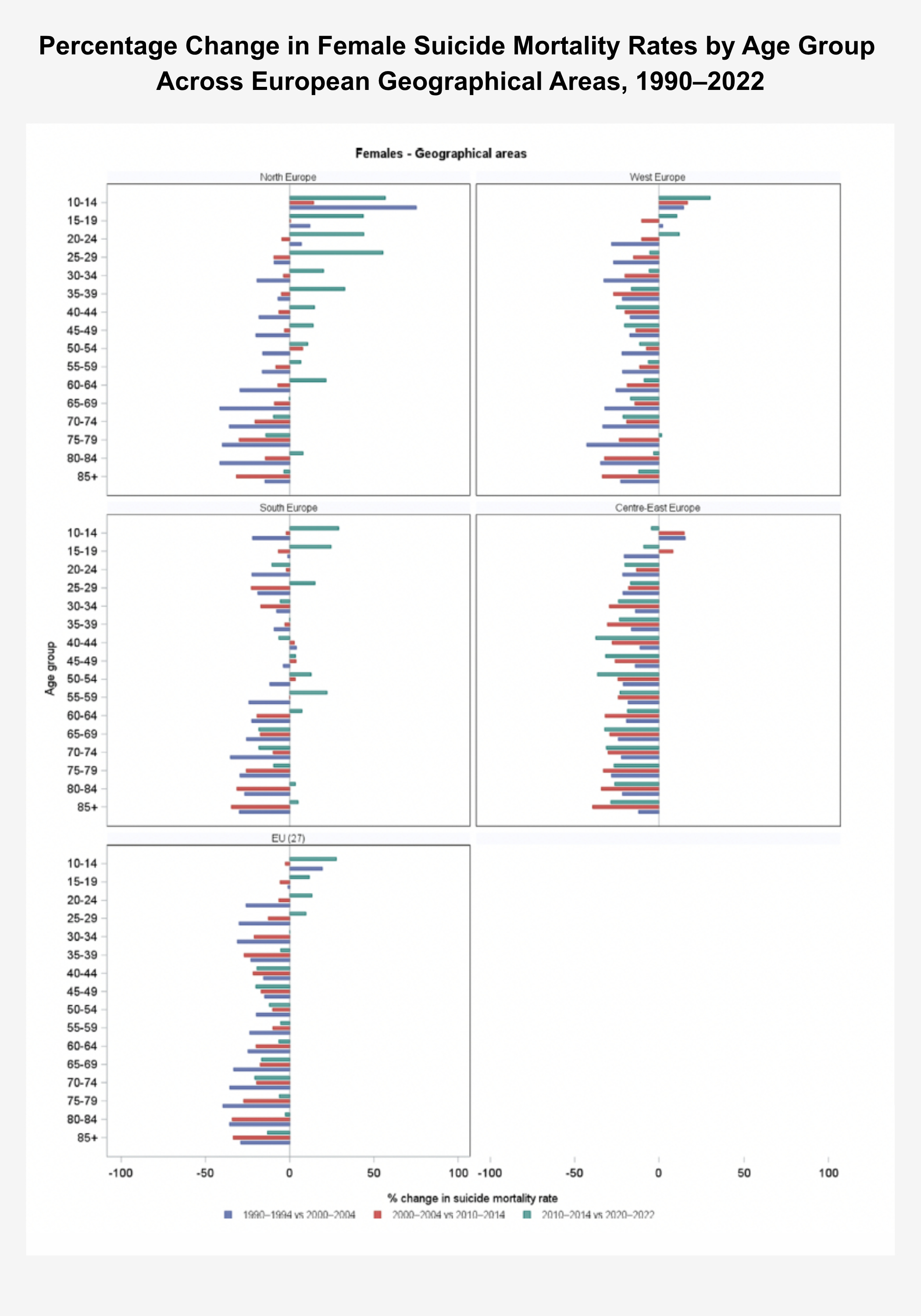
The green bars head to the right (indicating an increase 2010-14 to 2020-22) among all three adolescent and young adult age groups (10-14, 15-19, and 20-24) in North Europe (which includes Denmark, Finland, Iceland, Ireland, Norway, Sweden, and the UK). And the increase is not small — it’s around 50%. There are also increases in the female suicide rate in all three of these age groups in Western Europe (Austria, Belgium, France, Germany, Luxembourg, the Netherlands, and Switzerland) and the EU as a whole, and in two of the three age groups (10-14 and 15-19) in South Europe (Greece, Italy, Malta, Portugal, and Spain). The only region without increases is Central/East Europe (e.g., Czech Republic, Hungary, Romania, Serbia) — and even there the declines in the suicide rate were smaller for adolescents than they were for adult women.
And here is the authors’ graph for country-specific analyses for females:
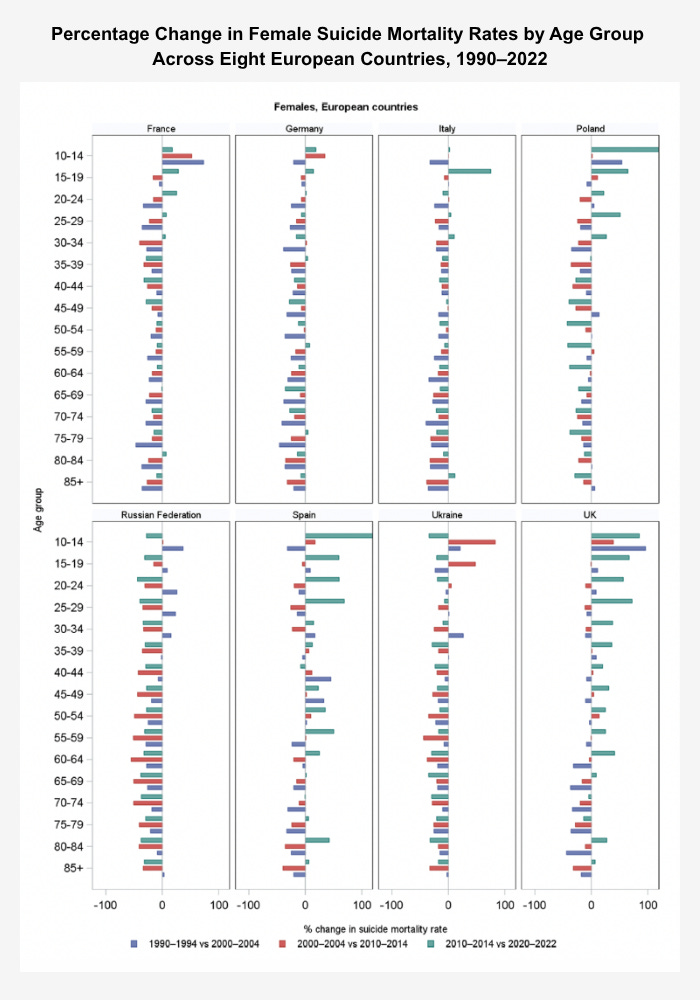
The green bars are on the right (indicating an increase in suicide rates) for all three age groups (10-14, 15-19, and 20-24) in France, Poland, Spain, and the UK, and are on the right for adolescents (10-14 and 15-19) in Germany and Italy. Russia and Ukraine instead show declines. So in 6 out of 8 countries, the suicide rate for teen girls is higher than it was in the early 2010s. One limitation of this analysis: Given how the authors grouped the years for comparison, it’s not possible to see how much of the increase occurred before the COVID-19 pandemic and how much appeared during and afterward. However, a comprehensive analysis found no significant change in suicide rates during the COVID-19 pandemic.
I’ll move next to Asia. A recent article reported suicide data from South Korea, even providing a supplement with the numbers by age group, gender, and year, which meant I could graph it myself. Here is the suicide rate for 10- to 19-year-olds in South Korea since 2010:
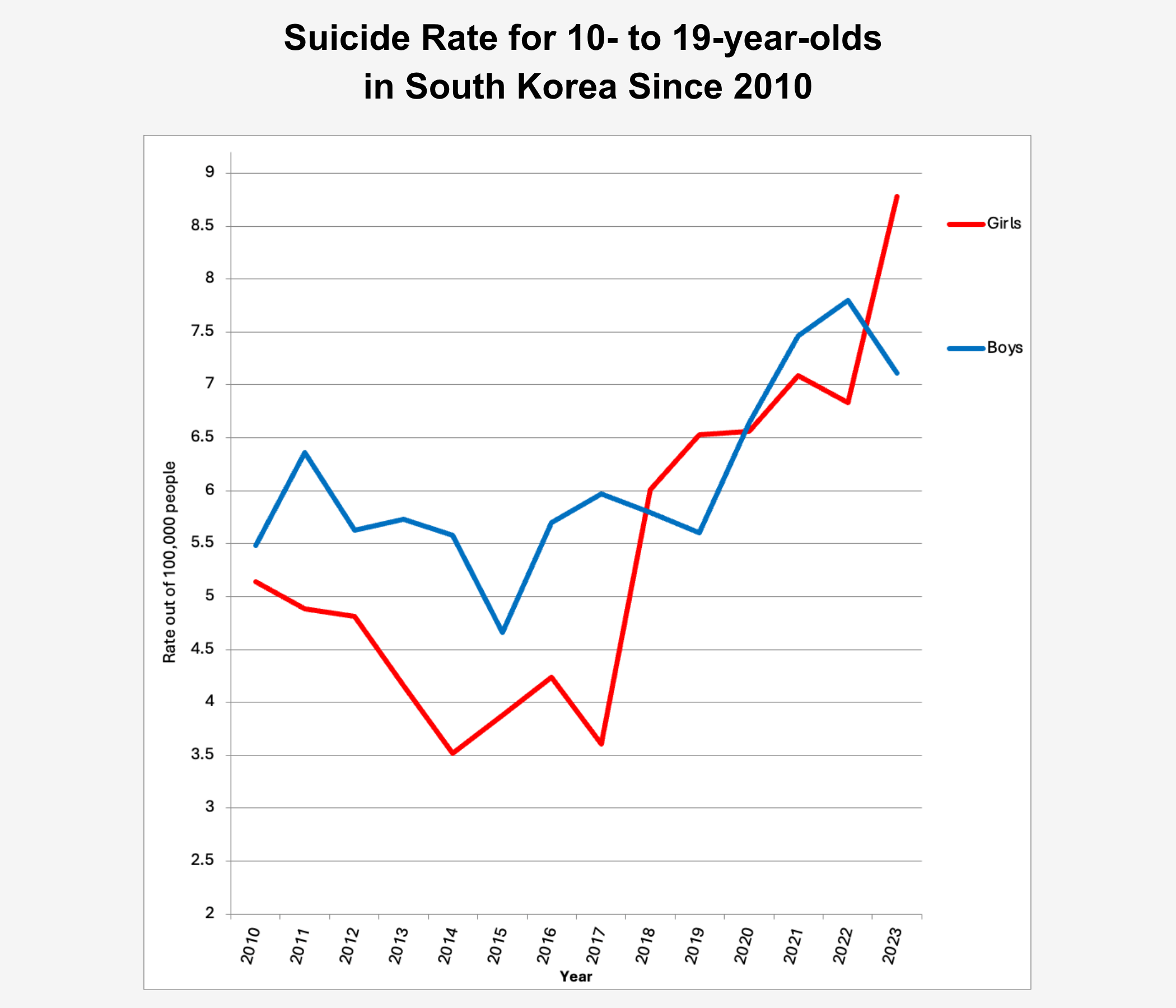
For boys, the suicide rate was 30% higher in 2023 than it was in 2010, though the largest increase was between 2019 and 2022, suggesting COVID might have played a role. For girls, the suicide rate in 2023 was 71% higher than it was in 2010, with little change during the peak COVID years of 2020 and 2021. Instead, the largest upticks were between 2017 and 2018 and 2022 and 2023.
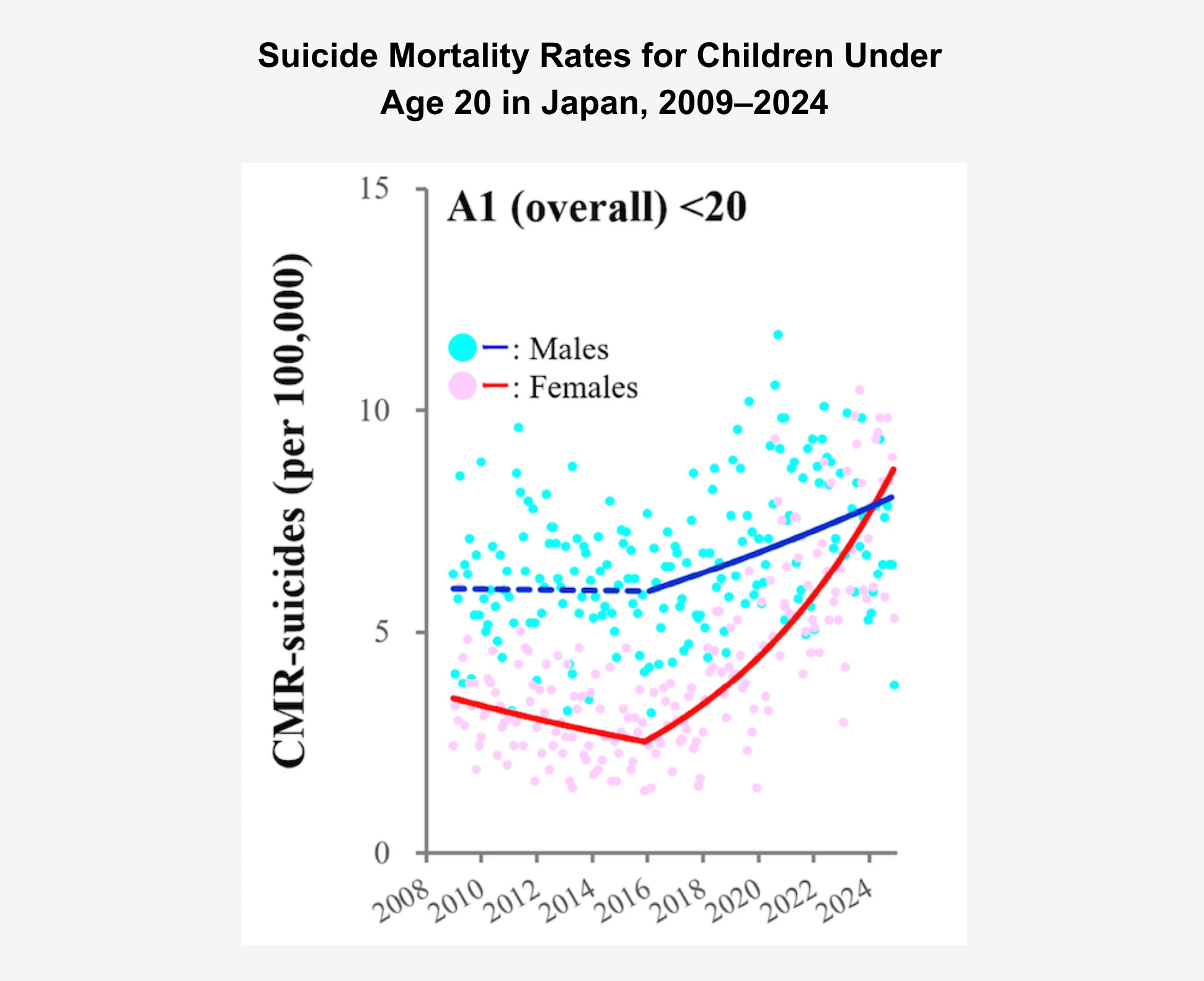
Another paper looked at suicide rates in Japan based on government databases. The authors found increases in the suicide rate beginning around 2016 for Japanese children and adolescents (those less than 20 years old; see their graph below). The suicide rate increased among both boys and girls, but the increase for girls was larger — so much so that in recent years the rates have been equal, upending the usual finding of higher suicide rates among males compared to females.
The authors found the largest increases in the suicide rate among middle and high school girls, with smaller increases for university students (see below). According to the trend lines, the suicide rate among Japanese middle school girls has increased steeply, going from around 1 out of 100,000 around 2015 to 7 out of 100,000 in 2024. For high school girls, the rate went from 4 in 2016 to 13 in 2024. In both cases these increases brought girls’ suicide rates higher than boys’ in recent years.
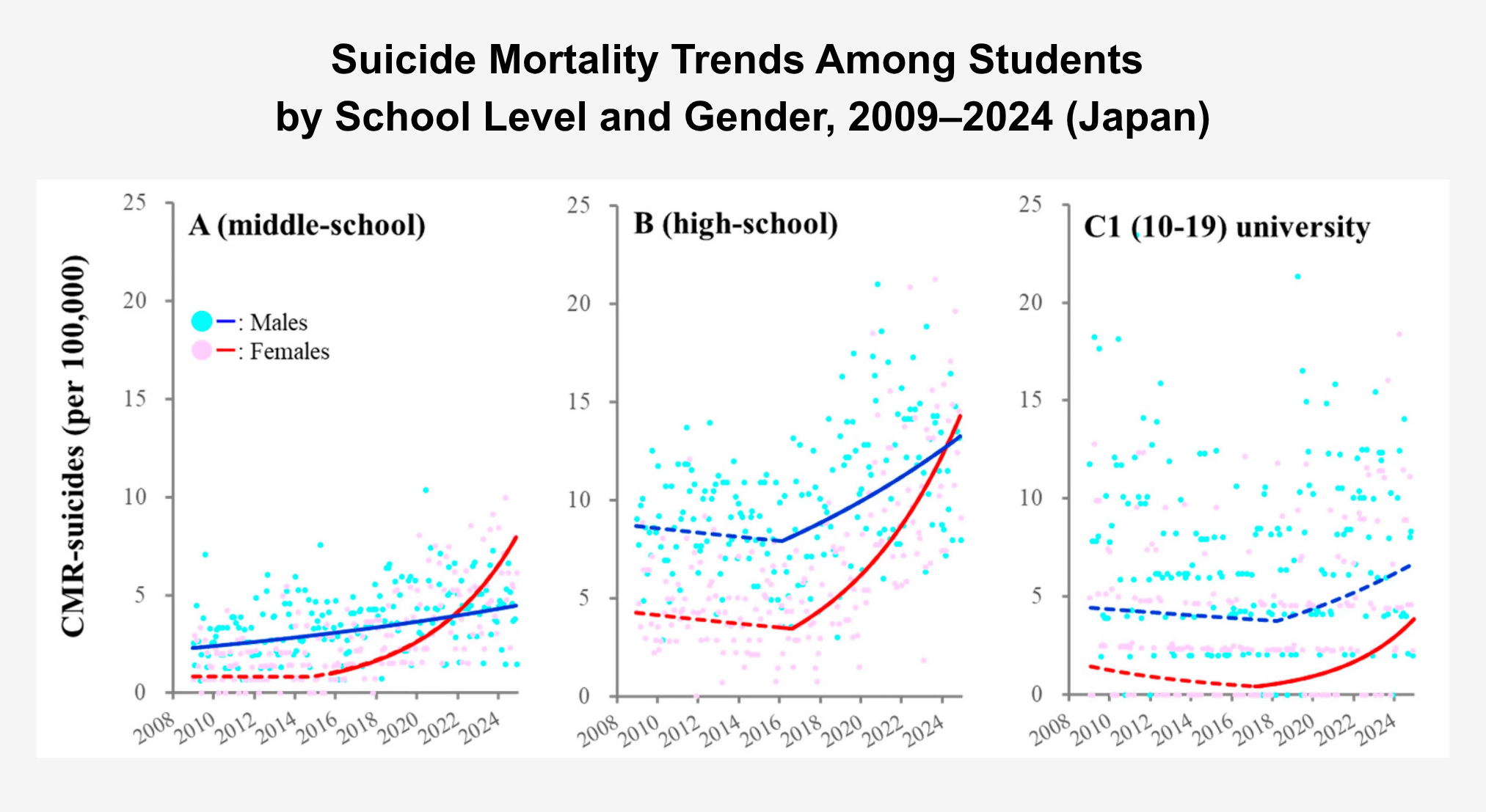
There were also increases for boys, with a steady increase among middle school boys between 2008 and 2024 and an increase from 2016 to 2024 among high school boys. (Thanks to Carmen Hui Jing Lim for alerting me to this article.)
The trends here are clear: The suicide rate for teen girls has increased since 2010 in most countries and regions in Europe and in the two Asian countries analyzed by recent studies (South Korea and Japan, where the increases began later, around 2016). These are regions that experienced the rise of smartphones and social media just as the U.S. did but did not have regular highly publicized school shootings or lockdown drills. They also didn’t have a widespread opioid epidemic or the same trends in income inequality or politics that occurred in the U.S. Any U.S.-specific (or English-speaking-specific, or even Western-specific, given South Korea and Japan) explanation doesn’t work for these data.
The later rise in suicide rates in Japan and South Korea deserves further exploration — did the collectivistic nature of those cultures blunt the early impact of social media and smartphones? Did the impacts only appear when social media became highly algorithmic (curating an individual feed designed to increase time spent on the app)? (Maybe: Instagram introduced algorithmic feeds in 2016; TikTok, known for its highly effective personalized algorithm, was introduced in South Korea and Japan in 2017). Or were there other specific events in these countries that made life worse for adolescents beginning around 2016?
As I noted earlier, many factors impact suicide trends. But combining this data with the raft of evidence on increases in depression and low well-being among teens across many countries strongly suggests that the adolescent mental health crisis is international, particularly among girls. That means the causes are likely to be something that is also international, though future research should work out why the timing of the rise is different in some countries.

Thank you for bringing together the international data. I agree that the rise in suicide among adolescent girls deserves serious attention. The evidence increasingly suggests this is not simply an American phenomenon.
Where I think we need to be careful is the step from an international trend to an international cause.
The figures demonstrate that something has changed for younger cohorts. They do not tell us what that change is.
For example, the Japanese data are particularly interesting. Female suicide rates appear to decline until around 2016 before reversing sharply. That raises questions about timing and mechanism that deserve investigation rather than assumption.
More fundamentally, I wonder whether we are asking the wrong question.
Instead of asking, "What is social media doing to children?", perhaps we should also ask, "What makes some children vulnerable to social media in the first place?"
Adolescence has always involved comparison, status, rejection, belonging and uncertainty. Social media may have industrialised those experiences, making them continuous, measurable and inescapable. But that is different from saying it created the underlying vulnerability.
If social media is primarily exploiting vulnerability rather than creating it, the implications are profound.
Removing social media may reduce one source of harm, but it does not necessarily make young people more resilient. AI will almost certainly become even better at identifying and exploiting individual vulnerabilities.
That suggests our long-term challenge is not simply to protect children from technology, but to prepare them for a world increasingly designed to manipulate attention, emotion and behaviour.
Perhaps the more important question is not, "How do we regulate social media?" but "What kind of human beings should childhood be developing?"
If we get childhood right—secure relationships, sleep, movement, autonomy, curiosity, emotional regulation and critical thinking—we may find that social media becomes less able to exploit the vulnerabilities that concern us all.
There's a correlation with the uptick in prescriptions of psych drugs that have suicidality as a side effect. Must be examined in order to get the full picture.