

Introduction from Zach Rausch and Lenore Skenazy:
We now describe The Anxious Generation as a tragedy in three acts. Act 1, the loss of community, began in the 1960s and 1970s, when local communal life and obligations began to weaken, and social distrust began to rise (as described in Robert Putnam’s book Bowling Alone). This loss of trust led to Act 2, the loss of the play-based childhood. That began in the 1980s but really accelerated in the 1990s when children were pulled indoors, away from the unsupervised play with peers that had been typical for most of human history. As more immersive and exciting virtual worlds emerged, kids were drawn away from the real world and into the virtual one. The early 2010s marked the beginning of Act 3, the rise of the phone-based childhood, with the advent of smartphones and enhanced-virality social media.
Today’s post focuses on Act 2, the loss of play-based, free-range childhood, and its wide-ranging ramifications. Jon and Zach (and Lenore Skenazy, Peter Gray, and others) claim that the decline of a play-based childhood with ample independence caused children born in the late 1990s and later (Gen Z, and Gen Alpha) to become progressively more anxious. This dynamic prompted Camilo Ortiz, a professor of psychology at Long Island University and a clinical therapist, to wonder if the problem could be addressed by reversing the process: Could increasing childhood independence decrease childhood anxiety?
Camilo took this simple idea and developed a new therapeutic intervention, “Independence Therapy,” that has just been published in The Journal of Anxiety Disorders. Camilo has found remarkable success with his patients and hopes that many more psychologists will adopt this new intervention as an approach to addressing the rising tide of anxious children (and parents).
Lenore (who co-founded Let Grow with Jon and helped write various sections of The Anxious Generation related to childhood independence) met Camilo in 2019 when he attended a panel discussion about The Coddling of the American Mind featuring Lenore, Jon, Greg Lukianoff, and Malcolm Gladwell. Camilo and Lenore began a conversation about Let Grow’s independence-building initiatives for schools (which are here) and how they seem to make kids more confident and happy. Two of Camilo’s doctoral candidates ended up writing their dissertations on Let Grow’s programs. Then Camilo decided to refashion these into a form of therapy.
Camilo himself is an outside-the-box thinker in the field of clinical psychology, partly because of his upbringing. Born in Colombia, he came to America with his family as an undocumented immigrant at age 2. He grew up in a working-class neighborhood in Queens, playing on the streets. He had enormous independence – and some scrapes – in part because his single mom was busy earning a living. He became a U.S. citizen at age 17, went to Hunter College High School, then Cornell, and then to the University of Massachusetts Amherst for his master's and PhD. Camilo’s scrappy background has helped him go beyond conventional thinking and design practical, straightforward solutions that work quickly.
You can learn more about Camilo’s story in his interview on Dad Saves America:
— Zach and Lenore
Note that this essay is a reprint of a 2023 essay by Camilo at Profectus Magazine. This version has been edited for clarity and updated with new information.
Whether you read scientific journals or The Washington Post, you have no doubt seen many pieces about how anxious kids are these days. Unfortunately, it’s true. The numbers are grim and they’re everywhere, so I won’t bore you with them here. As a clinical psychologist, I’ve trained practically all my life for this. Many of my colleagues and I use a highly effective, state-of-the-art treatment for child anxiety disorders called exposure therapy. The idea is simple, but the science is complicated.
Exposure therapy is currently the best treatment we have, but it’s not doing a damn thing to slow the runaway train of anxiety in children and adolescents. We need something new, and some of us may actually be on to a solution: intense and frequent child independence. The beauty of this approach is that practically anybody can do it, and you don’t need to pay some highfalutin Ph.D.
Before I describe how this promising treatment works, let’s spend a moment examining why anxiety is so difficult to manage. When kids (and adults, for that matter) are afraid of something, from spiders to plane crashes, they avoid those things. And man, is this strategy effective … Avoid planes, and you’ll think that is the reason you’ve never been in a crash. You saved yourself from that horrible fate. Another way people cope with anxiety is to distract themselves. In fact, we are brilliant at distracting ourselves from uncomfortable thoughts and situations. It’s often as easy as opening the Twitter app on your phone. You are instantly transported to a world of voyeurism and outrage. Problem solved. What was I worried about again?
Here’s the rub. Avoidance is a mirage. It fools us into thinking we are protecting ourselves, when in reality it does no such thing. It provides short-term but fleeting relief from the uncomfortable feelings of anxiety. And distraction only works temporarily. Sometimes that means just a few seconds of relief. In no time, those thoughts are back. Like Randy Quaid’s character in the Vacation movies, they keep showing up no matter what you do.
Why doesn’t anxiety stay away once we’ve temporarily banished it? Because it was evolutionarily advantageous for anxious thoughts to return. As I tell my patients, anxious thoughts are “sticky” for a reason. How could being miserable and anxious be advantageous? Because, sadly, your genes are indifferent to your happiness. They are all about replicating themselves and thus only “care” about your survival, not whether the ride is pleasant. Homo sapiens who could successfully rid themselves of anxious thoughts and get back to daydreaming about the attractive potential mate in their tribe were less likely to survive. That is because the roaring noise behind the bush is worth paying attention to and planning one’s day (and life) to avoid. Prehistoric ancestors prone to anxious worry were less carefree but more likely to survive. We are all the descendants of these neurotic hunter-gatherers.
But avoidance doesn’t work as a long-term strategy because it makes what psychologists call “corrective learning” impossible. Once we get it in our heads that something is dangerous – say, taking a plane ride – we don’t change our minds easily. If you think something is dangerous, you will hold onto your initial assumption until you receive a lot of disconfirming evidence. Our brains operate on the principle of inertia; they are as skeptical as Vizzinni from The Princess Bride (“Inconceivable!”).
The problem is that you cannot disconfirm a fear when you avoid it. “Thank God I crossed the street when that tiny white dog was walking toward me. They are killers!” will stay in place unless you pet that dog (and many other dogs) without getting bitten. This cognitive stubbornness is, again, for evolutionary reasons. Holding onto a fear is annoying, but it increases survivability. When you take the long way home to avoid something, all you lose is a little time. Letting go of fears can mean missing a real threat and thus the end of you (and your genes).
So clinicians who are skilled at delivering exposure therapy will work with kids (and their parents) to devise “approach” tasks where kids must repeatedly face their fears. The trick, particularly with kids, is to find exposure activities that they are willing to do but that also elicit high levels of anxiety. This is no easy feat. For most kids, spending an hour after a long day of school in a therapist’s office facing their greatest fear is probably the last thing they want to do. Lots of kids refuse. And lots of therapists are too reluctant to even suggest exposure therapy because they feel bad for the patients or are so anxious themselves that they aren’t willing to witness it. The result is very few kids with life-impairing anxiety receive a full course of exposure therapy at the intensity required for sustained improvement. The result is that even kids anxious enough to require treatment often don’t get what they need because the best treatment we have is viewed pretty dimly by those who need it and those who are supposed to administer it.
Well, what if we could get all the benefits of exposure therapy through a treatment that kids not only don’t hate but are actually excited about? Sounds impossible, right? But my graduate students and I (and some other smart people) have hit upon a novel idea that is bold enough to work.
Before I get to that idea, I need to briefly describe three other trends that have been occurring while – and before – children’s anxiety rates began soaring. First, parents have been spending more time with their kids. Second, kids have been taking (or more accurately, been allowed to take) fewer risks. Third, kids are playing less with other kids in person. All three trends are intertwined and add up to plummeting child independence. I think less independence is at the center of why so many kids are anxious. But how does less childhood independence lead to more anxiety? In so many ways!
When parents hover and prevent children from independently exploring the world around them, they foster many of the processes that scientists have identified as causes of anxiety. Kids who don’t practice independence (yes, it is a skill that withers without practice) are less self-confident, have worse social skills, are less tolerant of uncertainty, have worse problem-solving skills, and are less resilient. They overestimate danger, underestimate their own ability to handle problems and catastrophize when things don’t go as expected. Kids need lots of practice with what I call the four Ds: discomfort, distress, disappointment, and (mild) danger. When parents step in to “save” children from the four Ds, they inadvertently thwart children’s opportunities to successfully navigate these integral parts of life. In contrast, independence is a fantastic way for kids to get this practice and without even realizing it, inoculate themselves against anxiety.
There are lots of good reasons well-meaning parents don’t encourage independence. To help, we developed a short and easy-to-administer “treatment” that consists of mega-doses of child independence. A lot of this work is inspired by the work of Lenore Skenazy and her organization, LetGrow.org, which has spent years warning America about the perils of plummeting child independence. They encourage parents to “let go and let grow” so that kids can do what evolution has prepared them beautifully for—doing stuff without their parents around to gum it up. Lenore is not a psychologist or an academic. Her lack of formal training (plus being from Queens, NY) has allowed her to think outside the box and hit upon what practically everyone in my field was missing. If you break down barriers to independence, kids will flock to it, and they will be the better for it.
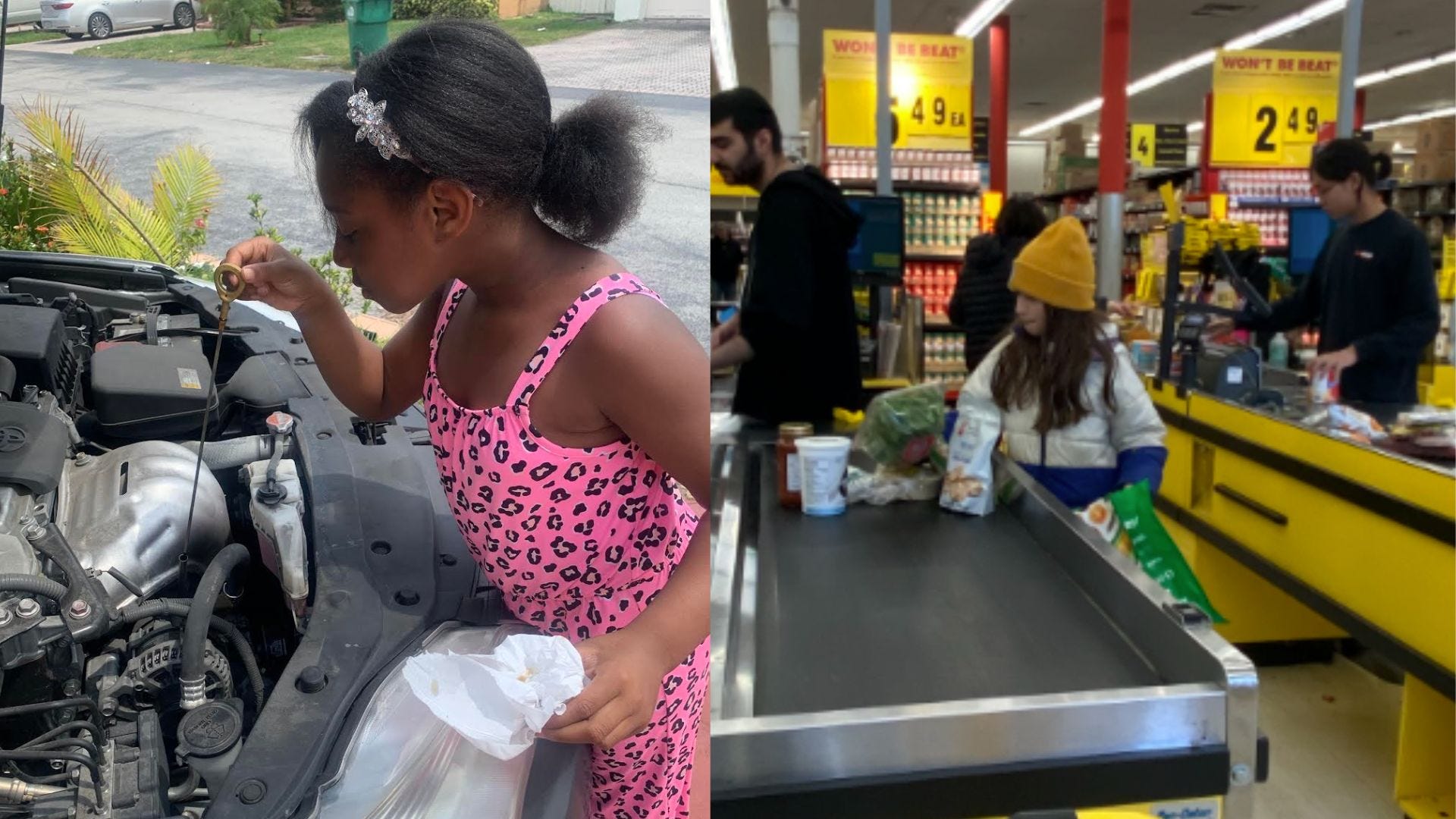
So, here’s where my students and I come in. We have developed a 5-session treatment that can be administered in person or over Zoom that consists largely of educating parents and kids on the benefits of independence. We brainstorm daily “IAs,” or independence activities, and follow up to see how things went and reinforce the lessons kids learned from their experiences. But here’s the really exciting part. These independence activities (unlike exposure therapy assignments) are purposely meant to be unrelated, on the surface, to the things kids are anxious about. We think you don’t need to make kids face their exact fears to make those fears better. As we have joked, “So you’re scared of the dark? Go to the corner and buy me a half a pound of salami!” In other words, IAs are “topographically” different (a term psychologists borrowed from map-makers) from a child’s anxieties. Yet they are helpful because they exercise many of the psychological muscles needed to better tackle anxiety. IAs increase resilience, tolerance of discomfort and uncertainty, social skills, and smart risk-taking.
For example, one of the first kids to go through our treatment was afraid to sleep in her own bed at night. This 9-year-old picked taking the bus to school by herself as one of her big IAs. She did a beautiful job – even when she got a little lost – and came home beaming about how grown up she felt. That night, she proceeded to sleep in her own bed for the first time in her life.
Obviously, this is an anecdote, but it is informative because it demonstrates that our theory may be right. What we have learned is that you don’t need to make kids miserable with the treatment in order to help them become less miserable from anxiety. You can have the best of both worlds.
The definition of an IA is an unstructured, developmentally challenging task that is performed without any help from adults. IAs often involve adventure and mild risk of discomfort or danger. These activities are typically chosen by the child and fall into four categories (outdoor, indoor, with other children, involving mild risk of injury). Examples of outdoor IAs include riding a bike to the park or taking the subway by oneself. Indoor IAs can be cooking a meal from beginning to end or painting a wall in your bedroom. IAs with other children can be going to a movie with friends or camping out in the backyard, and IAs that involve risk are whitling with a sharp knife or building a fire. These categories can be combined for extra powerful doses of independence.
A great example is the so-called “junk playgrounds” like The Yard, on Governor’s Island in New York City. They are filled with construction materials, don’t allow parents inside, and are full of amazing opportunities for children to learn how to navigate risk. Children can interact in groups of various ages. Mixed-age groups provide younger children with more opportunities to learn and older children with opportunities to cultivate leadership skills.
So far, we have found that kids are enthusiastic about practicing independence. The biggest barriers have come in the form of adults. And I don’t mean the children’s parents, who often know that independence is good for their kids and, after some coaxing, are able to let go. We’ve had to plan for strangers messing things up, and not in the way you might think. So-called “stranger danger” has been flipped on its head in our work. We’ve never had a stranger try to harm a child practicing independence; on the other hand, plenty of anxious strangers stepped in to “protect” our kids by trying to stop the independence activity. Here’s where we have leaned on Let Grow’s expertise. They have handy “Kid Licenses” informing strangers that a child out and about in the world is nothing to be alarmed about. Kids sign them, as do their parents. Then the kids can flash them like a literal badge of honor if anyone questions what they are doing.
Our research is ongoing, and it’s still early. But so far, we have found that these short bursts of independence have led to reduced anxiety in kids and their parents. It also increased kids’ self-esteem and willingness to try difficult things, even as it increased parents’ free time because they no longer had to spend every waking moment supervising their kids. Some parents have even made time to go on dates! We plan to conduct larger studies and continue improving the manual so even more clinicians can use it.
Our country is fighting a tidal wave of overprotectiveness and the anxiety it engenders. But we may have found a way to push back against the damaging idea that kids are fragile and need constant protection—all while allowing kids to have a heck of a good time.

Yes!! As a child clinical psychologist I could not agree more! (I have often referred to exposure therapy for children as feeling like torture for them!) but this makes so much sense— exercise those courage muscles in a sort of sneaky way!! (We have to do the same when we want children to learn better self regulation— sneak in the exercises without directly telling them why they are good for them). Ahhhh……. I am grateful this word is getting out there. There is so much a parent can do without resorting to coming to see someone like me!
Longtime reader of this blog and TAG book. I generally agree with all the prescriptions given here, but think we need to seriously grapple with three barriers to letting kids play and live more independently that are not just moral panic, they are genuinely real. These have different salience in different kinds of neighbourhoods but are all real to some extent for everybody.
The first is traffic. There are more people, driving vehicles with approximately double-triple the horsepower that vehicles had during the golden age of free play. I live in a dense classic streetcar suburb in Toronto (now considered part of downtown), and the thing I am overwhelmingly fearful of, more than everything else put together, when I let my nine-year-old out for free play, is the speed and size of the vehicles today.
The second is sexual abuse — NOT by strangers, but by the men among those networks of adults that we used to just trust to keep an eye on our kids. Comparative statistics are really hard to come by because this stuff wasn’t tracked or properly reported in the 1950s, but there’s enough anecdotal evidence and incidents that were bad enough to make the newspapers to convince me that way more rampant than it is today. Religious figures, sports coaches, even just storekeepers that the kids ran into frequently while roaming. I’m in a local history group that spends significant time combing through the digitized archives of our city newspapers for the period from 1890 to 1980 or so and you get a sense just from reading that of how much behaviour was basically assumed would happen, including really awful victim-blaming of, like 12-15 year old girls. Background checks and increased enforcement and just greater knowledge and willing to report things will help here I think, but it’s not a moral panic to be worried about this. Again, I’m not talking about strangers. It’s the networks of known adults.
The third one is maybe more of a factor in what in the US would be called “blue” cities. Here in Toronto it’s an issue too. There is now a significant population of truly dangerous people whose minds have been destroyed by opiates and fentanyl and who are in the midst of various schizophrenic breaks, who do things like attack strangers on public transit. This is not a made-up issue, it is really happening right now. I am not sure I trust strangers to protect my kids if something happens — I think strangers would have the right intentions, but several decades of prosecuting intervenors and those who counterattack criminals, at least here in Canada, has made people fearful to ever raise a hand. I don’t think you can restore the independence and play-based childhood in the liberal cities of North America without allowing for a baseline level of control in the streets again.
The fourth barrier of course is free-roam/Right-to-Play laws and giving people protection from child welfare agency calls for letting their kids play outside. But this group is already all over that stuff; it’s a well-known issue. It’s these other three that I’m not seeing this group totally willing to grapple with yet.