



Academic studies, testimony from hundreds of bereaved parents, and thousands of internal documents from social media companies have all combined to shape an emerging public consensus: social media causes a variety of direct and indirect harms to young people, ranging from sexual harassment and sextortion to depression and anxiety. Parents are forming pacts to keep their kids off of social media, governments are passing minimum age laws, and plaintiffs are winning large settlements against social media companies, culminating in the recent landmark settlement against Meta.
Yet some researchers continue to dispute the claim that social media poses serious risks to its adolescent users. They argue that associations between social media use and poor mental health are merely correlational or are too small to matter. More broadly, they say that public concern around social media is overblown — nothing more than the latest in a long line of “moral panics” about technology.
In Chapter 3 of the 2026 World Happiness Report, we argued, to the contrary, that social media worsens teens’ mental health. We organized seven lines of evidence, including cross-sectional and longitudinal surveys, randomized controlled trials, natural experiments, and several kinds of testimonial evidence. We also pointed to a wide variety of direct harms, including compulsive use, sextortion, and cyberbullying. And while we did not discuss the advent of short-form video, we are increasingly worried about the risks it poses to cognition, attention, reading comprehension, education, and executive function.
Since December 2025, when we submitted the draft of our World Happiness Report chapter, the evidence has only gotten stronger. In this essay we offer an overview of the available lines of evidence that is up to date while being shorter and more accessible to a general audience. (We will also be drafting a version of this essay for an academic audience.) In what follows, we review the evidence that social media hurts teens’ mental health, the evidence of social media’s direct harms, such as facilitating compulsive use and sextortion, and finally the evidence of newfound risks posed by pervasive short-form video to healthy cognitive development.
Our hope is that this essay can act as a living resource for academics, policymakers, and journalists, especially when they encounter claims that the evidence is just correlational or that concerns over social media are merely another unjustified moral panic. (We will continue to update this essay with new evidence at TechAndSocietyLab.org/causality.)
Social Media Harms Teens’ Mental Health
It has been widely accepted for years that social media is at least correlated with symptoms of anxiety and depression among young people. Large meta-analyses consistently find statistically significant positive associations between time spent on social media and depression and anxiety. They also find that heavier users are at greater risk than lighter users. Some studies have even identified “a dose-response relationship” between social media and mental illness; Liu et al. (2022) found that for every additional hour per day that adolescents spent on social media, their odds of experiencing symptoms of depression rose by 13%. These associations are also consistently larger for adolescent girls, as compared to both adolescent boys and to adults.
Longitudinal studies, which collect data about their participants over time, have found similar associations. The largest meta-analysis of longitudinal studies yet conducted, Teague et al. (2026), found that “social media use was associated with poorer outcomes [over time] for all domains examined, including depression, externalizing and internalizing difficulties, substance use, lower self-perception, self-injurious thoughts and behaviors, lower academic achievement, and less positive development” (p. 514).1
As our critics have been quick to point out, though, correlation does not imply causation. It is possible that these associations are the result of a third factor, such as genetics or family instability, causing social media use and mental illness to rise in tandem, generating a spurious correlation between them.
Fortunately, social scientists have a range of tools to separate genuine causation from mere correlation. These include randomized controlled trials (RCTs), which are considered the gold standard for identifying causal effects, but only measure those effects on individuals over short periods (at least in social media’s case), as well as natural experiments, which pose additional challenges for causal identification, but span longer periods and capture “spillover effects,” i.e., how individuals’ social media use affects those around them.
Line 1. Randomized Controlled Trials (RCTs)
An RCT is a controlled experiment in which participants are randomly assigned into one of two groups. Typically one group is made to undergo a “treatment” of some sort, such as taking a medication, while the other does not and acts as a “control,” an untreated base of comparison (often taking a placebo, in medical RCTs). Then, the changes observed in the treatment group are compared to whatever changes are observed in the control group. So long as the individuals in the two groups were randomly assigned, this allows researchers to infer that changes observed in the treatment group were caused by (not just correlated with) the treatment.
In the case of social media, because most people (and adolescents) are already frequent social media users, and because it is unethical to conduct experiments involving a treatment that may be harmful, most RCTs are “detox” experiments. In this type of experiment, participants lower or stop their use of social media for a defined period, and complete surveys about their mental health before, after, and sometimes multiple times throughout.
These experiments usually find that those who reduce or stop using social media see their mental health improve. The most recent systematic review and meta-analysis of social media detox experiments, Lopes et al. (2026), which was co-authored by members of the Tech and Society Lab, found, across 35 studies and 7,160 participants, that social media detoxes lasting at least one week among college-age youth produced statistically significant reductions in symptoms of depression and anxiety, along with perceived stress, fear of missing out, and body image concerns.
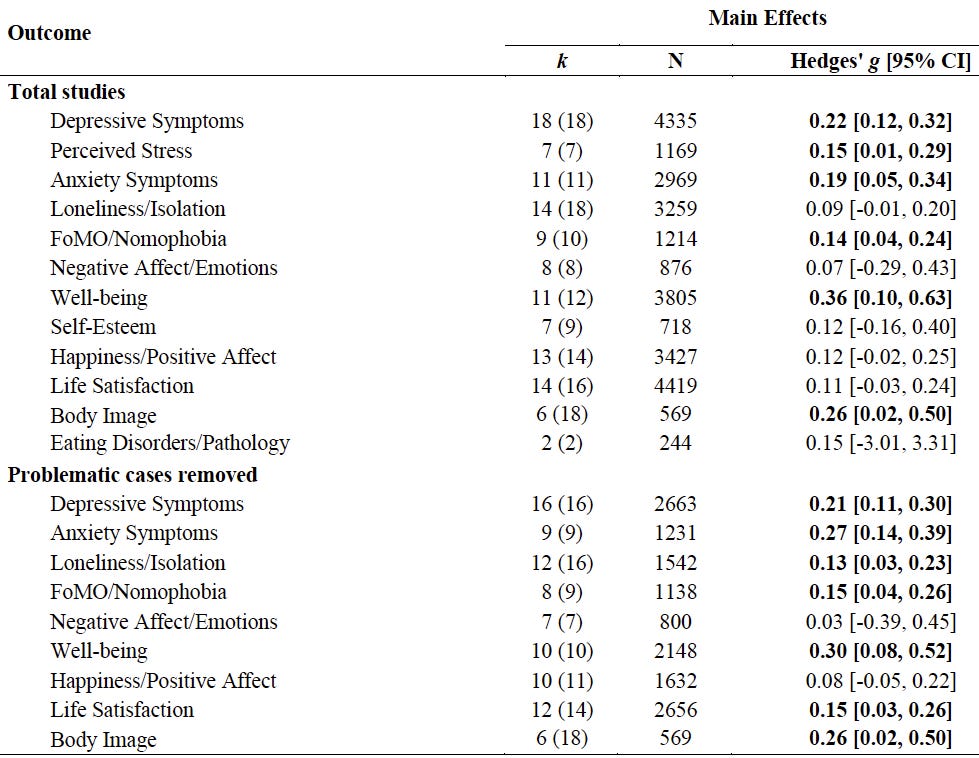
Two other recent meta-analyses on a mix of college students and other young adults, Burnell et al. (2025) and Liu et al. (2025), comprising 32 and 20 RCTs, respectively, came to similar conclusions. Both found that restricting social media use significantly improved several different measures of well-being. Burnell et al. found improvements specific to symptoms of depression and anxiety. For instance, of the 16 experiments reviewed in Burnell et al. that provided a clear measure of depression, 14 found reductions in depression, and among the 10 that provided a clear measure of anxiety, eight found reductions.2
It is sometimes claimed that, even if statistically significant, the effects found in social media reduction RCTs are “small,” even to the point of practical irrelevance. This is false. Consider the pooled effect sizes of social media detoxes on symptoms of depression and anxiety in Burnell et al. (2025) and Lopes et al. (2026), which are the two largest meta-analyses available:
Burnell et al.
Depressive symptoms: g = 0.19; 95% CI, 0.07 to 0.32
Anxiety symptoms: g = 0.28; 95% CI, 0.13 to 0.43
Lopes et al.
Depressive symptoms: g = 0.21; 95% CI, 0.11 to 0.30
Anxiety symptoms: g = 0.27; 95% CI, 0.14 to 0.39
How should we understand the size or significance of these effect sizes? (For context, “g = 0.22” corresponds to a reduction in symptoms of 0.22 standard deviations. The standard deviation is the typical distance of data points from the mean, the data here being participants’ scores on clinically validated scales of anxiety and depression.)
In order to situate their findings in a meaningful real-world context, Lopes et al. calculate potential impact fractions (PIFs) for both depressive and anxiety symptoms, measures of the proportion of symptom cases that might be prevented by reductions in the prevalence of intense and problematic social media use among adolescents. They calculate that a 50% population-level reduction in high social media use could prevent 8.7% of depressive symptom cases and 7.7% of anxiety symptom cases; were high social media use reduced by 100%, these figures would rise to 17.5% and 15.4%, respectively (see Lopes et al., 2026, pp. 7-8). While these are only rough estimates, they nonetheless go to show that apparently “small” effects can in fact be quite significant when applied to large populations.
Another reason that it is misleading to dismiss the effects of social media detox experiments as impractically small or insignificant is that they are analogous to a range of commonly used youth mental health interventions. In a large meta-analysis of RCTs evaluating school-based depression and anxiety prevention programs, Werner-Seidler et al. (2021) found post-intervention effects of g = 0.21 for depression and g = 0.18 for anxiety. Weisz et al. (2017), another large meta-analysis, found a mean post-treatment effect of g = 0.29 for depression from RCTs evaluating youth psychotherapy. And Recchia et al. (2023) found an effect of g = 0.29 for depression in a meta-analysis of physical activity interventions, also targeting adolescents.
Not only are social media reduction experiments as effective as these other interventions, but they also stand to benefit a much larger group, namely all adolescent social media users, and require no personnel or infrastructure to administer. In other words, it is significant that by simply not using social media for a few weeks, adolescents stand to benefit as much as they would by participating in far more resource-intensive mental health interventions.
While Burnell et al., Lopes et al., and Liu et al. do not amount to an exhaustive list of all social media reduction RCTs, they do show that the balance of experimental evidence strongly favors the existence of a causal link between social media and worsening mental health. They also show that the effects of social media on mental health are more than large enough to be of practical significance — in particular when one considers the sheer scale of modern-day social media use among young people.
Line 2. Natural Experiments
Notwithstanding their gold-standard status among social scientists, RCTs have an important limitation: they are carried out in a controlled environment, and (at least in this case) only examine individual effects. They therefore may fail to capture certain aspects of more realistic environments, including spillover effects between individuals.
Natural experiments overcome this problem by exploiting quasi-random variation in how similar groups are affected by real-world events, creating natural “treatment” and “control” groups that researchers can then compare. While this variation is not perfectly random, researchers do their best to approximate randomness by using statistical methods such as instrumental variables,3 and controls for factors like socioeconomic status that might affect the dependent variable (in this case, rates of mental illness).
In McClean et al. (2025), we reviewed four natural experiments pertinent to social media, all using instrumental variable methods — one in Germany, one in Italy, one in the United States, and one in Spain. All four employed a similar analytical strategy: they took advantage of the fact that high-speed internet came to some areas months or years before it arrived in others. High-speed internet makes it easier and more appealing to use social media, especially the most popular forms that involve bandwidth-intensive images or videos. The researchers behind these studies could then ask: did rates of mental illness rise in areas with greater access to high-speed internet, relative to similar ones with lesser access? All found that the answer was yes.
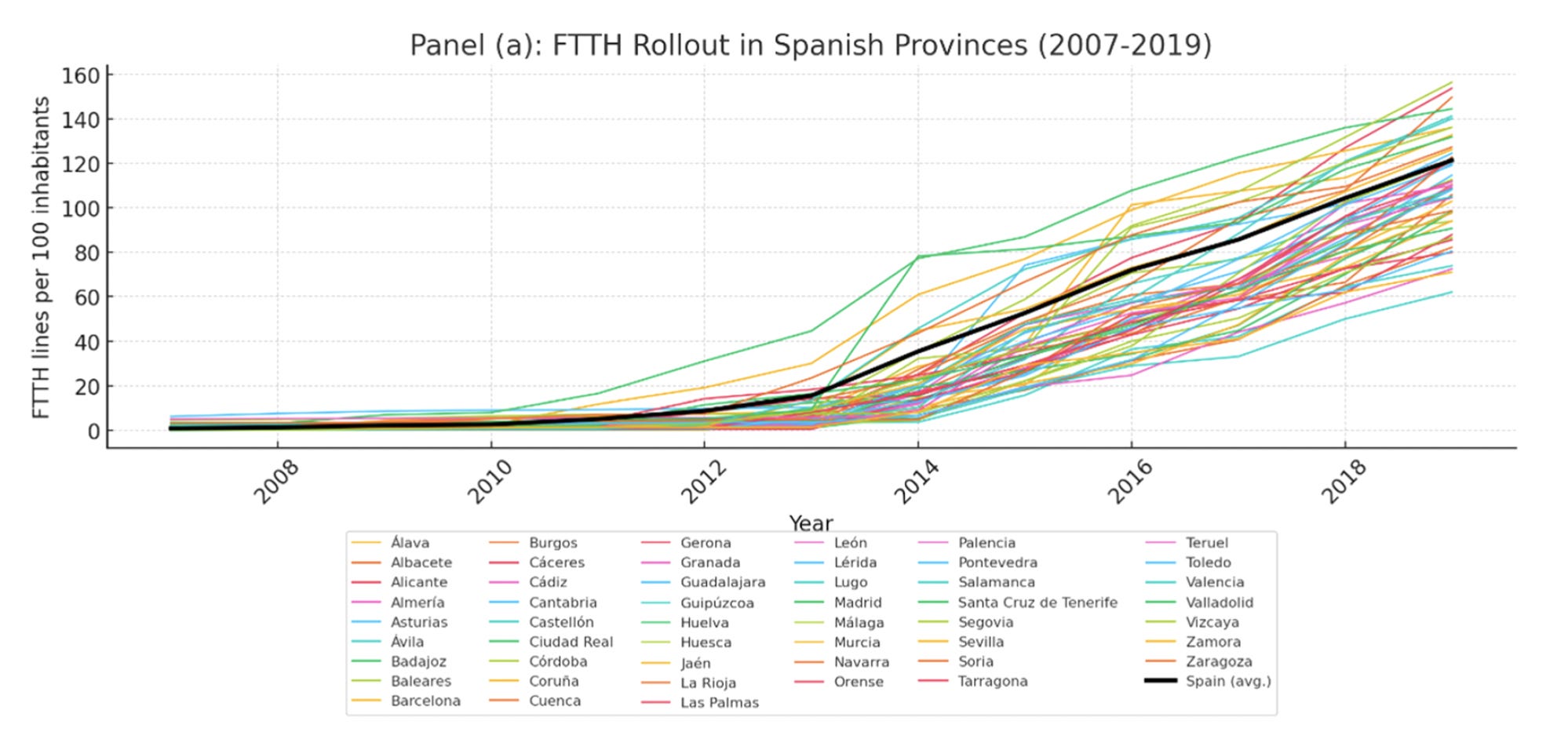
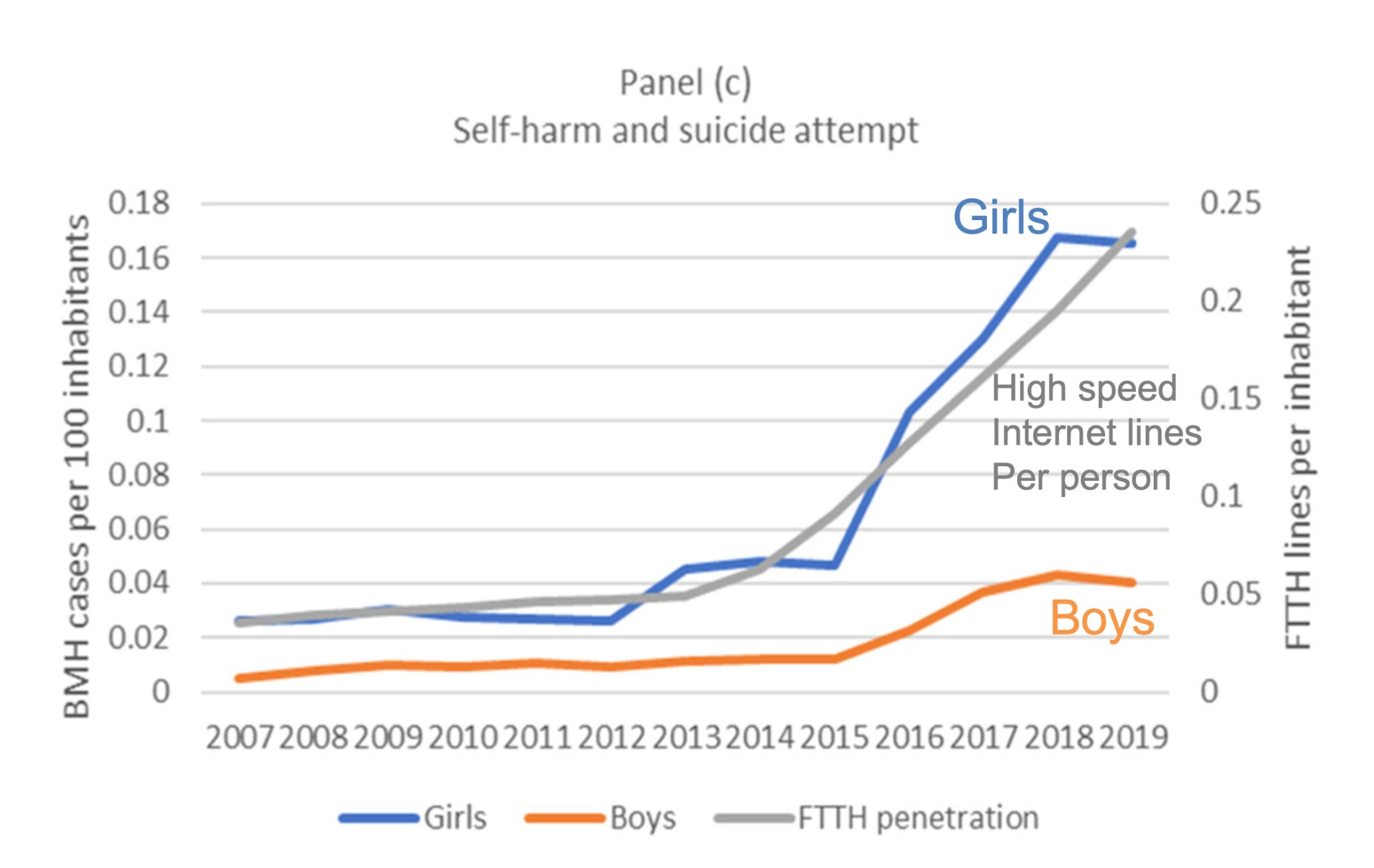
For example, the study in Spain, Arenas-Arroyo et al. (2025), exploited variation in the rollout of high-speed fiber internet across the country from 2007 to 2019 (see Figure 2, below). The authors found that provinces with more fiber lines installed saw greater increases in mental health diagnoses, self-harm, and suicide attempts, with effects concentrated in girls and women ages 15-19. Most results were robust for girls and women, but not for boys and men (with the exception of deaths from suicide). You can see the close relationship between fiber access, self-harm, and suicide attempts among girls and women in Figure 3, below.
The studies from Germany (Golin, 2022), Italy (Donati et al., 2025), and the U.S. (Kyung et al., 2021) yielded broadly similar results: all found that the expansion of high-speed internet was associated with rising mental illness across self-reports (Germany), clinical diagnoses (Italy and Spain), and suicide rates (Spain and the U.S.). Effects were concentrated among young women and girls. Pugno (2025) reviewed the same four studies, as well as Braghieri et al. (2022), discussed below, and came to very similar conclusions.
This is also true of three more natural experiments, covered neither in our review nor Pugno’s: McDool et al. (2020), Churchill and Johnson (2026), and Guo (2023). They also found that exposure to high-speed internet predicts greater incidence of mental illness (note, though, that neither Churchill and Johnson nor Guo is published in peer-reviewed journals; the first is a National Bureau of Economic Research (NBER) working paper, and the second is a dissertation chapter). Churchill and Johnson found that a one-standard-deviation increase in broadband access in the U.S. between 2009 and 2019 was associated with a 16% increase in the likelihood that adolescent girls reported seriously considering suicide; a 12% increase in the likelihood that they reported making a suicide plan; and a 17% increase in the likelihood that they attempted suicide.
Guo found that the expansion of high-speed wireless between 2010 and 2019 in British Columbia was associated with a 90% increase in severe mental health diagnoses among teen girls (p. 23). Critically, she was also able to link this increase to social media using Google search volume data; the keyword “Instagram” was searched about 2,600 additional times per month in municipalities with high-speed internet as compared to those without (p. 21).
That girls and young women experience the strongest mental health effects in these studies is further support for the assumption that the harmful effects of high-speed internet are driven in part by increased use of social media. Were the effects of broadband expansion instead driven by gaming, streaming, pornography, or remote work, we would likely see a more balanced or even male-focused distribution of harm.
Overall, we have found nine natural experiment-based studies assessing how high-speed internet access affects mental health, and all but one reported a significant negative effect.4
It would of course be preferable if these studies directly measured access to or usage of social media, rather than high-speed internet access. There is one study that does so, however, and it too supports the claim that social media causes worse mental health among young people.
Braghieri et al. (2022) exploited the staggered rollout of Facebook on college campuses between 2004 and 2006 to assess access to the platform’s effects on student mental health through 2008. They found that campuses that gained access to Facebook saw significant increases in an index measuring poor mental health among students. These effects are especially notable given that the operative version of Facebook preceded the smartphone and was much more basic, lacking now-standard features such as the “like” button and algorithmically populated feeds.
With remarkable uniformity, the evidence from natural experiments supports the existence of a causal link between social media and worsening mental health. Given that the same is true of RCTs, we can say with high confidence that the evidence writ large strongly supports the existence of this causal link.
Line 3. Testimony from Parents, Teachers, Clinicians, and Teens
While RCTs and natural experiments may be two of our strongest sources of evidence, they are not the only ones. Other important evidence for assessing the effects of social media on teens’ mental health is testimonial: what do the groups best positioned to evaluate these impacts in real-world environments believe? In our contribution to the 2026 World Happiness Report, we identified four lines of testimonial evidence that further reinforce the case that social media is harming teens’ health: surveys of parents, teachers, clinicians, and teens themselves.
Beginning with parents, they overwhelmingly see social media as harmful. In a 2025 Pew Research Center survey, a 40% plurality of U.S. parents identified social media as the single most negative influence on teen mental health. A 2025 U.K. survey by More in Common also asked parents to identify what factor had the largest negative impact on their children’s mental health, and again the top response was “social media use / excessive screen time,” followed by a mix of related concerns including exposure to harmful content online, bullying, and lack of sleep.
Surveys of educators are similarly negative. In a 2024 survey of 595 district leaders, school principals, and teachers by Education Week, 95% said that social media’s impact on the mental health and well-being of girls was either very or somewhat negative in their district or school (56% very, 36% somewhat); 86% said the same for boys (27% very, 60% somewhat). Ninety-one percent also said that social media “has had a negative impact on how students treat people in real life.”
Another 2024 survey of 2,889 members of the National Education Association asked educators to rate how various factors contributed to student mental health challenges at their schools. While “lack of parental involvement and communication” was their top concern (63% said this “contributes a lot” to student mental health challenges), factors related to the role of technology were a close second: 57% of educators said that “social media use” contributed a lot to student mental health issues, and the same percentage said so about “cell phone or personal device use after school hours.”
While survey evidence on clinicians’ perspective is much slimmer, one consequential exception is an internal mixed-methods study conducted by Meta whose findings were disclosed in recent litigation against the company by school districts. The study, which surveyed 1,000 psychiatrists, therapists, and social workers, asked them (among other things) to assess social media’s role in their patients’ mental health on a case-by-case basis. Clinicians in the U.S., U.K., and Brazil perceived social media’s role to be “primarily negative” in 31%, 41%, and 29% of cases, respectively. By contrast, they perceived it to be positive in only 7%, 5% and 7% of cases (p. 21). And while they perceived social media to have caused patients’ mental health challenges in only 2%, 7% and 7% of cases, they perceived it to have exacerbated those challenges in 81% of cases (p. 23; the “exacerbated” figure was the same across the U.S., U.K., and Brazil).
What about teens themselves? Teens’ feelings about social media are on average more positive than those of the adults tasked with their care and education, but with important caveats. For example, in the same 2025 Pew survey in which parents expressed strong negative sentiments about social media, 74% of teens said that “what they see on social media makes them feel more connected to what’s going on in their friends’ lives.” Sixty-three percent said that social media platforms “are a place they can show their creative side.” And 52% said that “what they see on [social media] makes them feel more accepted.” The same proportion (52%) said that social media makes them feel “as if they have people who will support them through tough times.” Overall, when asked about social media’s effect on them personally, 28% of teens claimed it was mostly positive, while only 14% claimed it was mostly negative.
These results are only part of the story, though. In the same survey, 48% of teens said that social media had “a mostly negative effect on people their age,” up from 32% in 2022. Twenty-five percent of teen girls (and 14% of boys) also said that social media had hurt their mental health. Teens were also more likely to say that social media hurt, rather than helped, their sleep, productivity, grades, and mental health, although in the last two cases roughly half said it neither hurt nor helped.
That teens report a mix of positives and negatives from social media is in one sense unsurprising: social media now encompasses a large portion of their social reality. As a result, it is natural that they associate social media with positive aspects of socializing generally: keeping up with friends, creative collaboration and sharing, and so on. The question is whether these feelings are specific to platforms themselves, rather than the social interactions they undergird.
Although it is about college students, not teens, a groundbreaking paper by Bursztyn et al. (2025) gives reason to think the answer is no, that young people do not intrinsically enjoy being on social media platforms, but rather enjoy the social experiences they’re now required to access.
In “When Product Markets Become Collective Traps: The Case of Social Media,” Bursztyn et al. measured U.S. college students’ willingness to pay for access to social media platforms, specifically TikTok and Instagram, under different conditions. This is a common method in empirical economics for eliciting the strength of individuals’ preferences over different outcomes.
They found that while students were willing to pay an average of $55 for four weeks of access to TikTok and $47 for access to Instagram, holding constant current levels of use on their campuses, they were willing to pay $24 and $6, respectively, to deactivate TikTok and Instagram for four weeks, provided that the other users on their campuses did the same. Bursztyn et al. call this a “product market trap,” a scenario where consumers are only willing to pay for a product so long as others do so, but would rather not use it — and would pay for this outcome — provided others stopped as well.
Reinforcing this interpretation, Bursztyn et al. also surveyed college students about their preferences directly: 57% said they would prefer to live in a world without TikTok and 58% said the same about Instagram. We asked a similar question to adult members of Gen Z in another survey conducted in collaboration with The Harris Poll and found much the same: 47% of respondents said they wished TikTok never existed, and 34% said the same about Instagram.
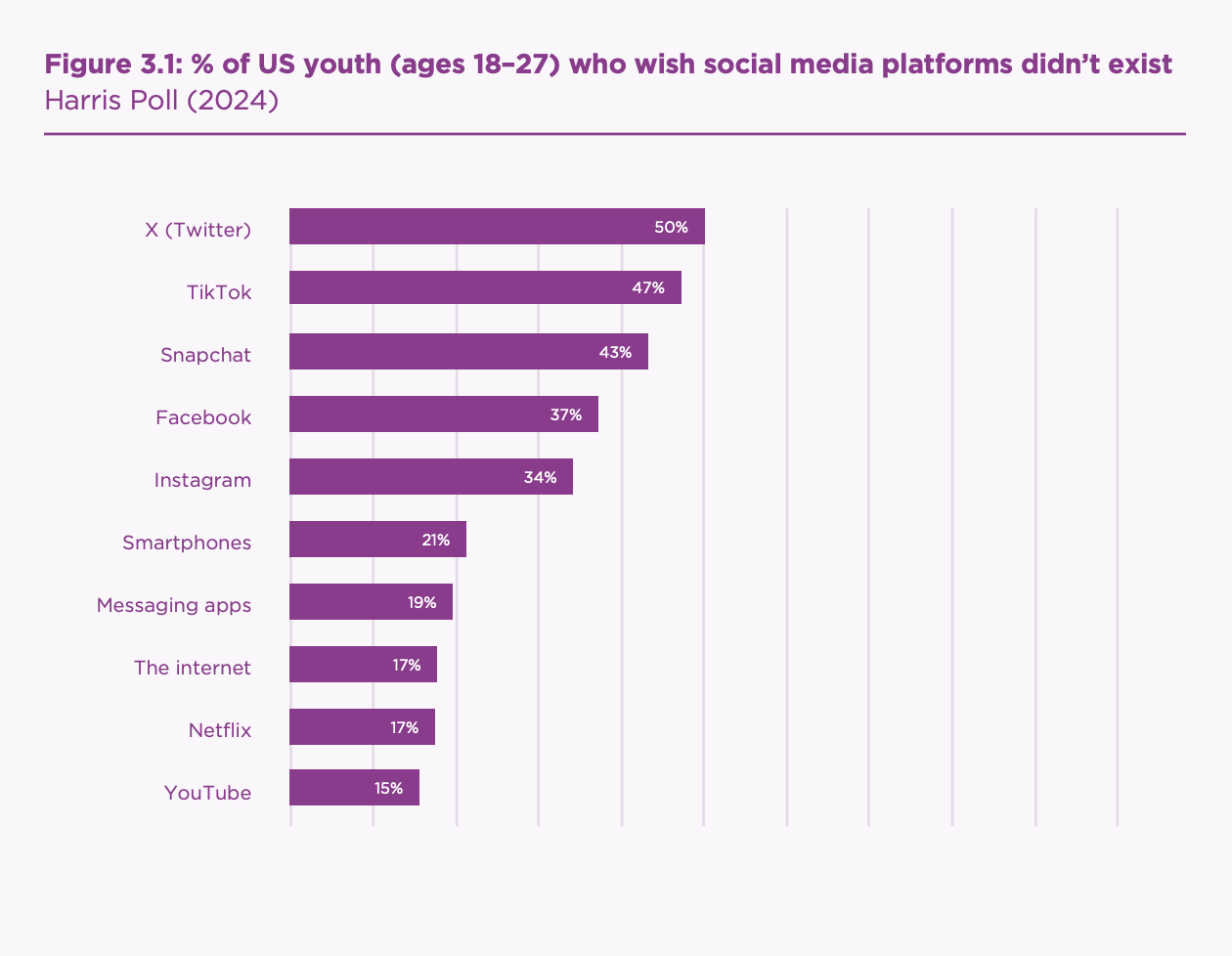
While we cannot be certain they generalize to teens, these results provide important context for interpreting both young adults’ and teens’ sentiments about social media. If many adults as young as 18 would prefer to live in a world without social media, but would also pay to keep using it so long as their peers did, then teens only a couple of years younger may be similar: their positive sentiments may reflect the practical necessity of using social media for things they would enjoy even more if they had greater opportunities to do them offline.
Even if this is false, it is important to distinguish questions of product safety from those of user experience. Presumably underage drinkers’ outlook on their own alcohol consumption is different from their parents’. It remains significant that many teachers, parents, and clinicians — those responsible for teens’ care and education — perceive social media to be harmful.
Line 4. Research and Testimony From Meta Employees
If the experimental research, natural-experimental research, and public testimonial evidence weren’t enough, the case that social media harms teens’ mental health can be made by appeal to internal research and documentation from the largest corporate purveyor of social media itself: Meta.
Recent litigation against the company has led to the exposure of dozens of internal assessments by researchers, executives, and other employees of the company that further reinforce the case for causation. We have organized and given in-depth summaries of 35 such assessments — all studies by Meta researchers — at MetasInternalResearch.org. These studies cover a wide range of questions, such as the frequency of negative experiences on Meta platforms and the role of social comparisons in the user experience, and employ a variety of methods, from surveys to longitudinal studies to literature reviews.
Meta even carried out its own experiment, a social media reduction study called Project Mercury. Carried out in late 2019, Project Mercury was an experimental deactivation study similar to those in the wider academic literature. Notably, however, Meta researchers claimed in internal documentation that the experiment had a design “of much higher quality” than was typical of existing studies. They also described the study as “one of our first causal approaches to understand the impact that Facebook has on people’s lives.”
Similar to the social media reduction experiments we review above, Project Mercury had a treatment group deactivate both Facebook and Instagram for one month, and a control group continue using the platforms as normal. One week after deactivation, Meta researchers measured a range of mental health-related variables, and found that those who deactivated Facebook “reported lower feelings of depression, anxiety, loneliness, and social comparison” relative to controls. Referring to Project Mercury, the researchers stated that “the Nielsen study does show causal impact on social comparison.” Effects on depression and anxiety were also consistent with those in the experimental literature. After seeing these results, Meta shut down the study after the first week.
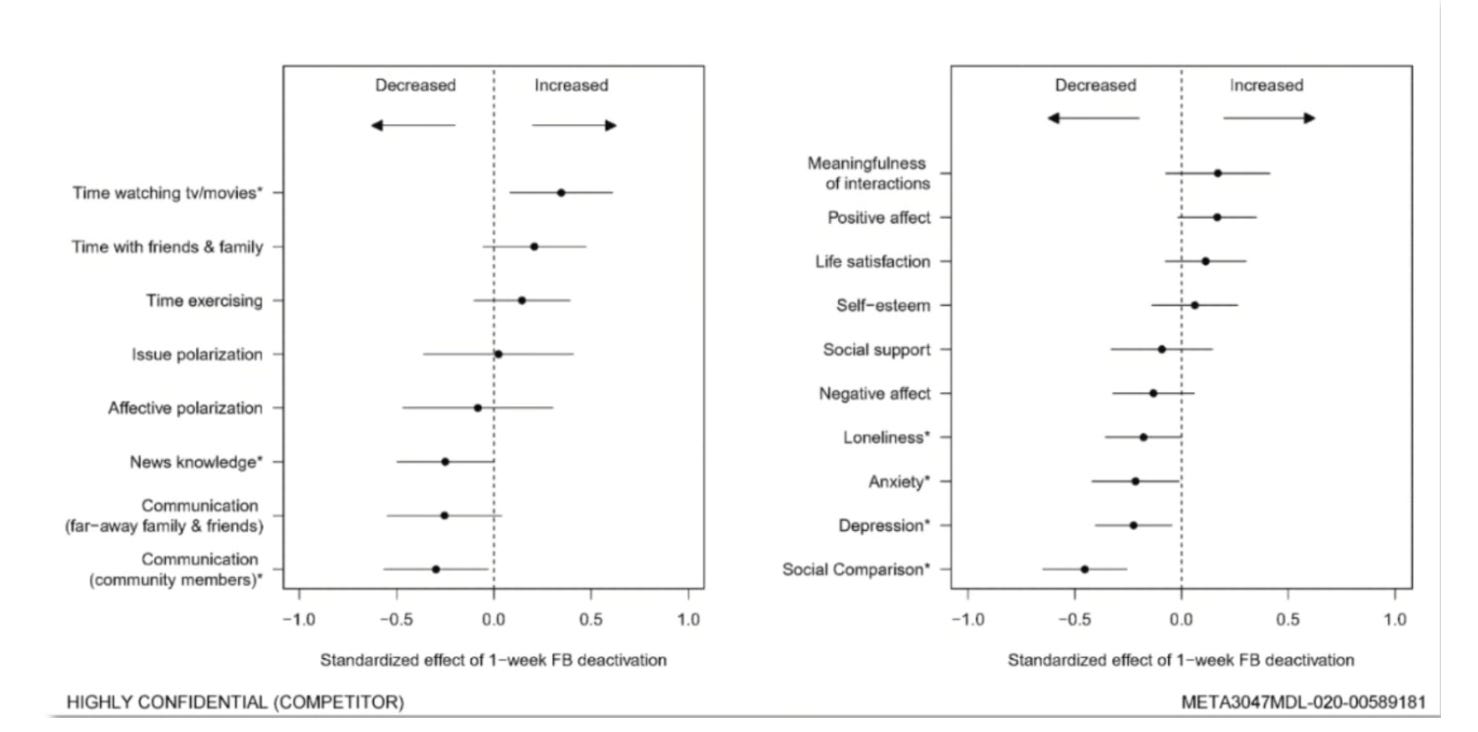
Meta employees also made numerous statements attesting to widespread belief within the company that its products were harmful to users’ mental health. Below is a sampling of such statements drawn from documents discovered in recent litigation against Meta by school districts.5 They support the contention that social media is a cause, not just a correlate, of harm to teens’ mental health. They also come from individuals uniquely well positioned to make that assessment, and who have few incentives to do so, suggesting their concern is sincere:
“Teens are hooked despite how it makes them feel. Instagram is addictive, and time-spend on platform is having a negative impact on mental health” — internal communications by Meta researchers (MDL 3047, p. 21).
“(1) teens feel addicted to IG and feel a pressure to be present, (2) like addicts, they feel that they are unable to stop themselves from being on IG, and (3) the tools we currently have aren’t effective at limiting their time on the ap[p]” — internal communications by Meta researchers (MDL 3047, pp. 21-22).
“... best research suggests that Facebook is net bad for well-being” — internal document (MDL 3047, p. 32).
“Users experience of downward spiral is exacerbated by our platform ... Aspects of Instagram exacerbate each other to create a perfect storm ... Mental health outcomes related to this can be severe [including] depression, body dysmorphia, [and] eating disorders” — internal document (MDL 3047, p. 33).
“... research suggests a causal link between Instagram use and appearance comparison and/or body image issues” — internal document (MDL 3047, p. 32).
“... it seems patently obvious that phone usage, selfie-culture, and photo-editing are contributing to anxiety, depression, and body dysmorphia ... we have to assume we are contributors / amplifiers” — internal communications (MDL 3047, p. 32).
“[social comparison is] a big problem that IG core mechanics make worse” — internal document (MDL 3047, p. 49).
“[use of filters to manipulate selfies exacerbated the] risk and maintenance of several mental health concerns, including body dissatisfaction, eating disorders, and body dysmorphic disorder” — internal literature review (MDL 3047, p. 51).
“[addictive use of Meta platforms] ... can lead to more downstream effects like self-injury or suicide” — internal document (MDL 3047, p. 32).
“Product features that are designed to exploit insecurity, or provide a dopamine rush (likes, notification, the pull-down-to-see, the infinite scroll, etc), to increase time spent, are inherently at odds with well-being and take away from people’s ability to consciously focus[] on activities that add value to their lives” — internal document (MDL 3047, p. 34).
Clearly, many Meta employees, including safety researchers, understood it to be the case that Meta products were causing harm to adolescent users. Those who dismiss the risks of social media or claim the evidence of harm is only correlational are at odds with what those best positioned to make a sober assessment of the technology say, in private, about its harms. Meta’s own researchers agree: social media causes harm to teens’ mental health.
Social Media Causes “Direct” Harms, Such as Displacement, Compulsive Use, Sexual Harassment, and Sextortion
In the past, social media’s relationship with mental health has often been our main focus. But it is important to acknowledge that social media causes other kinds of harm as well. While mental health is an “indirect” harm, in the sense that the causal path connecting social media to mental health is complex and affected by a wide range of variables, social media also has “direct” harms — those for which the causal relationship with social media is immediate and obvious.
The most basic harm that social media creates is opportunity cost. The average teen spends around five hours a day on the major social media platforms (with 87% accounted for by YouTube, TikTok, and Instagram). A quarter spend seven hours or more. The longer that children going through puberty spend swiping and watching short-form videos, the less time they spend sleeping, exercising, and hanging out with friends, all of which are widely understood to be critical for healthy social and emotional development, as well as for physical health.
Another basic harm is compulsive or problematic social media use, also sometimes termed “social media addiction.” Problematic use is generally defined as use that is disruptive of ordinary functioning and well-being, but that is difficult for the user to stop, although there is no single agreed-upon definition. Depending on the measure, prevalence rates for problematic social media use among adolescents range from as low as 4.5% to as high as 25%. For context, 4.5% of the global adolescent population is 58.5 million kids. Meta itself found that around 6% of Facebook users under 25 in the U.S. experienced “severe problematic use,” which its researchers defined as “experiencing a negative life outcome attributed to Facebook as well as lack of control” (see study 2.1 at MetasInternalResearch.org). Unsurprisingly, problematic users report lower well-being across a range of domains relative to nonproblematic users.
Outside of opportunity cost and problematic use, teen users also have to worry about sexual harassment, sextortion, cyberbullying, access to dangerous drugs, and exposure to harmful content, including posts promoting self-harm, eating disorders, and suicide.
Evidence of widespread sexual harassment on Meta platforms is particularly concerning. The company infamously found in an internal study from 2021 that 14% of Instagram users ages 13-15 received unwanted sexual advances in a single week (see study 1.1 at MetasInternalResearch.org). The company also knowingly put what internal documents called “IIC violators” — IIC standing for inappropriate interactions with children — in direct contact with millions of minors. At one point in 2023, the Instagram feature “Accounts You May Follow” recommended “‘nearly 2 million minors’” to “adult groomers” in the previous three months. Twenty-two percent of those recommendations, in turn, “‘resulted in a follow request’” (MDL 3047, p. 53). While Meta has since updated Instagram with new safety features, including “teen accounts,” an independent audit of these features completed from March through July 2025 found that 64% “were either no longer available or ineffective” (p. 9).
Snapchat has also been responsible for facilitating an enormous amount of harm affecting young people. Given how photos sent over the platform disappear, the app is an ideal venue for illicit activities, including selling drugs and soliciting nude photos from minors. In late 2022, Snap employees discussed receiving 10,000 reports of sextortion from their users each month. Over this very same period (late 2022 to early 2023), the FBI observed “at least a 20% increase in reporting of financially motivated sextortion incidents involving minor victims compared to the same time period the previous year.” It also identified 20 suicides between 2021 and 2023 related to the sextortion of minors (out of the 13,000 cases reported to the FBI). A complaint filed by Attorney General Raúl Torrez of New Mexico in 2024 referred to Snap as a “primary platform used by criminals to carry out sextortion.” If this weren’t bad enough, Snapchat is also being sued for its role in over 60 overdoses connected to fentanyl-laced pills allegedly sold on its platform, many of which were lethal.
This is just a small slice of the direct harms attributable to social media, and just a small slice of what we know about at that. Social media companies are sitting on vast troves of data that they refuse to allow researchers to access, data that would almost certainly reveal a much greater depth of harm than what we can discern from the outside. Even if everything we knew about social media’s “indirect” harms to mental health were incorrect, the information on direct harms in public circulation is more than sufficient to deem the technology unsafe for teens. Millions of children and adolescents a year suffer from these harms in the United States alone.
Social Media, Especially Short-Form Video, Poses Risks to Cognitive Functioning
We have long had serious concerns about the effects of social media use on cognition. Both longitudinal and cross-sectional studies have consistently turned up negative associations between social media use and various measures of academic and cognitive performance.
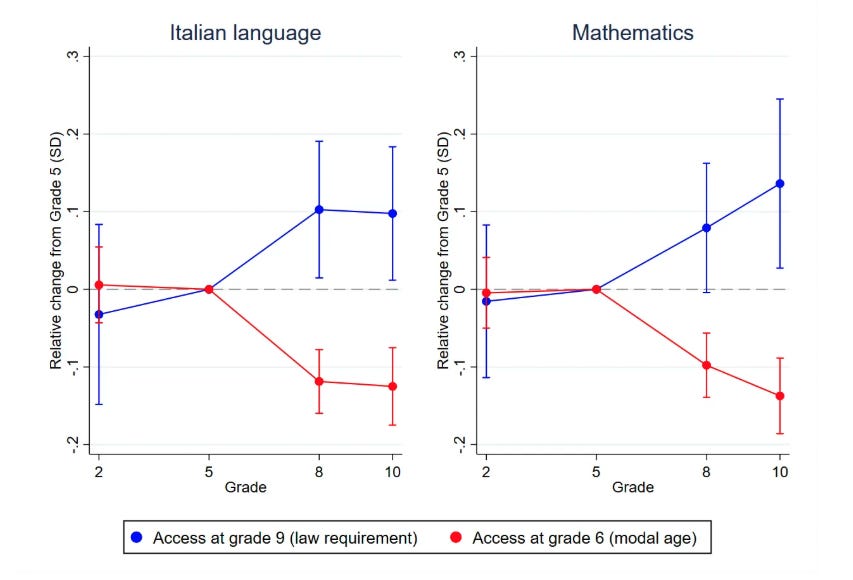
Recently, even stronger evidence has emerged showing that these are more than just associations: a new quasi-experimental study of 5,200 Italian students by Gui et al. (2026) found that those who started using social media earlier (in sixth grade versus ninth) saw their academic trajectories diverge from those who started later, with the early group performing worse in math and Italian (their native language), despite being on similar trajectories to the later group through fifth grade. You can see this divergence begin after fifth grade in the figure below.
This study is about social media use in general. But what we are most concerned about as of late is short-form video. Short-form video rose to prominence via the now ultra-popular TikTok, which launched in China as Douyin in 2016 and then internationally in 2017. It grew quickly, becoming a global sensation during the COVID-19 lockdowns of 2020. Instagram copied TikTok with Reels in 2020, and YouTube joined in with Shorts in 2021. Consuming short-form video is now among the most common uses of social media.
Since it typically takes years from the time a trend starts for academic research to catch up, much of the social media debate so far has been conducted around the effects of older, slower platforms, such as Facebook and Instagram. But finally, over the past couple of years, some research into short-form video has begun to emerge. What it has found is not encouraging.
To date, we have identified eight meta-analyses and review papers linking short-form video to cognitive functioning, mental health, and well-being (all covering, though not necessarily limited to, adolescents).6 All eight found that short-form video consumption was associated with a range of negative outcomes.
With respect to cognitive functioning, these studies found that increased time spent watching short-form video was linked to poorer cognitive performance overall, poorer attention, weaker executive functioning or inhibitory control (that is, our ability to resist distraction and impulses), reduced working memory, increased compulsive behavior, heightened risk of problematic use patterns, and greater emotional dysregulation. The size of these associations is also substantial: Nguyen et al. (2025), the largest meta-analysis we are aware of, found pooled (negative) effects of short-form video use on cognitive outcomes between r = 0.30 and 0.40.
The same meta-analyses also found significant pooled effects of short-form video use on mental health outcomes, effects approximately twice as large as those from general social media use. While associations between general social media use and measures of depression and anxiety tend to fall within the range of r = 0.10 to 0.15, the associations found for short-form video use and depression and anxiety fall between r = 0.20 and 0.30.
Several experimental studies of short-form video use have also emerged over the past couple of years. We have so far identified 11 randomized and quasi-experimental studies on the impact of short-form video on cognitive functioning. All but one found a negative effect.7
In particular, these studies found that consuming short-form video reduced participants’ ability to recall a planned action (prospective memory); weakened the brain’s ability to prepare for an upcoming task or challenge (anticipatory cognitive control); made participants less likely to recall what they had just learned from the short-form videos themselves; made them less likely to remember details of what they had just read or watched if they’d watched short-form videos beforehand; reduced their ability to temporarily hold and manipulate information in real time (working memory); and made it more difficult for them to sustain attention.
If anything, though, these experiments risk understating short-form videos’ risks. They only ask participants to watch short-form videos for a limited time — roughly five to 30 minutes. But in reality teens are consuming short-form video on TikTok alone for an average of 1.5 hours daily and have been doing so for years.
The prospect that the reality of mass short-form video consumption is even worse than experimental research would have us believe is especially concerning in light of recent Programme for International Student Assessment (PISA) data on educational performance around the world. Across science, reading, and math, scores began to decline after 2012, well before pandemic-era school closures. Declines in reading and math accelerated between 2018 and 2022, with the change in these years widely attributed to school closures. Yet, astonishingly, when schools were reopened, these declines didn’t slow. If anything, they sped up.
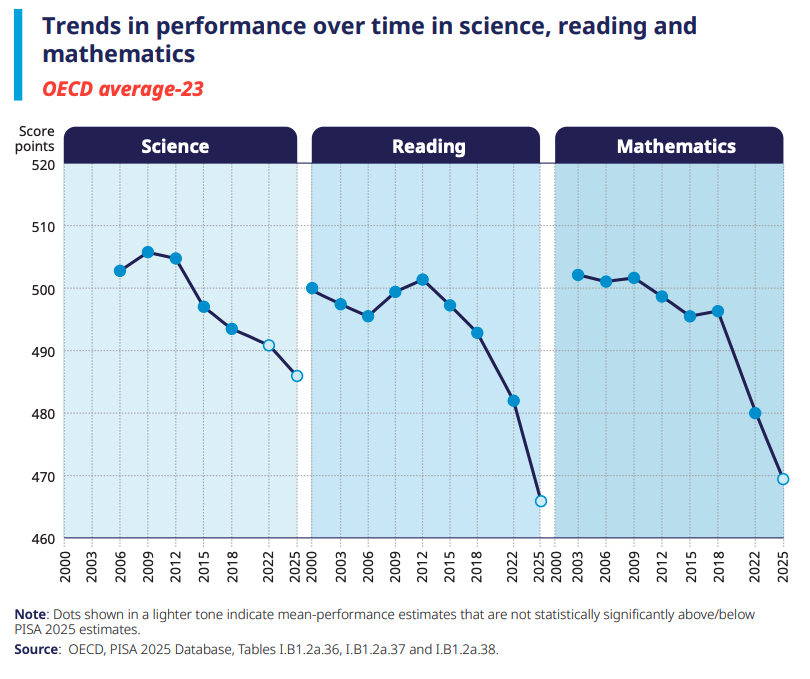
In reading, the decline in scores between 2022 and 2025 was the largest on record. As detailed in PISA’s 2025 report, it was also concentrated in “tasks that [use] longer text as stimuli.” “The share of hasty readers,” continue the report’s authors, “— students who rush through texts and give quick but incorrect answers — almost doubled between 2018 and 2025” (p. 25, our italics). They later suggest that these data “could be related to students’ capacity or willingness to sustain focused engagement with demanding reading tasks” (p. 96).
While we cannot be certain these changes were driven by the rise of social media or short-form video, Andreas Schleicher, director for education and skills at the Organization for Economic Cooperation and Development (OECD), hypothesizes that “skimming social media feeds and rapidly processing information may be contributing to worsening ability and motivation to engage with complex texts and data” (p. 14).
There is now a growing literature of correlational and experimental research to support this contention. Though research in this area is nascent, the evidence we already have on the relationship between short-form video and cognition is cause for serious concern.
Conclusion
There is now strong, varied, and abundant evidence that social media is not safe for children or teens. That evidence ranges from cross-sectional, longitudinal, experimental, and quasi-experimental studies to testimony from parents, teachers, clinicians, teens themselves, and even Meta employees. It also encompasses a wide range of harms, including greater risk of depression and anxiety, dysfunction-inducing compulsive use, sexual harassment and sextortion, and multiple kinds of cognitive impairment.
The evidence that we have reviewed implies that social media causes these harms, not just that it is correlated with them. It also implies that these harms affect a large share of the adolescent population. This is not just another groundless moral panic, as some critics have asserted. There is ample evidence of large-scale and often severe harm. Those who continue to say that there is no evidence that social media harms mental health have an obligation to explain why the evidence we have presented here does not count as evidence.
While some researchers claim to find evidence of reverse causality — that cross-sectional associations are the result of mental illness leading to greater social media use, rather than the other way around — we have encountered very little evidence this is the case. What evidence we have encountered makes questionable methodological choices, such as measuring only healthier forms of digital communication or blending together distinct measures, outcomes, and age groups.
One meta-analysis, Lemahieu et al. (2025), found no significant overall effect of social media abstinence on positive affect, negative affect, or life satisfaction. But there are systematic differences between this study and the meta-analyses above. Lemahieu et al. only reviewed 10 studies, eight of which employed interventions of one week or less. In contrast, of the 32 studies reviewed in Burnell et al., only 17 studies employed interventions of one week or less, and the remaining 15 employed interventions of two weeks or more. For those reliant on — or even addicted to — social media platforms, getting off can be difficult. It is natural to expect few, or even negative, changes in mood within the first week of detox. That may explain why Lemahieu et al. found no significant effects, while Burnell et al. found larger positive effects.
Another meta-analysis, Ferguson (2025), claims to show that the evidence of harm to mental health stemming from social media is “statistically no different than zero” (p. 201). But, as we document in Rausch and Haidt (in press), this study has severe methodological flaws, including blending heterogeneous studies and outcome variables, and omitting results specific to depression and anxiety.
Instrumental variable designs address the problem of how to assess the causal outcomes of a given treatment, when it cannot be or has not been randomly assigned. One solution is to find an “instrumental variable” that is strongly correlated with the relevant treatment, and that only affects the relevant outcome through that treatment. This variable, sometimes just called an “instrument,” can then be treated as a proxy for the treatment that is not subject to the same confounders. In an influential example, the economist Joshua Angrist used the Vietnam draft lottery as an instrument, or proxy, for military service in order to assess how service affects future earnings (without using the lottery as an instrument, the relationship between service and earnings would be confounded, since many variables influence both the choice to serve and future earnings).
The one exception is Johnson and Persico (2024), which found that, between 2000 and 2008, greater access to high-speed internet in the United States was associated with fewer suicides, as well as improvements in self-reported physical and mental health. The period under study, however, precedes the widespread use of social media, and the authors themselves interpret their results as stemming from improved economic conditions associated with the arrival of broadband access.
They are drawn from school districts’ omnibus opposition to a motion for summary judgment filed by platform companies in In re Social Media Adolescent Addiction/Personal Injury Products Liability Litigation, MDL No. 3047, N.D. Cal. — hereafter, “MDL 3047.”
These eight studies are: Arouch et al. (2025); Conte et al. (2025); Ebster et al. (2026); Galanis et al. (2025); Jain et al. (2025); Mona et al. (2026); Nguyen et al. (2025); Tang et al. (2026).
These 11 studies are: Barton & Smyth (2025); Chen et al. (2022); Chiossi et al. (2023); Cole et al. (2025); Li et al. (2025); Lin et al. (2024); Luo et al. (2025); Siy et al. (2026); Wei et al. (2026a); Wei et al. (2026b); Zhai et al. (2026). The study that found no negative effects is Lin et al. (2024).
This is excellent. Thank you for the data. Now, if only people in power would sit up and notice instead of blaming teachers for all of the ills in this generation of students who are going to grow up to be voting citizens.
This piece (similar to previous ones) treats teen distress as mostly about themselves (i.e., how they look, how they compare, what's done to them). But that misses a huge part of what smartphones deliver, which is a constant, intimate view of highly distressing real-world dysfunction. Teens are watching climate catastrophes unfold, democratic backsliding around the world, unfathomable numbers of children killed in Gaza and elsewhere, children and teens killed by gun violence in their own country ... (I could go on). Why would we think they aren't affected by this?
In the Monitoring the Future data, the amount of time teens spent thinking about "social problems of the nation and world" rose substantially around 2012, particularly among liberal teen girls (the same group with the largest rise in depression). Hopelessness about the world and pessimism about the world's future also rose around the same time. And in climate surveys, a large proportion of young people are highly distressed by climate change, and many say the world is doomed.
I think it's important to consider that smartphones gave teens an intimate look at societal dysfunction, and their distress is likely an accurate and reasonable response to that dysfunction. Further, confiscating phones may help by partly blinding them to our modern societal ills, but it does nothing to address the fact that their distress is likely a direct reflection of the hypercompetitive, image-obsessed, threat-saturated, deeply dysfunctional society we live in.