


Intro from Jon Haidt and Catherine Price:
For years, parents have asked us both for a book they could give to their kids to help them understand how tech affects their brains and lives.
So we teamed up, and we wrote it: The Amazing Generation: Your Guide to Fun and Freedom in a Screen-Filled World.We’re so excited to get it into kids’ hands.
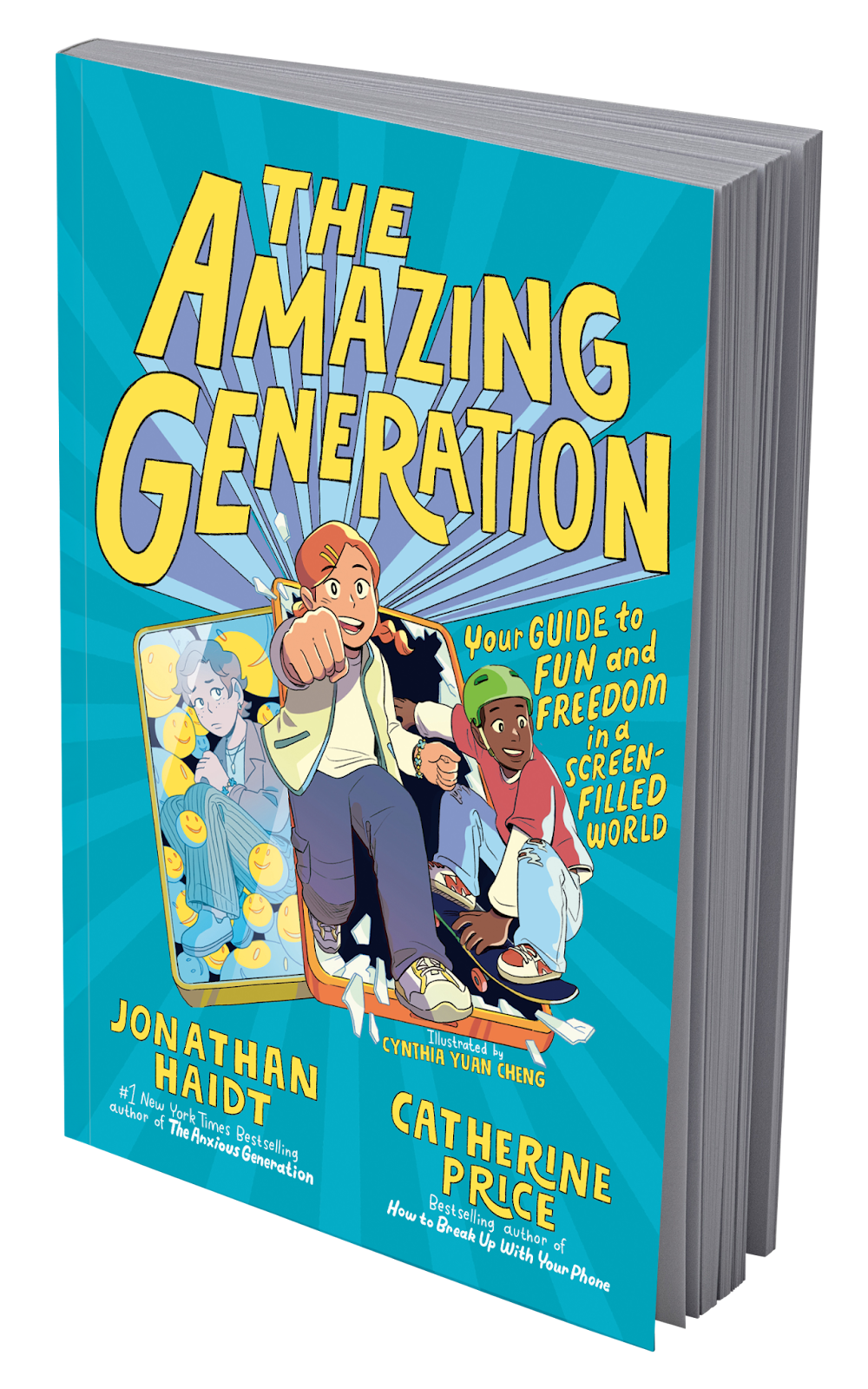
Aimed at 9–12 year-olds — and relevant whether or not they already have smartphones or social media accounts — The Amazing Generation is a companion to The Anxious Generation, and is perfect for families to read together or for kids to read on their own.
Our goal was to inspire kids to embrace the Four Norms from The Anxious Generation for themselves.
The Four Norms:
No smartphones until at least 14
No social media until at least 16
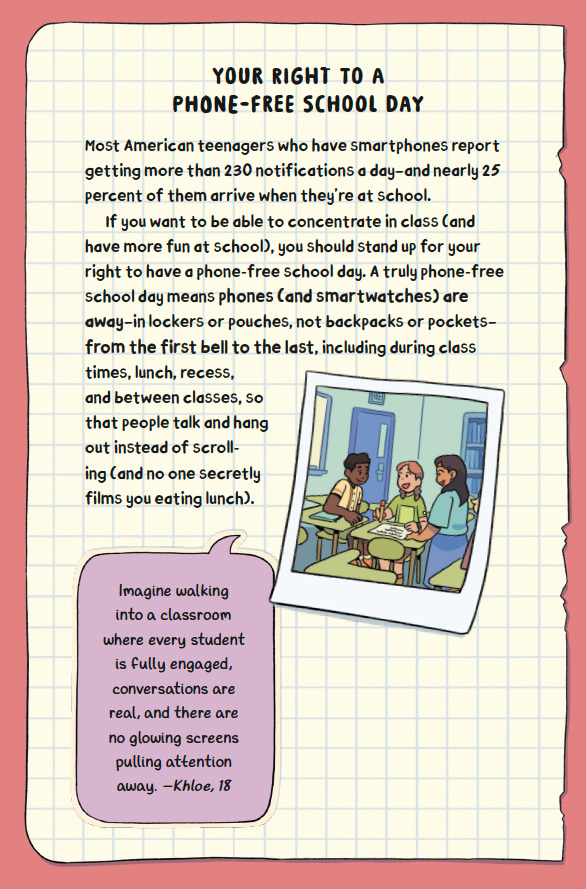
Phone-free schools from bell to bell
More responsibility, freedom, and free play in the real world
The book provides readers with a choice: they can follow the crowd and spend their teen years scrolling, or they can join the growing rebellion of young people who are deciding to limit their own exposure to addictive devices and algorithms and put their energy toward having experiences and relationships in the real world.
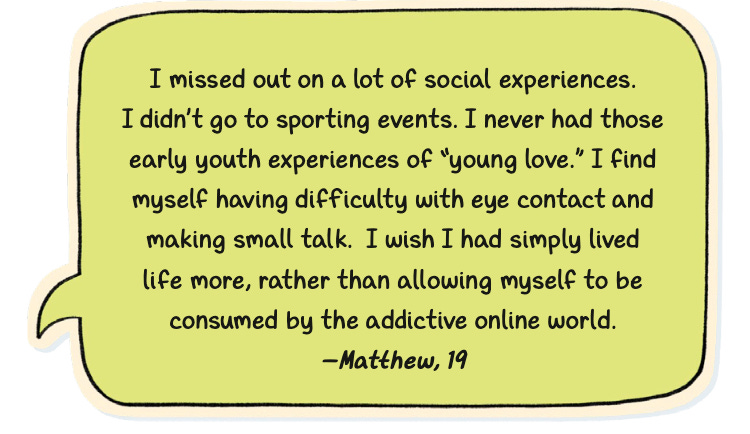
The book is fun to read. It’s packed with surprising facts, interactive challenges, secrets tech leaders don’t want kids to know — and includes a graphic novel by Cynthia Yuan Cheng. It’s also full of real-life stories from young adults who regret using smartphones and social media too early and want to help the next generation make better choices.
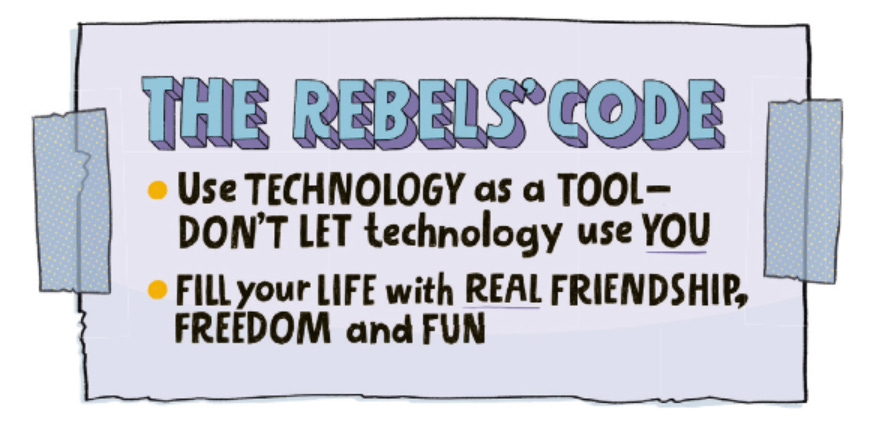
But, ultimately, the book isn’t just about what not to do. It’s a guide to living a fun and fulfilling life. At its heart is what we call The Rebels’ Code:
Our hope is that parents and educators can use the book to spark meaningful, productive conversations about tech with their kids and students, and that young readers will finish the book feeling inspired to become rebels themselves. In other words, it’s a tool for collective action by kids, families, schools, and even whole towns. We hope that you’ll share it with your own communities and family members.
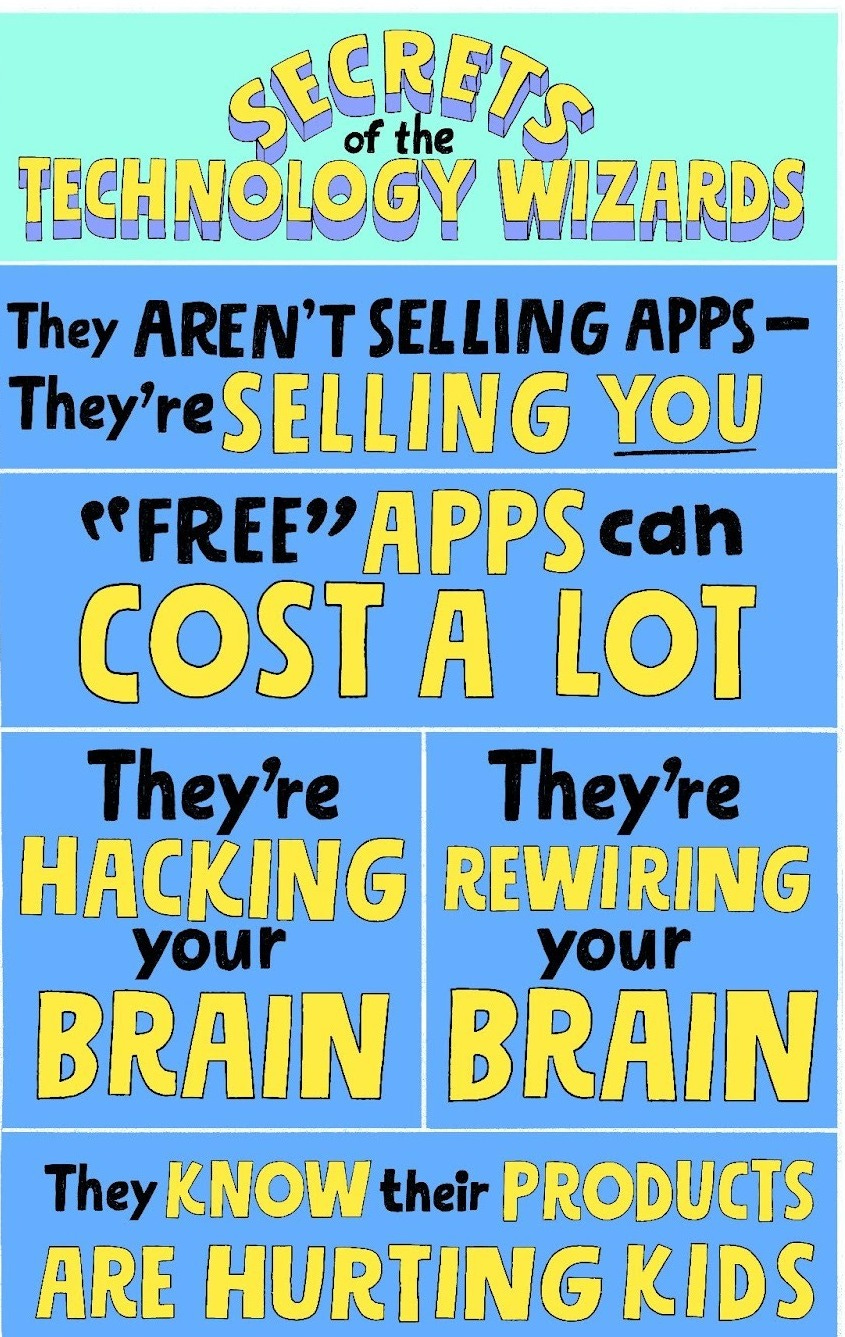
The book comes out Dec. 30, but we’re thrilled to share a sneak preview with you. It’s from a section called “Secrets of the Tech Wizards.”
Here’s to helping the next generation become amazing.
—Jonathan Haidt, author of The Anxious Generation, and Catherine Price, author of How to Break Up With Your Phone
A Preview of The Amazing Generation
Excerpt from The Amazing Generation: “Secrets of the Tech Wizards”
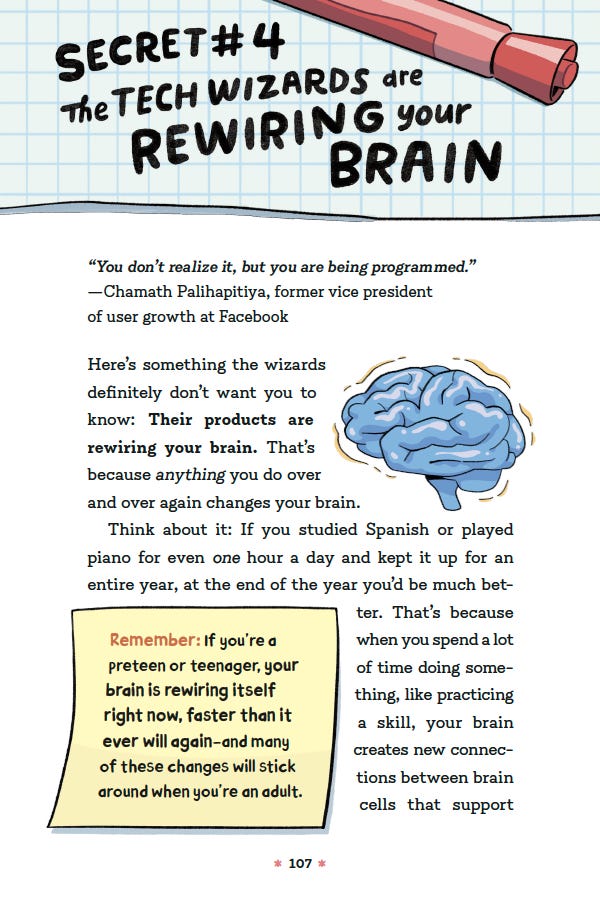
![[continued] … the skill and adds a coating that makes those connections stronger and faster. It’s a lot like what happens when you go sledding. The first run down the hill is slow because the snow is fresh and there is no path yet. But after a few runs, the snow gets packed down, the path gets smoother, and you start flying down the hill. In other words, your daily habits change your brain. That’s why rebels regularly ask themselves: Are my daily habits wiring my brain in ways that help me? Or are they helping the tech wizards? If a habit is helping the tech wizards, then rebels replace it with a habit that helps them instead.](https://substackcdn.com/image/fetch/$s_!6b77!,f_auto,q_auto:good,fl_progressive:steep/https%3A%2F%2Fsubstack-post-media.s3.amazonaws.com%2Fpublic%2Fimages%2F511212f2-cf8b-490c-9c25-9cdae9c61b14_570x877.png "[continued] … the skill and adds a coating that makes those connections stronger and faster. It’s a lot like what happens when you go sledding. The first run down the hill is slow because the snow is fresh and there is no path yet. But after a few runs, the snow gets packed down, the path gets smoother, and you start flying down the hill. In other words, your daily habits change your brain. That’s why rebels regularly ask themselves: Are my daily habits wiring my brain in ways that help me? Or are they helping the tech wizards? If a habit is helping the tech wizards, then rebels replace it with a habit that helps them instead.")
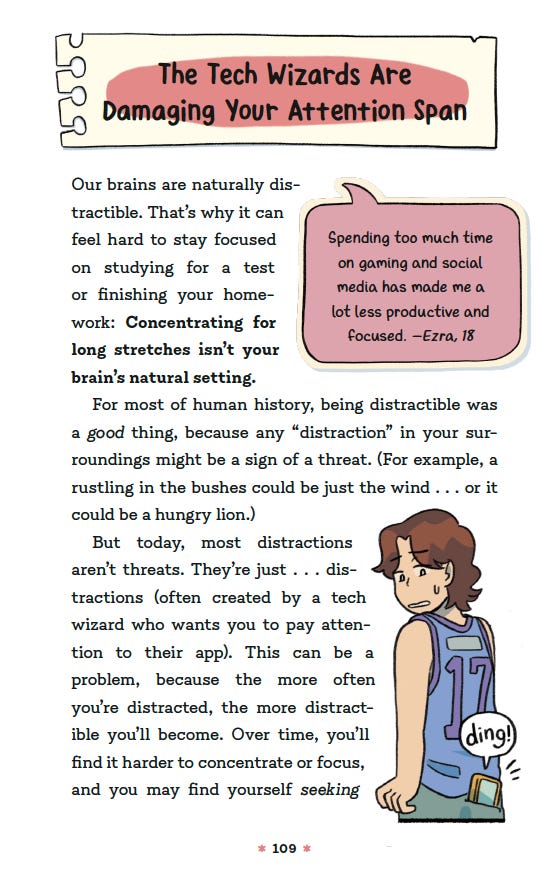
![[continued] … A distraction anytime things even the tiniest bit boring or hard. If you’ve ever spent a lot of time consuming short, fast-moving content—like TikTok, Snapchat Spotlight videos, Instagram Reels, or YouTube Shorts—then you’ve probably felt this happening: As soon as the video you’re watching feels even the tiniest bit boring or slow, you feel an urge to swipe or scroll to something new. If you spent a lot of time consuming this type of content, you’ll eventually find it harder to pay attention to conversations with friends and family (let alone finish your homework), since real people (and math!) are usually not as fast moving and entertaining as a TikTok feed.](https://substackcdn.com/image/fetch/$s_!dBRI!,f_auto,q_auto:good,fl_progressive:steep/https%3A%2F%2Fsubstack-post-media.s3.amazonaws.com%2Fpublic%2Fimages%2F9338043b-1c9c-4d06-945c-b5ceee01c444_577x881.png "[continued] … A distraction anytime things even the tiniest bit boring or hard. If you’ve ever spent a lot of time consuming short, fast-moving content—like TikTok, Snapchat Spotlight videos, Instagram Reels, or YouTube Shorts—then you’ve probably felt this happening: As soon as the video you’re watching feels even the tiniest bit boring or slow, you feel an urge to swipe or scroll to something new. If you spent a lot of time consuming this type of content, you’ll eventually find it harder to pay attention to conversations with friends and family (let alone finish your homework), since real people (and math!) are usually not as fast moving and entertaining as a TikTok feed.")

What Kids Are Saying
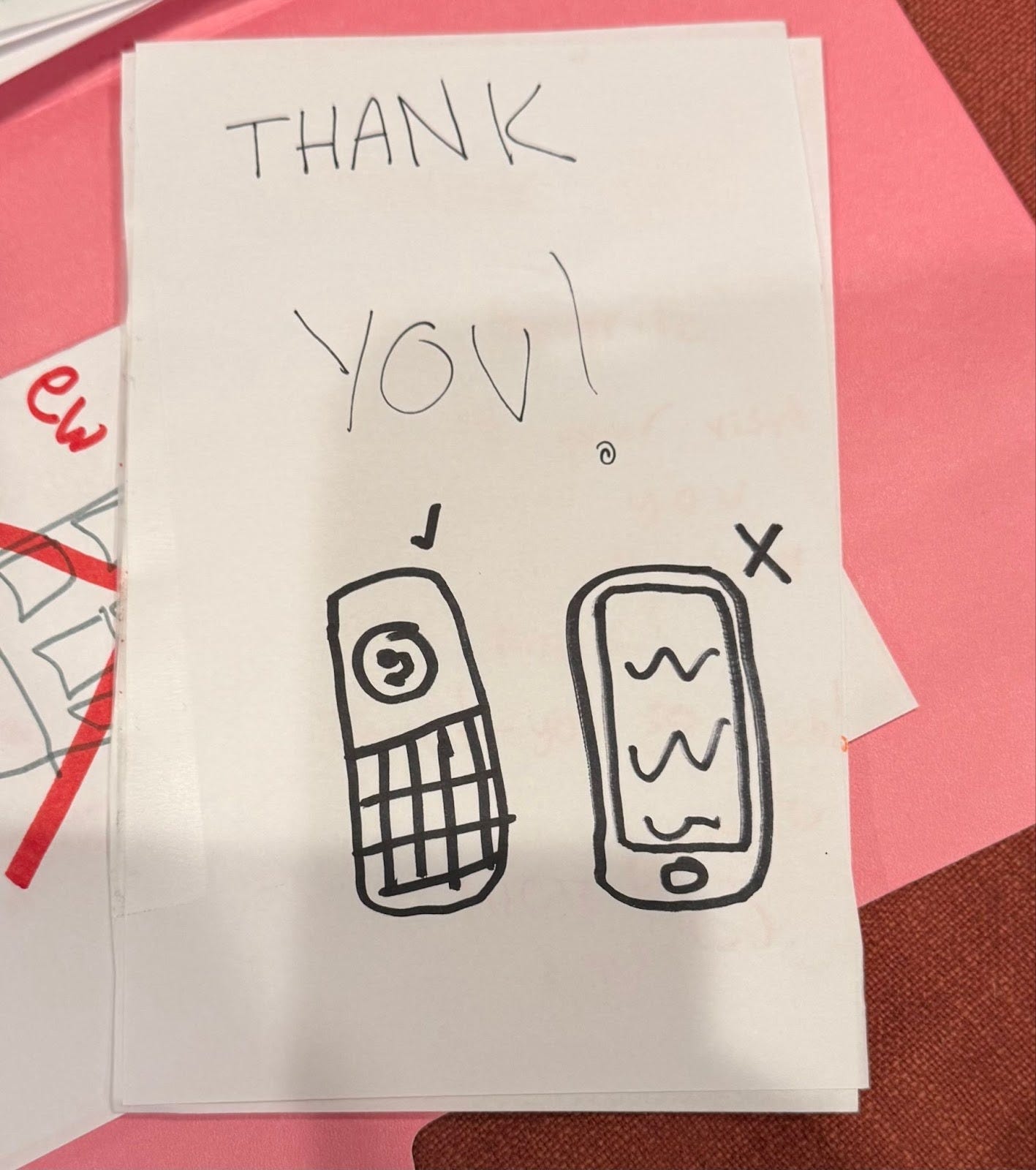
Below are several thank-you notes we’ve received from real kids who have heard us talk about the book (all shared with their permission).
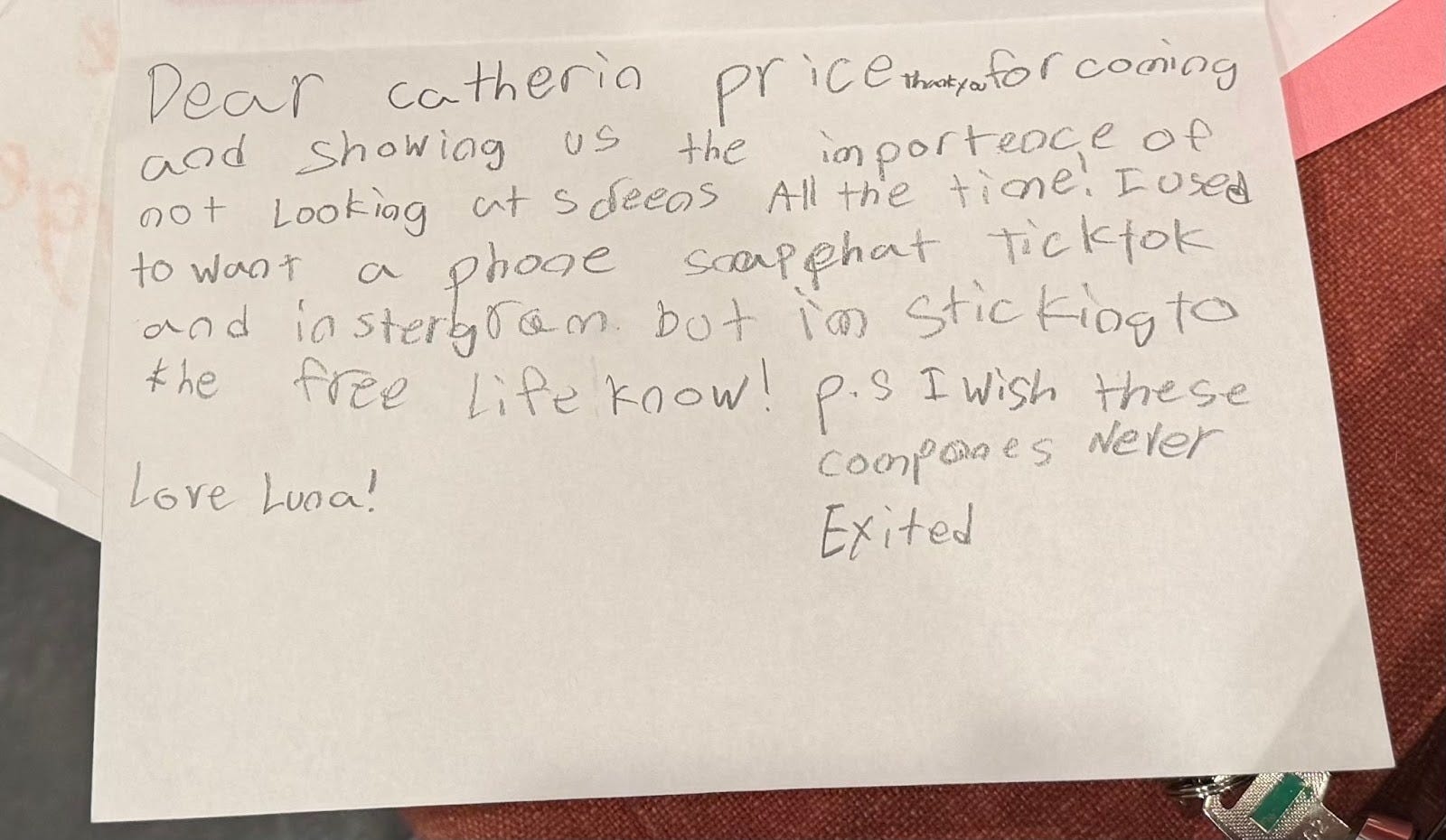
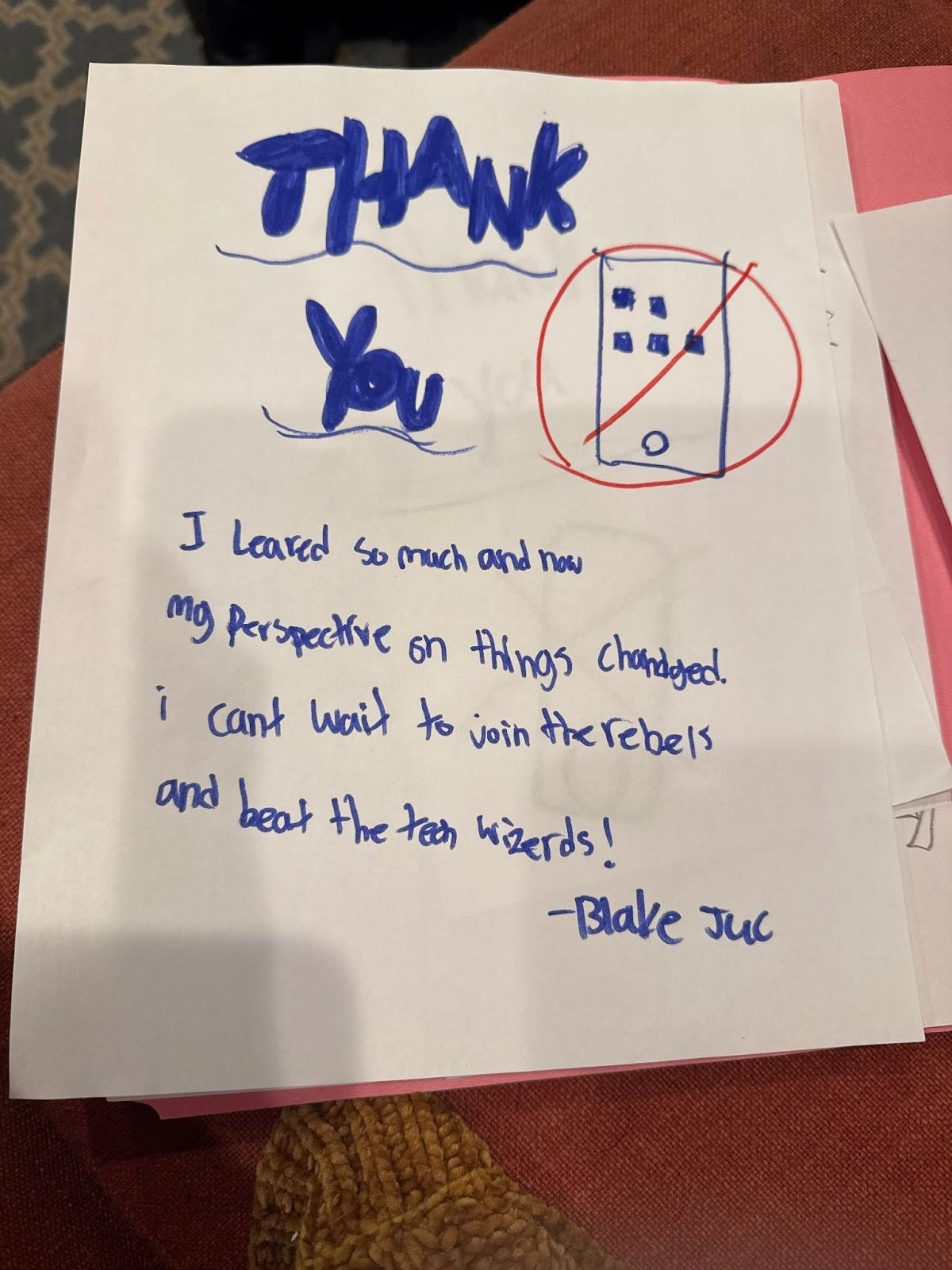

Love it : ). I also see the a headline in the Free Press this morning asks “Is Social Media the New Big Tobacco?” Wonderful developments.
THANK YOU! We are definitely REBELS and thrilled to know we aren't alone.
As a parent who has opted out of technology for my 11 & 12 y.o I still want to get this book for my kids to read so they hear it from someone else. :)