

Introduction from Zach Rausch and Jon Haidt:
Today, we are sharing an important essay from Brooke Istook, President of the Heat Initiative, whose two recent reports, “The Hidden Dangers of Snapchat for Kids: Experiences of Snapchat Users Ages 10–17,”created in collaboration with Design It For Us, ParentsTogether Action, and The Anxious Generation Movement, and “‘Everybody Got Demons, I Use Drugs to Quiet Mine’: One Week on Snapchat as a Seventh Grader,” conducted with ParentsTogether Action, examine the risks Snapchat can pose to children and adolescents.
We think this piece is essential reading for parents weighing the trade-offs of allowing their children to use the app. As we have documented previously on this Substack, Snapchat has been linked to a wide range of harms affecting minors, and this new report adds important details to that picture.
One note: Shortly after “The Hidden Dangers of Snapchat” report was published on June 4, 2026, Snapchat announced new changes to teen accounts. They also publicly responded to the second of the two reports covered here, in which the researchers created and tested two 13-year-old simulation accounts. Snapchat’s changes and response are worth considering, but they do not diminish the broader questions these reports raise about the platform’s risks for young users.
– Zach and Jon
What Does a 13-Year-Old See on Snapchat in a Normal Week?
By Brooke Istook
I was standing poolside at my son’s end‑of‑year swim party recently when the conversation inevitably turned to social media. My friend’s son, who’s in middle school, had been begging for Snapchat, and she’d just given in. All of his friends are on it. It’s how they communicate and make plans, and he felt left out. She’d held firm for a long time but he was relentless, and she didn’t want him to feel isolated. He promised to use it only to communicate with his friends. Had she made the wrong decision? Were the risks real or overstated?
It’s extraordinarily difficult for families to know how to protect their kids in today’s tech landscape. Design choices made by trillion‑dollar companies expose kids to wide-ranging risks. The companies’ leaders are aware that their products harm children, and they bury the evidence. Meanwhile, the available parental controls are time-consuming to figure out, confusing to navigate, and often easy for kids to circumvent.
Snapchat is no exception and its features pose significant risks, from exposure to violent or sexual content to grooming to sextortion. With nearly one‑third of American 9- to 12‑year‑olds and more than half of 13‑ to 17‑year‑olds using Snapchat daily, it’s essential for parents — and for the people designing technical, legal, and cultural solutions — to understand what kids actually experience on the platform. While adults often know their own concerns, they don’t always understand what kids experience online, in part because their own online experience is so different.
My team at the Heat Initiative partnered with The Anxious Generation Movement, Design It For Us, and ParentsTogether Action to survey young people about their experiences on Snapchat and to test what a typical 13-year-old user encounters on the app. We found that kids are exposed to unsafe experiences, including unwanted contact and explicit and disturbing content, at an alarming rate. Exposure is often driven by the platform’s algorithmic recommendations, and average adolescents using the app as intended frequently encounter harmful content or messages without seeking them out, underlining the need for safer design of core platform features.
Snapchat 101
Before we dive into the results of the study, here’s a quick primer: Snapchat is a social media app where users can send disappearing photos, short videos, and messages directly to other users, or “Friends.” The app centers on one‑to‑one or small‑group communication, often happening many times a day. “Disappearing” is the key differentiator here: most messages and pictures disappear after the recipient views them, which can make the app feel more private, casual, and spontaneous for young users, while also introducing unique risks.
Snapchat also includes public features like Stories, Spotlight videos, Discover videos and Maps. These can expose kids to content and contact beyond their close friends. Similar to Instagram and TikTok, Snapchat’s Stories, Spotlight, and Discover features are driven by engagement-based algorithms, and the app serves content that the user is likely to engage with (not just content the user searches for directly). This can skew recommendations towards increasingly shocking or emotionally driven content to capture users’ attention and keep them on the app longer.
How Often Do Young Users Have Unsafe Experiences on Snap?
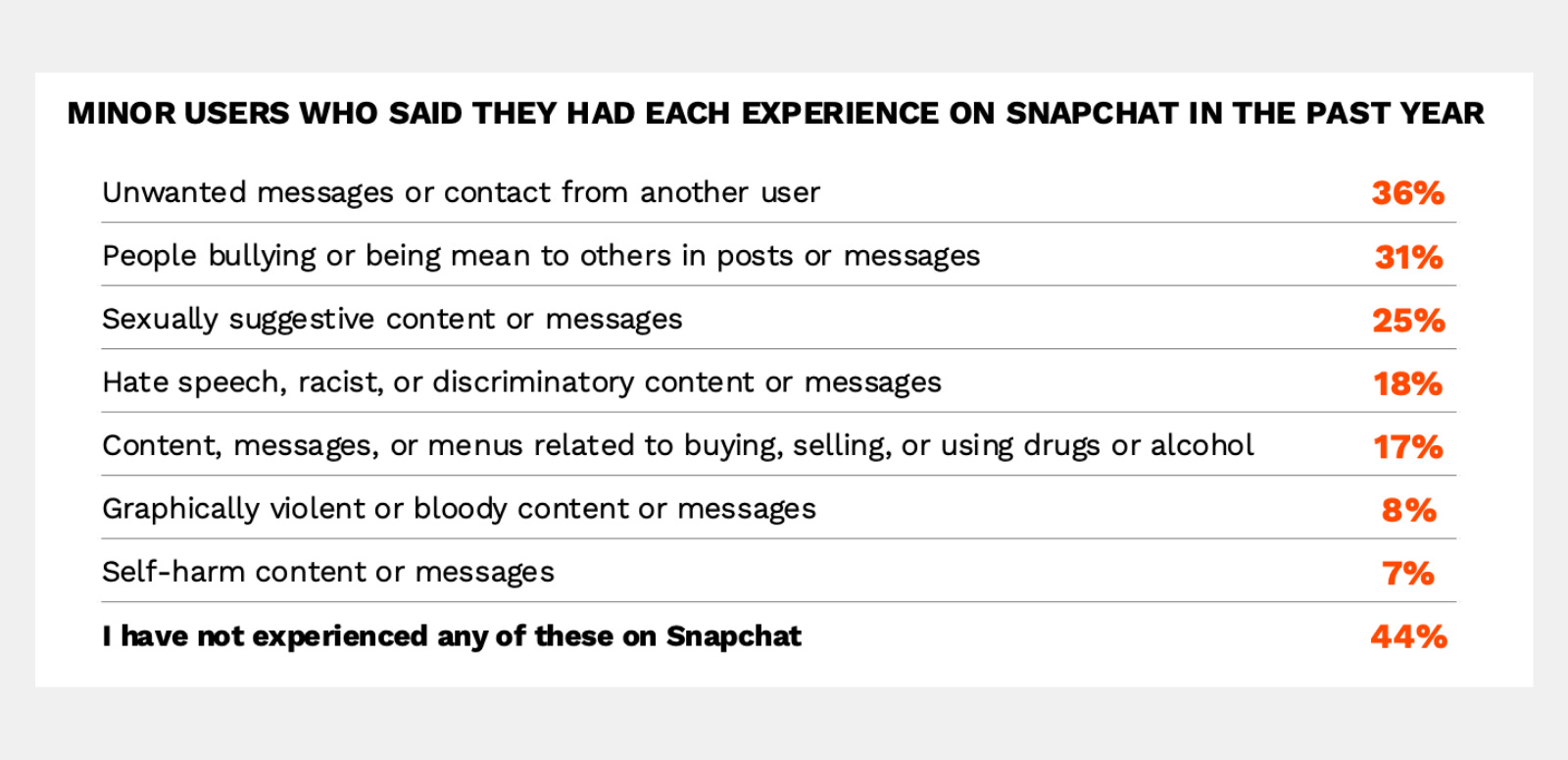
In December 2025, we surveyed 1,000 adolescents ages 10–17 from across the United States to ask whether they had encountered seven different types of unsafe experiences on Snapchat in the past year, and where in Snapchat they had these experiences. These included graphic violence; content about self‑harm, drugs, or alcohol; sexually suggestive material; hate or discriminatory speech; bullying; and unwanted contact from other users.
The most common problem reported by teens was unwanted contact from other users (36%). Many kids also reported seeing bullying or mean behavior in posts or messages (31%), as well as sexually suggestive content (25%). While fewer users said they encountered graphic violence or content related to self‑harm, those experiences still happened often enough to raise concerns — and they occurred far more frequently than most parents would expect on an app used for everyday communication.
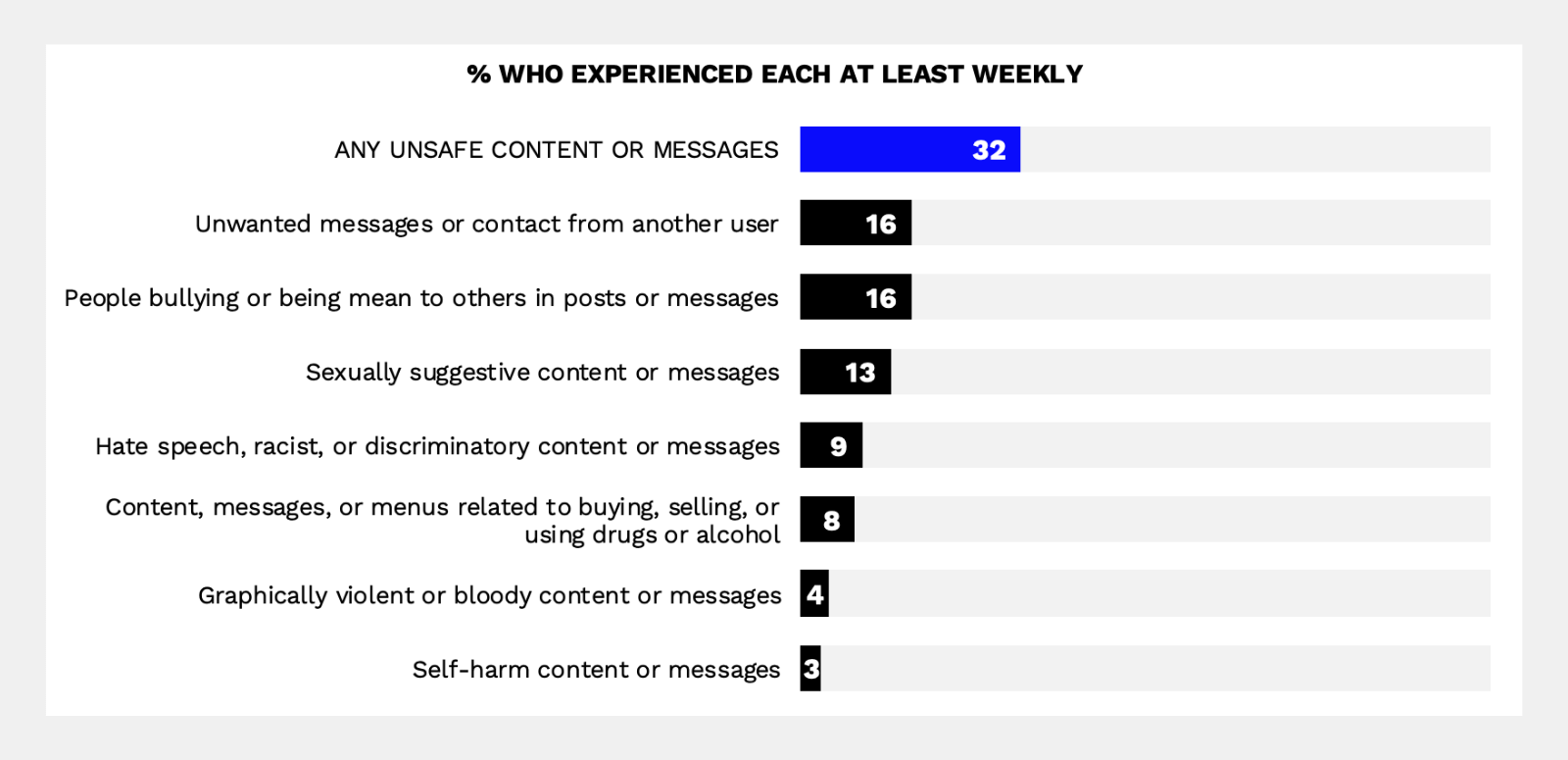
Unfortunately, these weren’t isolated instances. Across all of the experiences we asked about, one in three young people reported encountering unsafe content or messages weekly or more, including approximately one in eight kids who encountered sexually suggestive content at least weekly.
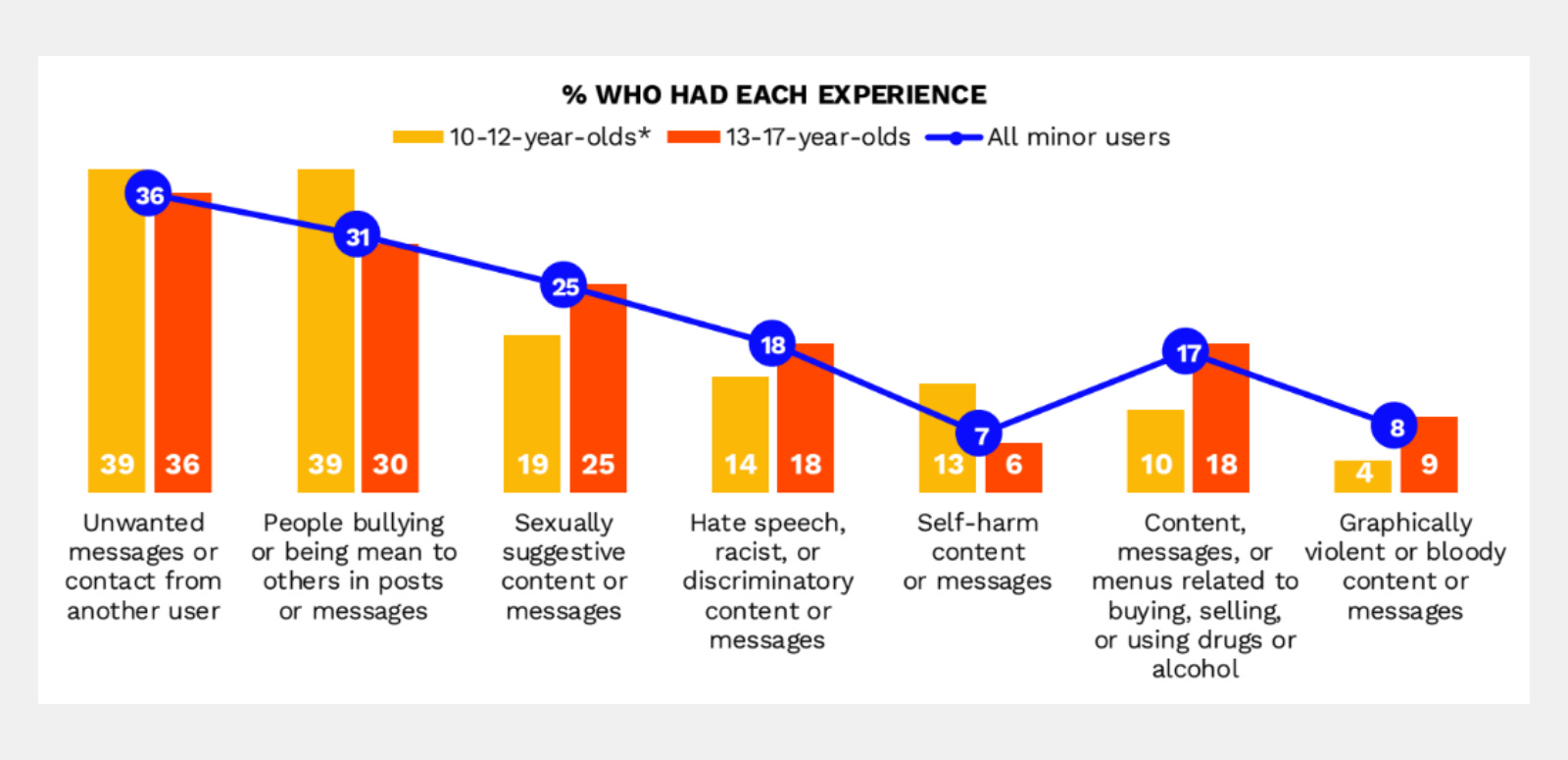
Younger users ages 10–12 are still finding their way onto the platform and they are encountering harmful experiences at similar rates to teens. While our sample size for younger users was smaller, the data indicates that pre-teen users may be seeing self-harm content at twice the rate of their teen counterparts. These early findings are concerning and warrant more research.
Unwanted Messages or Contact From Other Users
“[The unwanted messages] made me feel upset and uncomfortable, and sometimes I just wanted to ignore it and move on.”
– Boy, 16, Hispanic/Latino, West
Snapchat’s “Find Friends” feature is designed to help users connect with new people by searching for usernames, syncing phone contacts, or viewing Friend suggestions generated by Snapchat. In 2022, Snap announced changes meant to limit exposure for minors, stating that users under 18 would only be discoverable through Find Friends if they shared a certain number of mutual friends with another user.
Despite this safeguard, our research found that over half of kids ages 10–17 (51%) said Find Friends still recommended profiles of people they did not know in real life, while another 9% were unsure whether they knew the person. Among those who saw unfamiliar recommendations, more than one‑third (35%) believed the suggested profile belonged to an adult (another 30% said they were unsure of the person’s age). Meaning that, even with the supposed safety changes, Snapchat is still frequently recommending that minors connect with adult strangers.
We tested this ourselves: In a parallel study in partnership with ParentsTogether Action, The Heat Initiative created two brand-new Snapchat accounts registered as 13-year-olds on clean Android devices. Each test account spent a total of six hours passively viewing content recommended by Snapchat’s algorithms and followed 50 creator accounts that would interest a 13-year-old as recommended by the platform.
The testing found that Snapchat’s “Find Friends” feature was recommending unknown adults to brand-new 13-year-old test accounts on Android devices where no mutual connections existed. Recommended profiles included adult content creators and accounts prominently featuring drug content. Examples include:
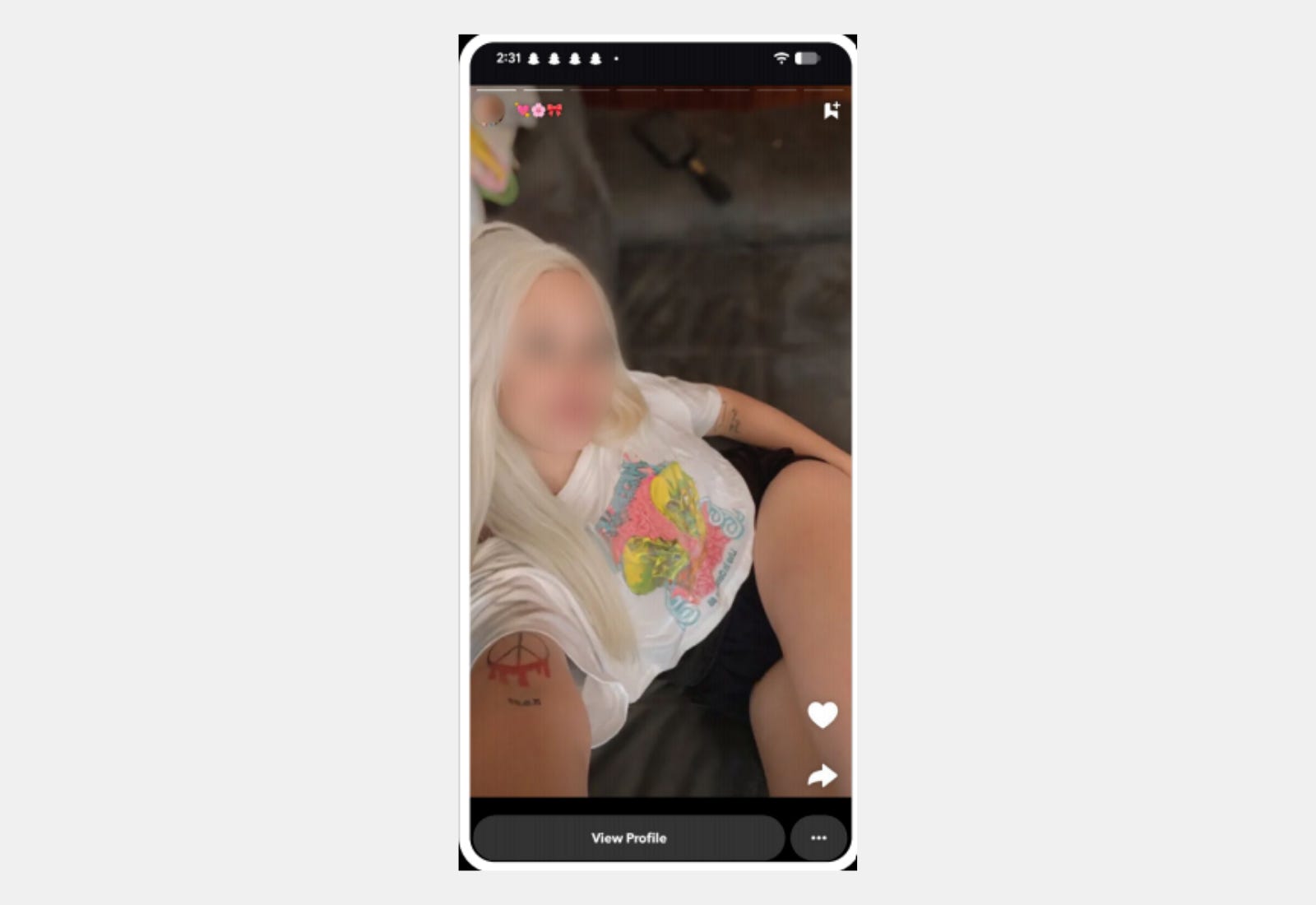
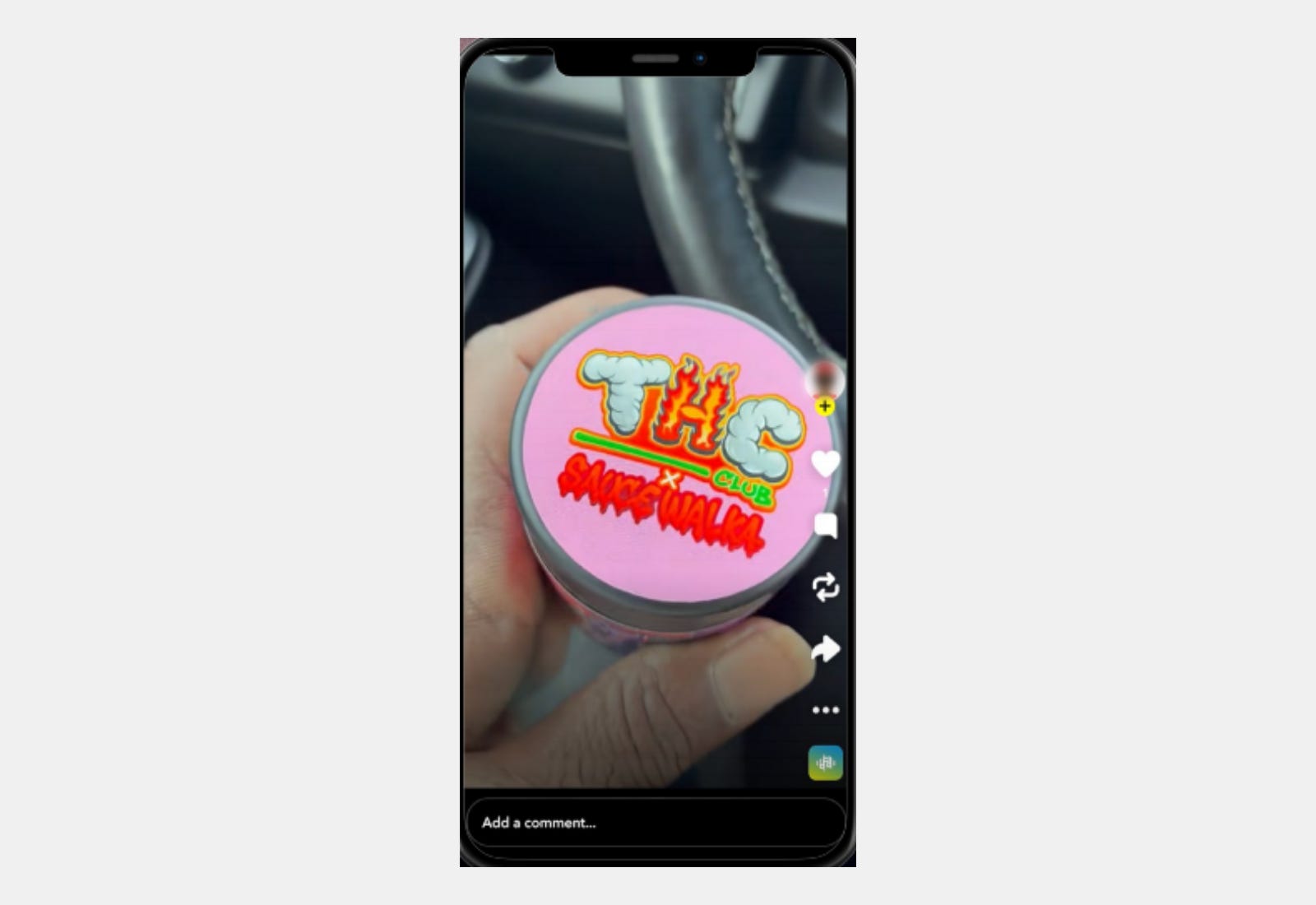
While Snapchat’s teen accounts can only receive messages from mutually accepted contacts by default, if a teen accepts these adult “friend” recommendations, it opens up the opportunity for the adult to message them directly.
According to our survey, more than 90% of unwanted messages reported by kids came from people they didn’t know, and most of that contact occurred in Direct Snaps or Chats (85%). About one in four minors who experienced unwanted messages said the messages included troubling content such as sexual images, spam, profanity, bullying, or requests for nude photos. These experiences affected kids across age groups and genders.
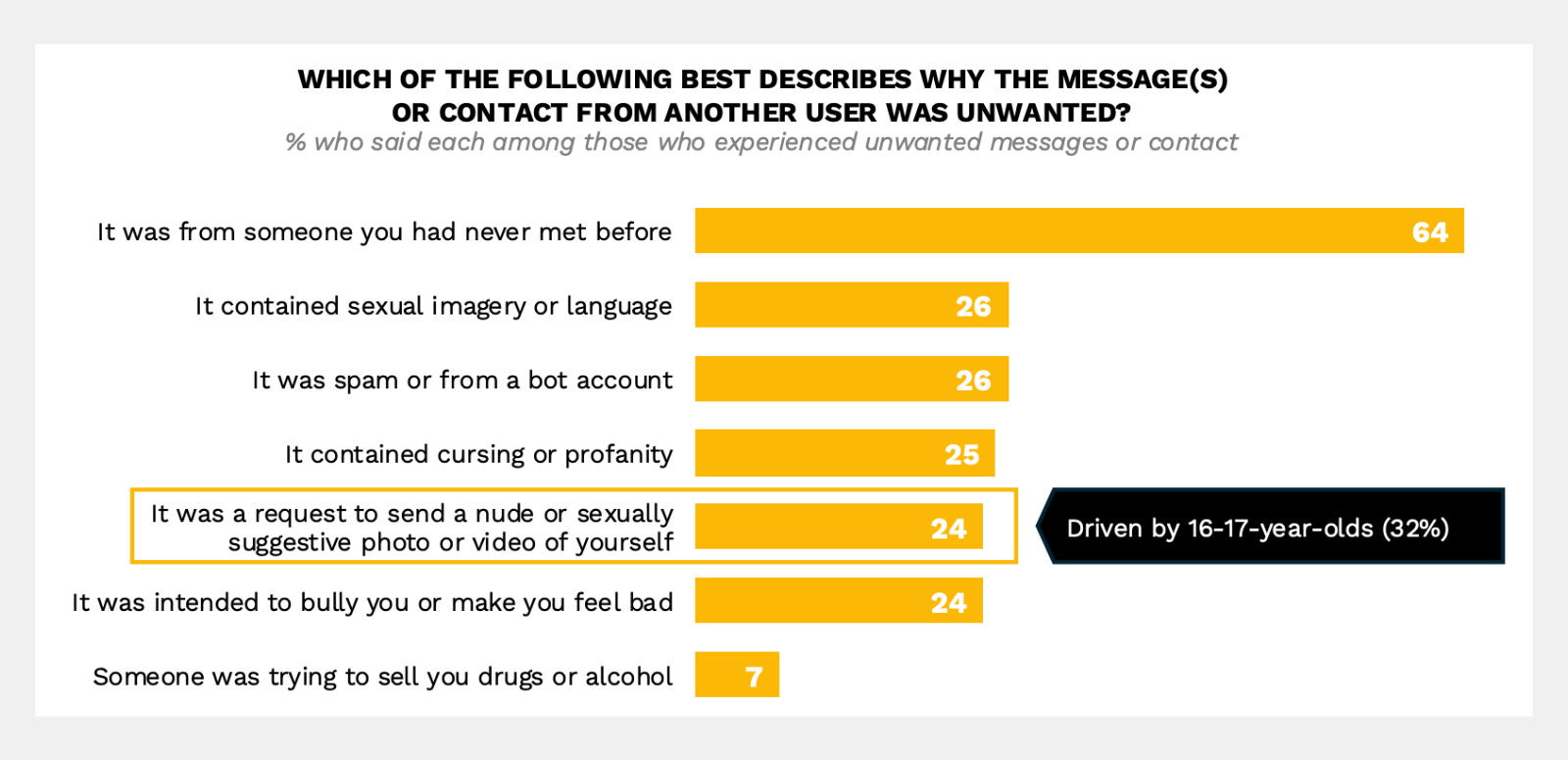
For kids who received unwanted messages, the most common effect was to leave them feeling “uncomfortable” (69% of respondents). Thirty-six percent felt “disturbed” by these experiences and more than one in three felt “anxious.”
Sextortion
One of the more extreme situations we asked about was sextortion — a form of online blackmail where the blackmailer threatens to share or make public a sexual image of the victim to get them to do something (like give money). Often, criminals will create fake profiles and trick or manipulate the victim into providing intimate photos. They then use those photos to threaten them.
Research from Thorn and NCMEC in 2024 found that Snapchat and Instagram were the most common platforms used for financial sextortion. Documents made public by the New Mexico Attorney General’s lawsuit against Snap revealed that in 2022 Snap employees were receiving approximately 10,000 user reports of sextortion each month, and the company’s own internal analysis acknowledged that these reports likely represented only a fraction of the actual abuse, given how rarely victims come forward. Internal communications showed that the company believed sextortion “should not be its responsibility” and ignored 90% of reports with automatic responses to “block the other person.”
Four percent of the young people we surveyed had experienced sextortion on Snapchat. If we assume Snap CEO Evan Spiegel’s 20 million teens on Snapchat estimate is correct, this extrapolates to 800,000 U.S. teens being threatened on the app in the last year alone. This rate is almost three times higher among LGBTQ+ kids ages 10–17, with 11% saying they have experienced sextortion.
Internal documents released as part of the New Mexico lawsuit revealed that Snap Inc. knew about the risks posed by its Find Friends/Quick Add feature, especially related to sextortion. It appears these risks remain.
Sexually Suggestive Content or Messages
“It made [me] feel unsafe and exploited when I saw these images and it kinda [made] me uncomfortable to use the app.”
– Girl, 14, African-American, South
One in four survey participants ages 10–17 encountered sexual content and messages. Sexually suggestive content or messages were most commonly found via Direct Snaps or Chat (60%), but were also seen in Stories (47%) and Discover (27%). Stories and Discover are both driven by algorithmic recommendations, and Direct Snaps and Chats can originate from algorithmically recommended profiles that the younger person has accepted. When asked how these messages affect them, 72% said they felt “uncomfortable,” nearly 40% felt “disturbed,” and nearly 33% reported feeling “anxious” (respondents were able to select multiple responses).
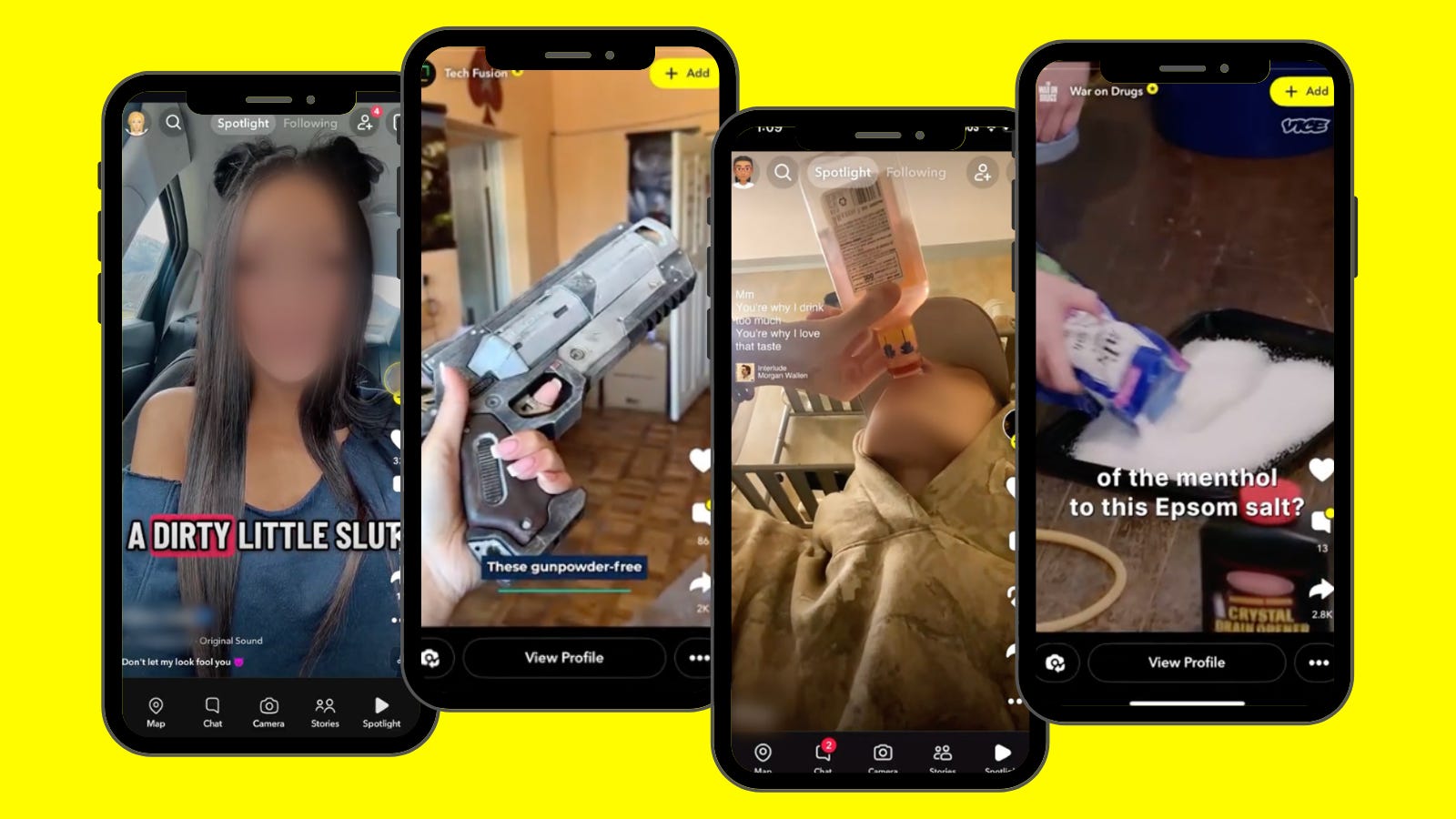
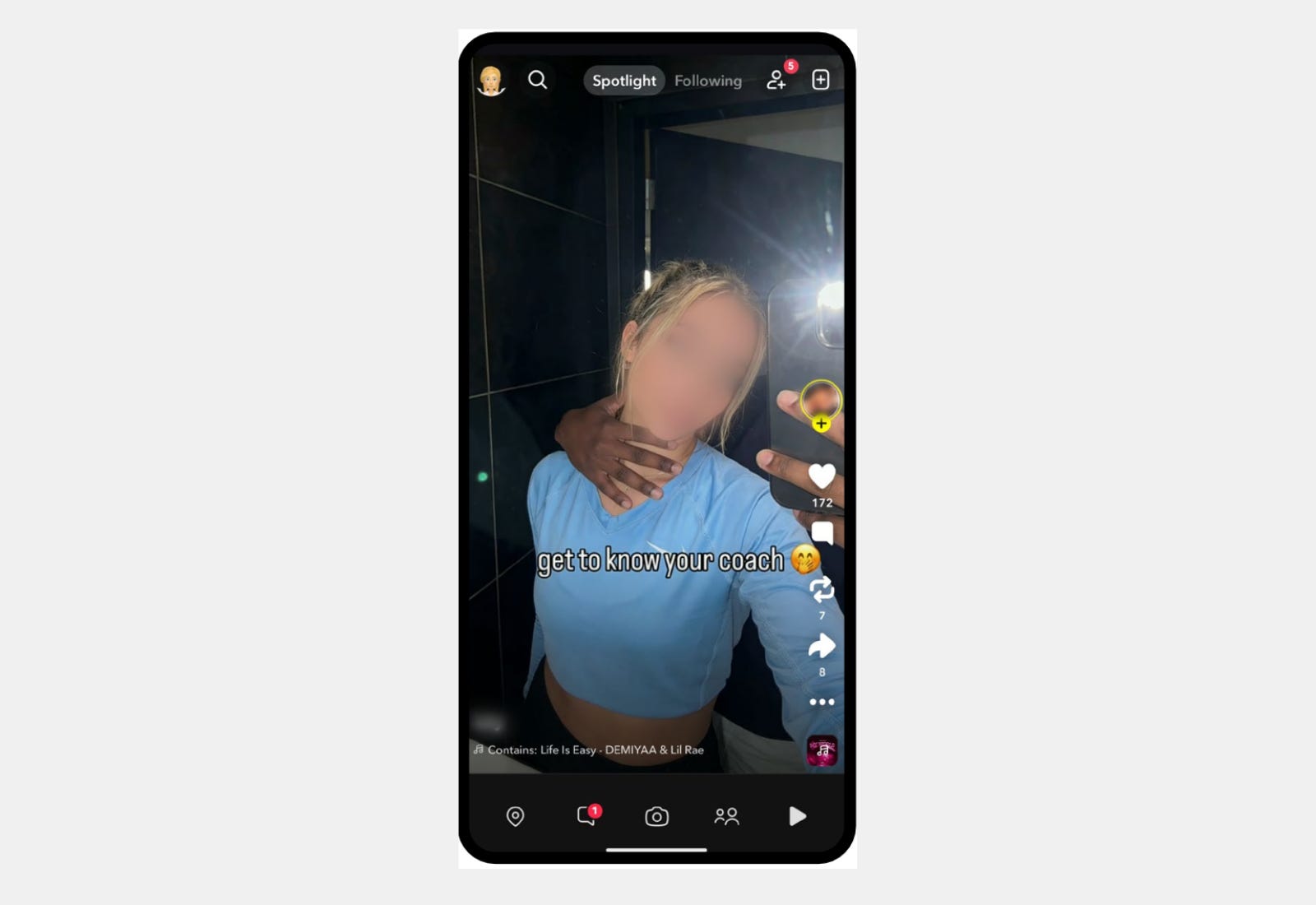
In our testing of the two new 13-year-old avatar accounts, Snapchat recommended a combined 244 sexual videos — an average of one every three minutes (each account was used for six hours). While none of these videos featured nudity, all featured sexual language, pantomimed sex acts, or both. Patterns included general sexual content, sexual violence, and content depicting large age gaps (adults and children).
Here are just a few examples of content served to the test accounts (keep in mind: the accounts were imitating a 13-year-old’s average use):
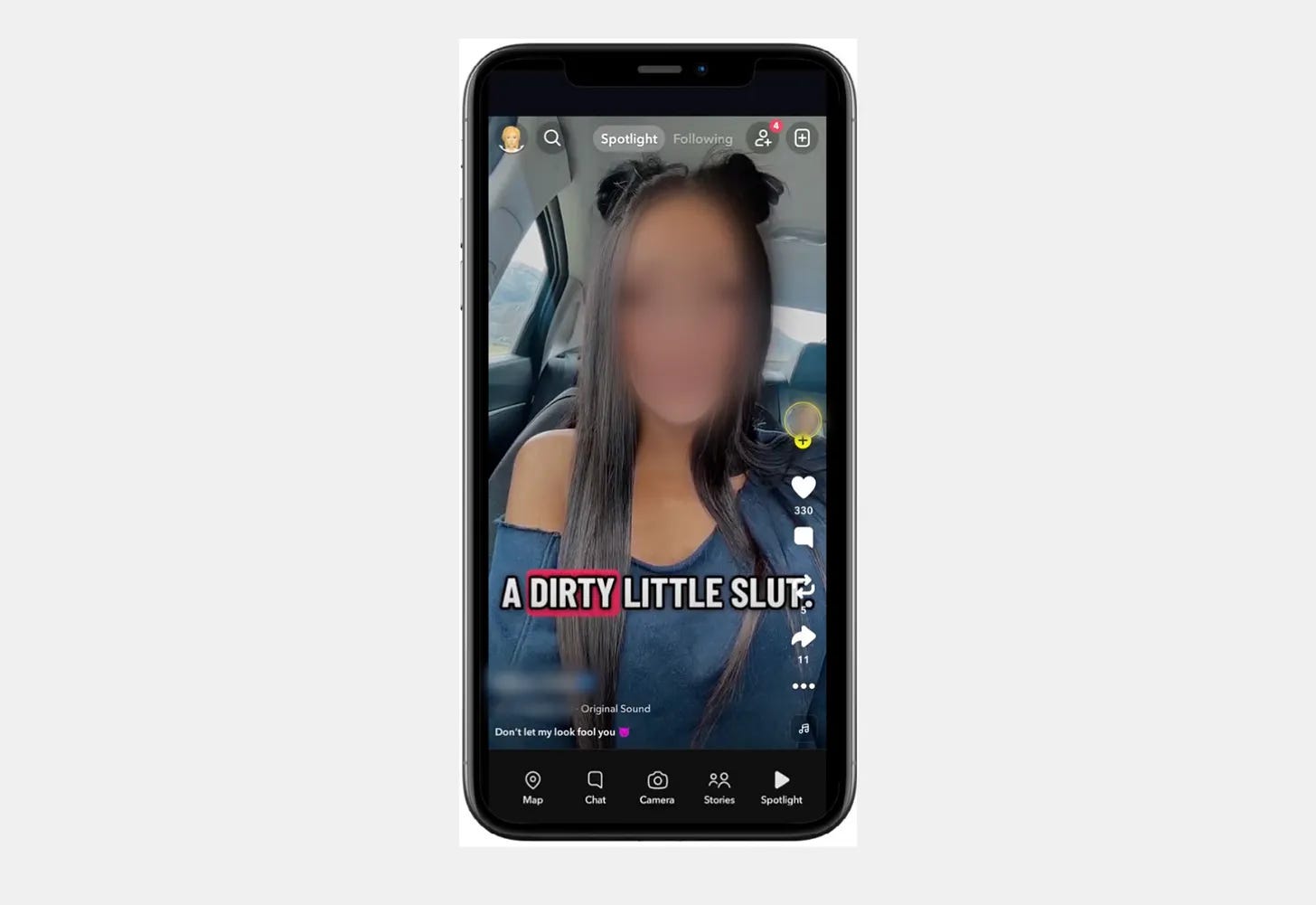
Snapchat recommended several videos of apparent adults describing sexual acts in graphic detail. Some of the creators of this content appear to sell adult content on other platforms.
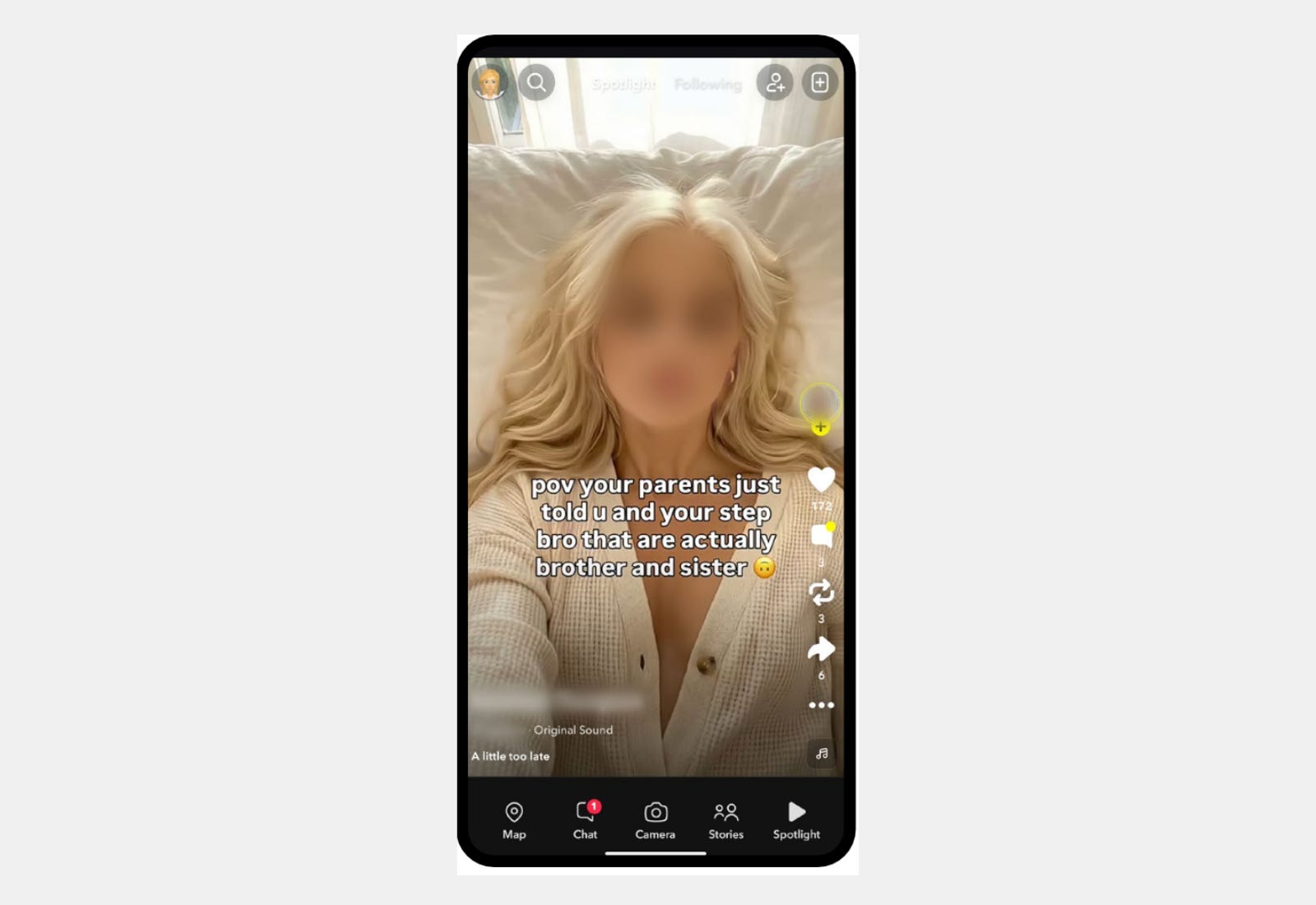
Of the 244 videos, 21 featured age-gap relationships, relationships between children and adults, and relationships with problematic power imbalances.
Violent or Graphic Content
“It made me feel shocked, worried, and dirty; I felt unsafe seeing violent images on Snapchat, and it worried me for days, so I avoided those conversations and stories.”
– Girl, 14, African-American, Midwest
About one in eight of the adolescents we surveyed said they had encountered graphic or bloody content while using Snapchat. Graphic or violent material was most commonly encountered in Stories (53% of the time), an area of the app shaped by recommendations and algorithms, meaning that kids don’t necessarily have to search for violent content to see it, and it can surface through average use. It also appeared frequently (47% of the time) in direct messages or chats, which many families assume are safer, friend‑only spaces.
For many of the kids surveyed, the experience of encountering this content was not something they could simply scroll past and forget. More than half said the content left them feeling “uncomfortable,” half said it was “disturbing,” and nearly a third reported feeling “anxious” afterward. Sixteen percent of those who saw violent content on Snapchat said it made them feel “depressed.” These reactions highlight that even occasional exposure to graphic content can have a real emotional impact on developing minds.
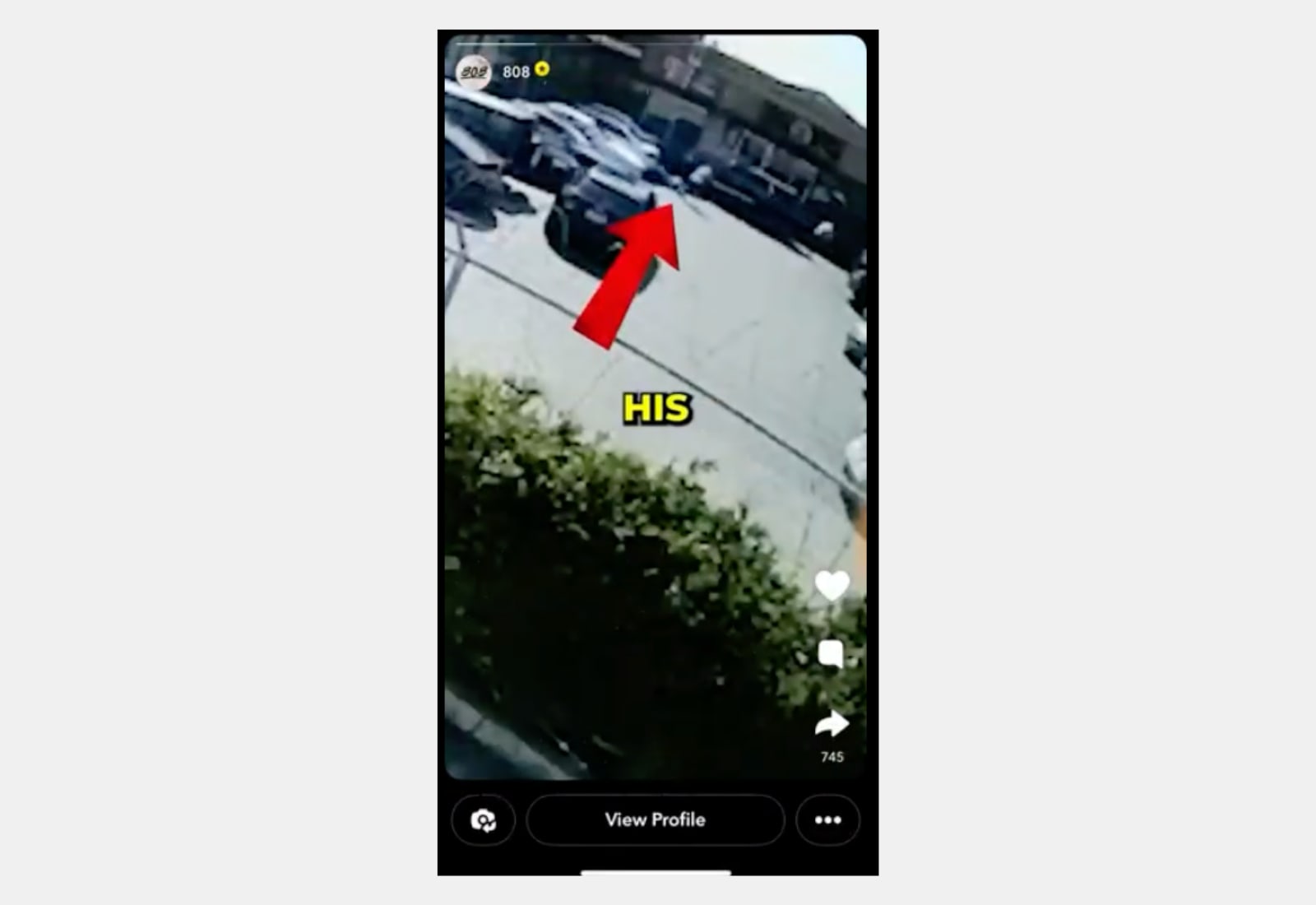
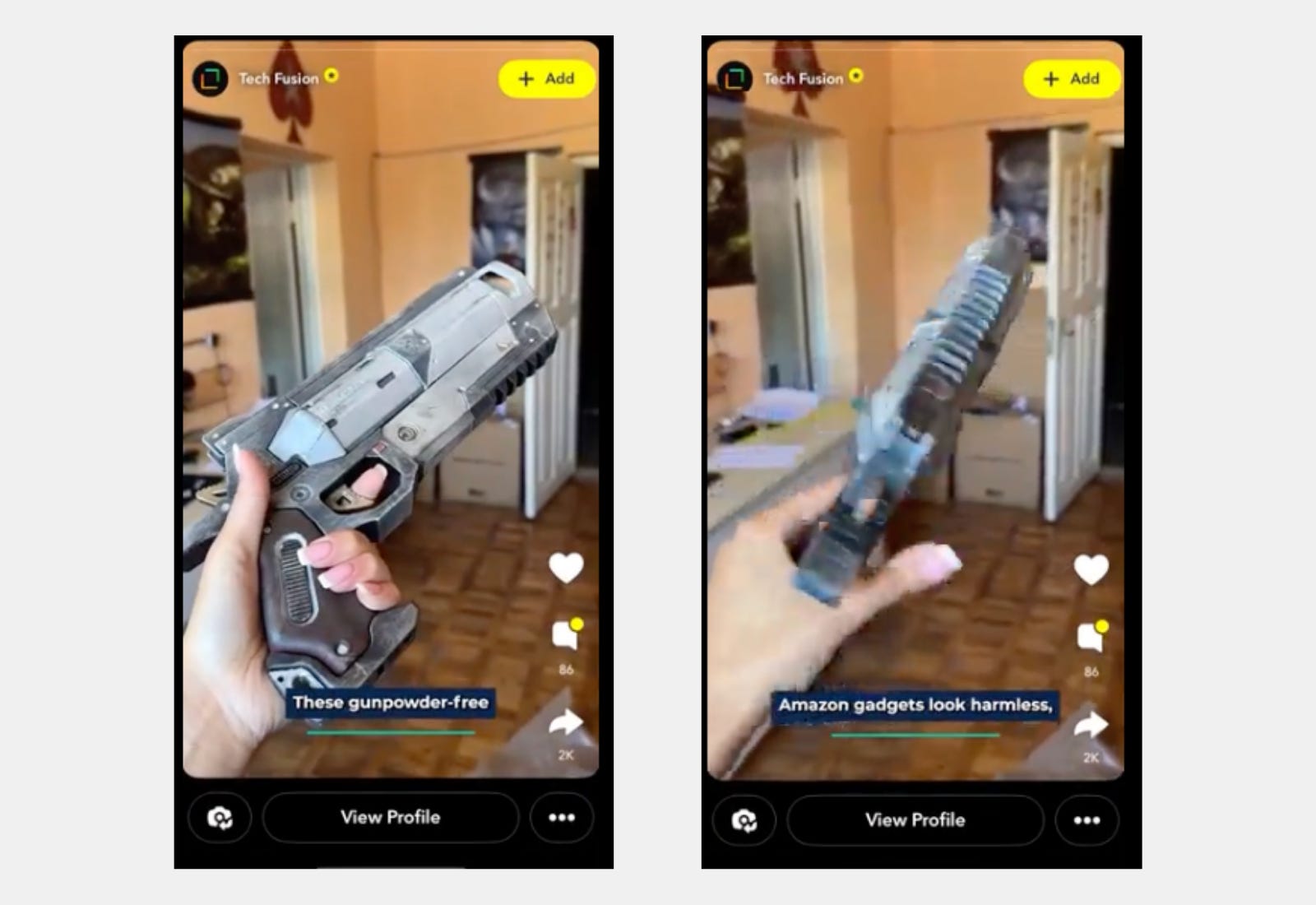
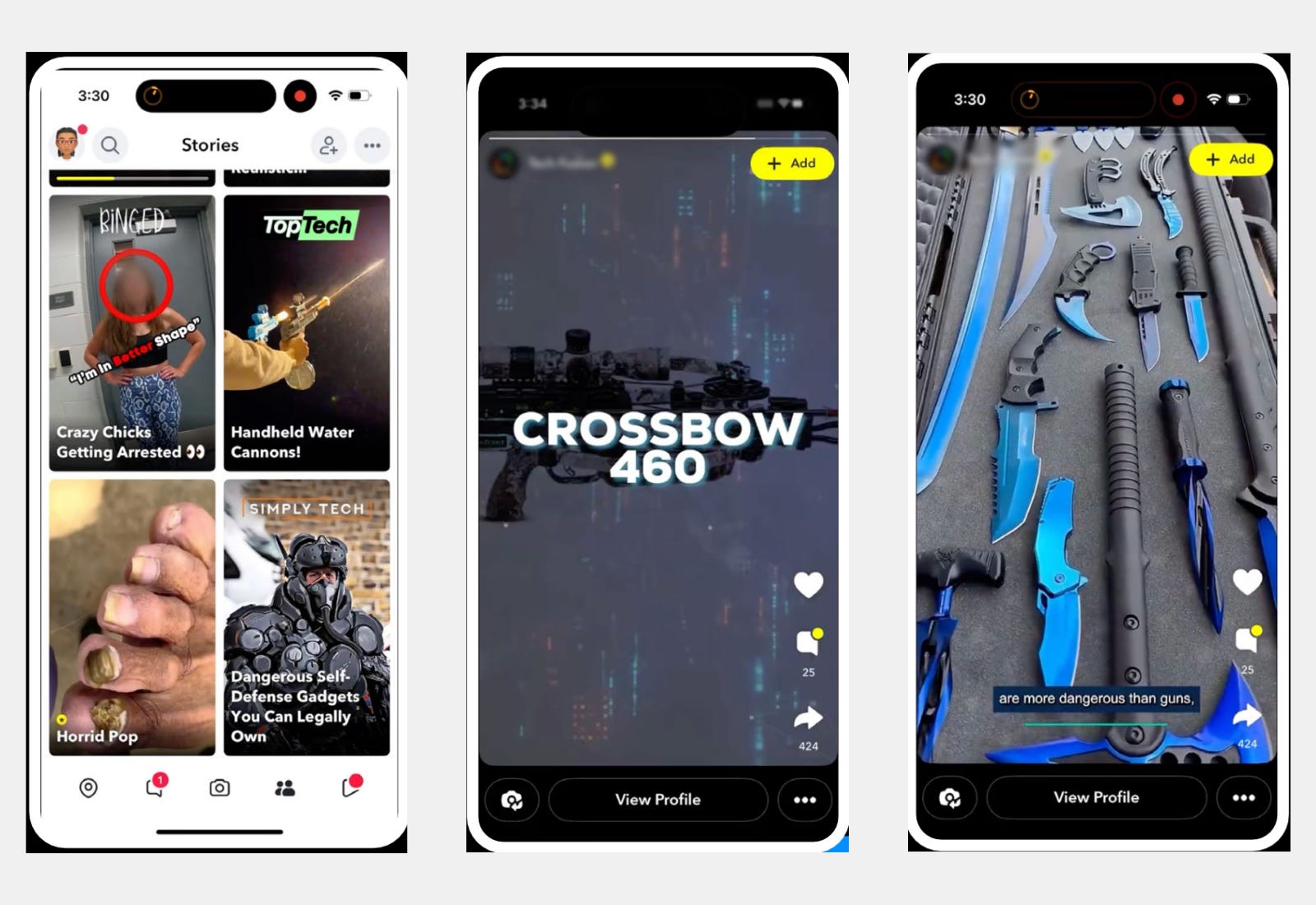
Violent videos were also recommended to the new 13-year-old avatar accounts in our testing. Snapchat recommended a combined 95 videos promoting violence, gang activity, or criminal behavior during the testing period (six hours per account). This averages out to roughly one every seven minutes. Video content included instructions on how to acquire dangerous legal weapons and how to make guns more dangerous. It also included surveillance footage of celebrities — including notoriously violent rappers — being murdered; gory crime scenes; and videos that glorified gang and criminal life. Other violent fighting videos showed victims unresponsive and bleeding.
Self-Harm, Self-Derogation, and Suicide Content
“The self harm and hate-related posts made me feel anxious and uncomfortable, and they really affected the way I viewed the platform.”
– Boy, 16, White, Northeast
Seven percent of the youth surveyed said they had seen content related to self‑harm or suicide in the past year, and 3% reported encountering it on a weekly basis. Self‑harm material most often appears in direct messages or chats (71% of affected users saw it in DMs or chats). But it was also commonly encountered in the algorithm-driven Stories (58%) and Discover areas (17%).
While those surveyed saw this type of content less frequently than other harmful material, it had a strong emotional impact on the young people who did see it. Two‑thirds said it left them feeling “uncomfortable,” more than half found it “disturbing,” and nearly half reported feeling “anxious.” Alarmingly, 31% said the experience made them feel “depressed,” underscoring how exposure to self‑harm content can be deeply distressing even when it is not frequent.
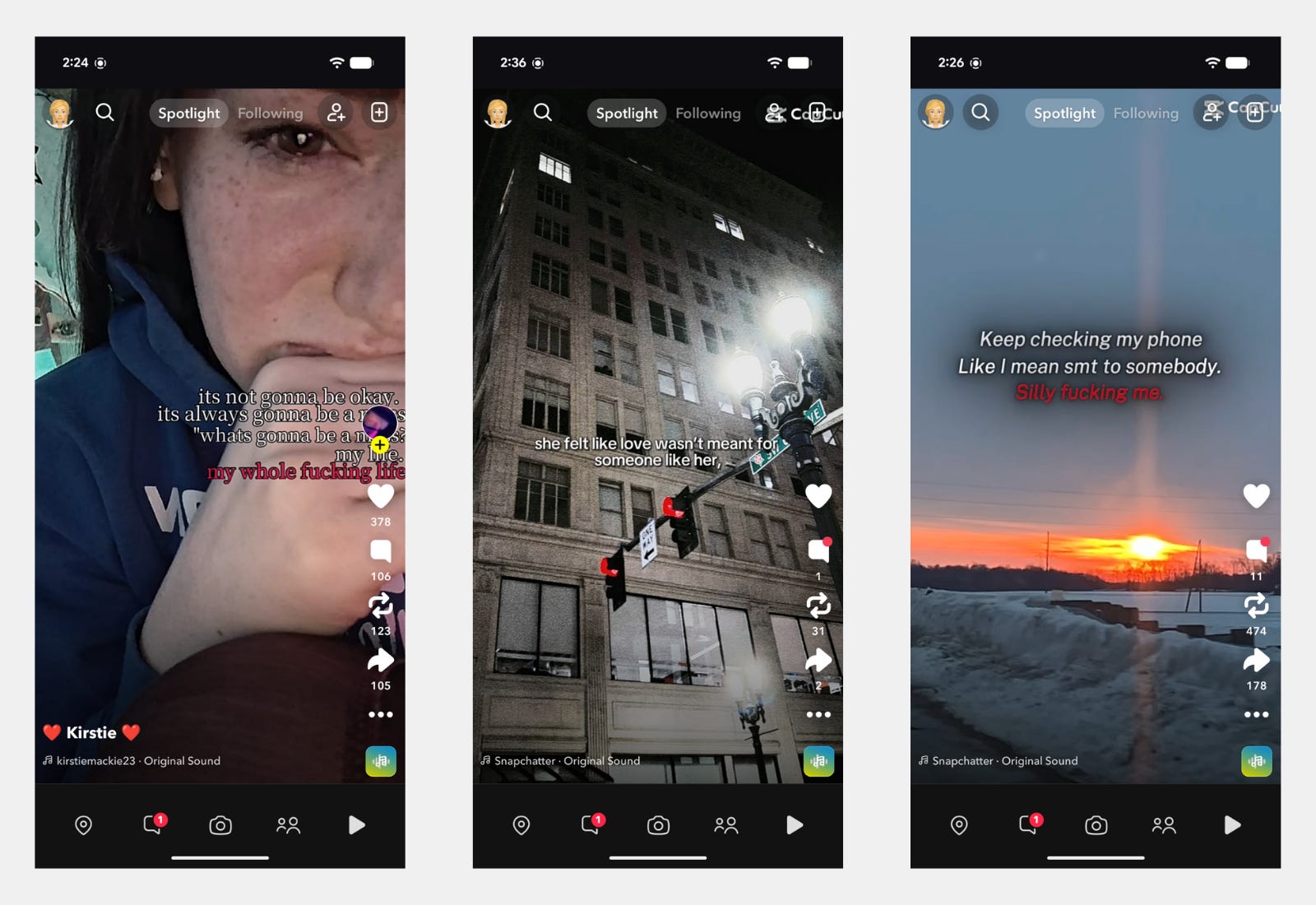
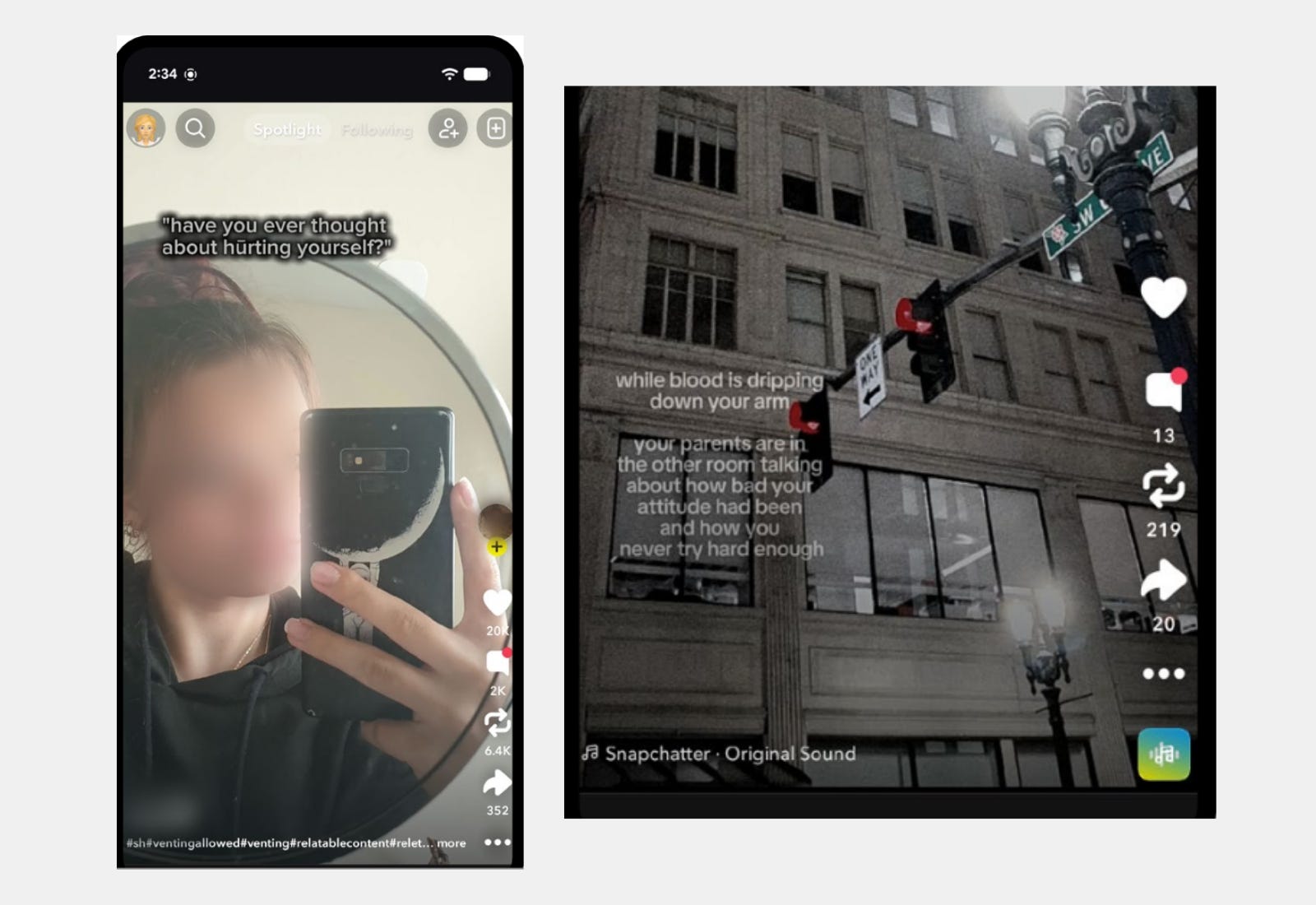
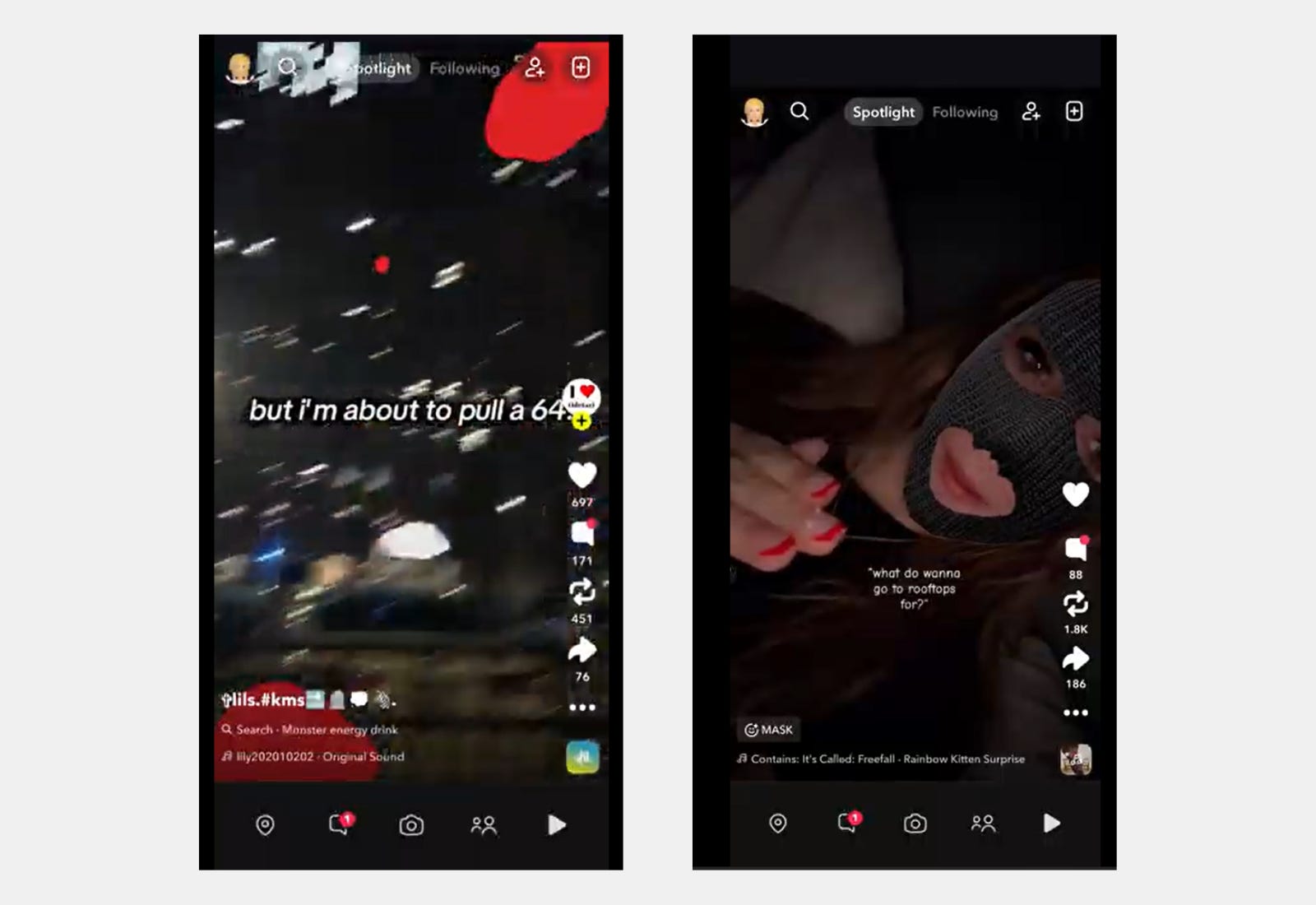
Our testing found that Snapchat recommended 53 self-harm/suicide videos to the 13-year-old avatar accounts over the combined 12 hours of testing — an average of one every 13 minutes. For parents, this highlights a difficult reality: emotionally damaging content can appear unexpectedly, driven by platform design and automated recommendation, not necessarily by a child’s curiosity or choices.
Drug and Alcohol Content
“It made me feel weird seeing kids my age selling drugs online. It made me want to tell their parents so they won’t get in trouble with police. It also made me more careful about things I click on and view.”
– Boy, 12, African-American, South
About one in six kids in the study said they had encountered content related to drugs or alcohol while using Snapchat, and roughly one in twelve reported seeing it on a weekly basis. This experience was more common for teens than tweens, with 10% of 10–12-year-olds encountering drug or alcohol content over the last year compared to 18% of 13–17-year-olds. Among the 17% of minor users who saw content, messages, or menus related to buying, selling, or using drugs or alcohol, more than half (53%) said they either saw posts that specifically advertised drugs or another user offered to sell them drugs directly.
Like violence-related content, drug‑ and alcohol‑related posts were also most commonly found in the algorithm-based Stories, meaning children don’t need to go looking for this material for it to surface. It appeared almost as often in direct messages or chats, and was also present in Spotlight.
In our testing of the 13-year-old avatar accounts, Snapchat recommended a combined 256 drug- and alcohol‑related videos (roughly one every three minutes), including videos showing how to grow marijuana, create drugs, and depicting very young children using substances. The more time the test accounts spent on the app, the riskier the content became. For families, this highlights a critical reality: repeated exposure to substance‑related content can be driven by algorithms that reward engagement and may grow in intensity or shock-value to keep young people engaged.
Examples of the drug and alcohol content served to the test accounts are included below.
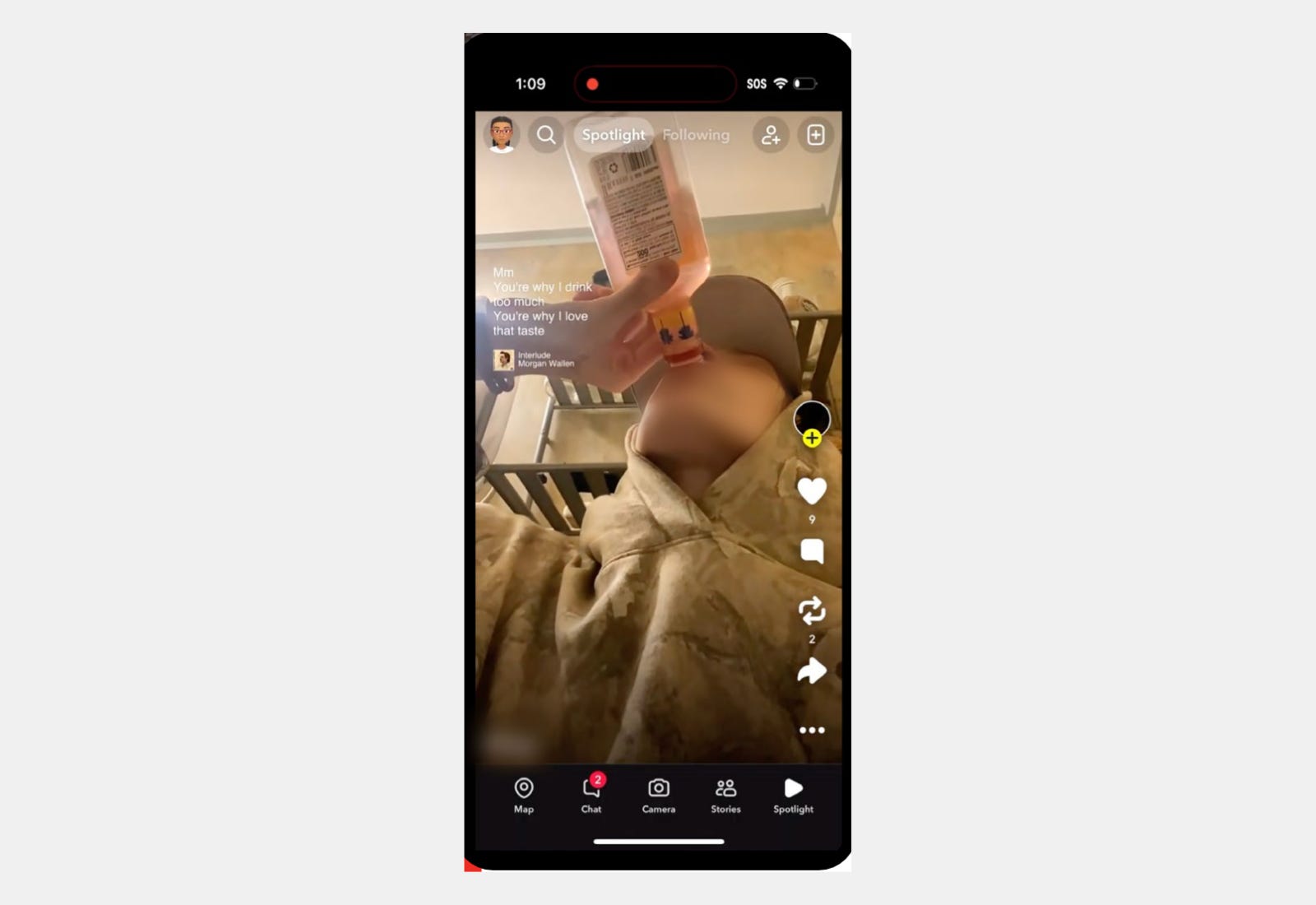
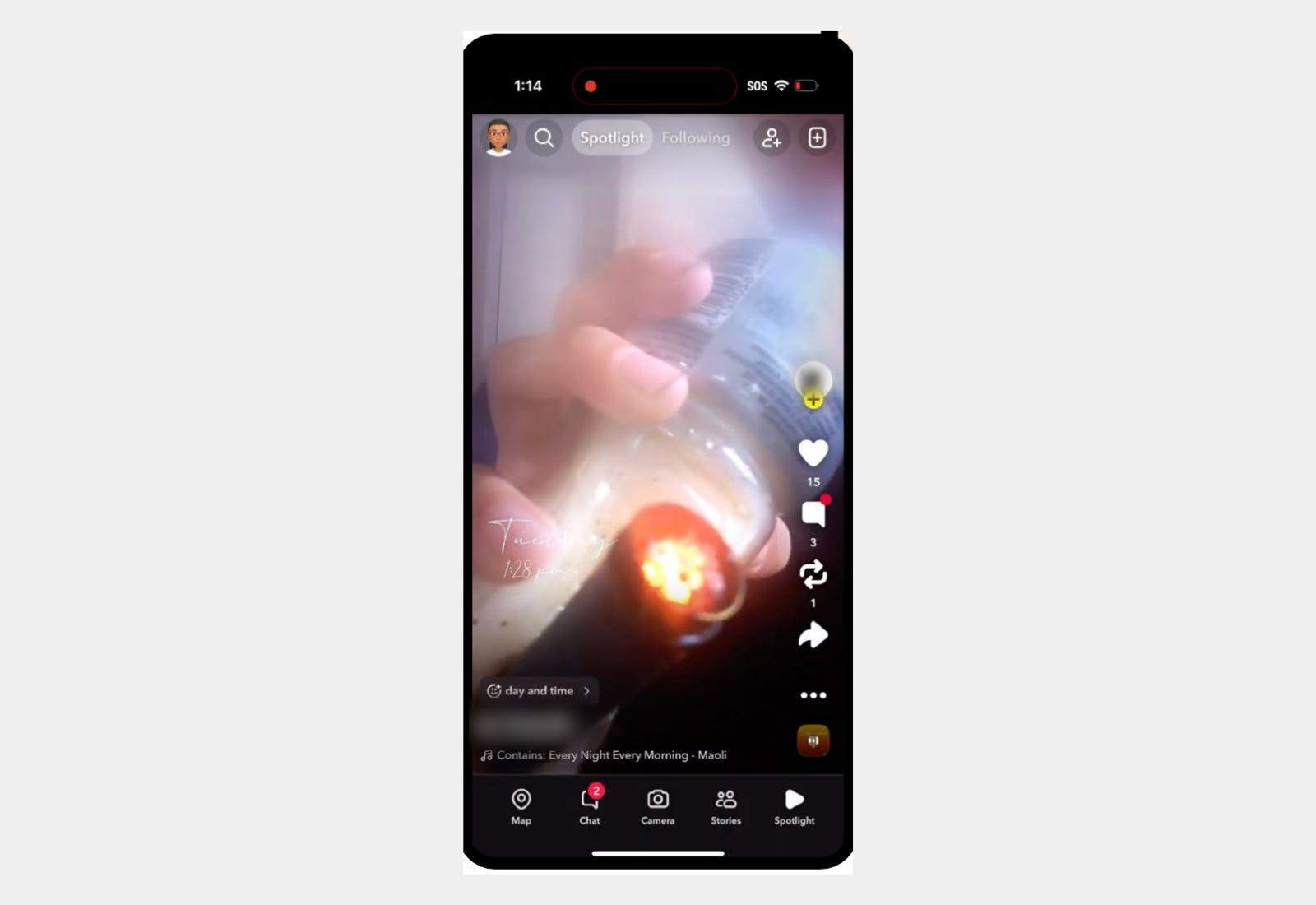
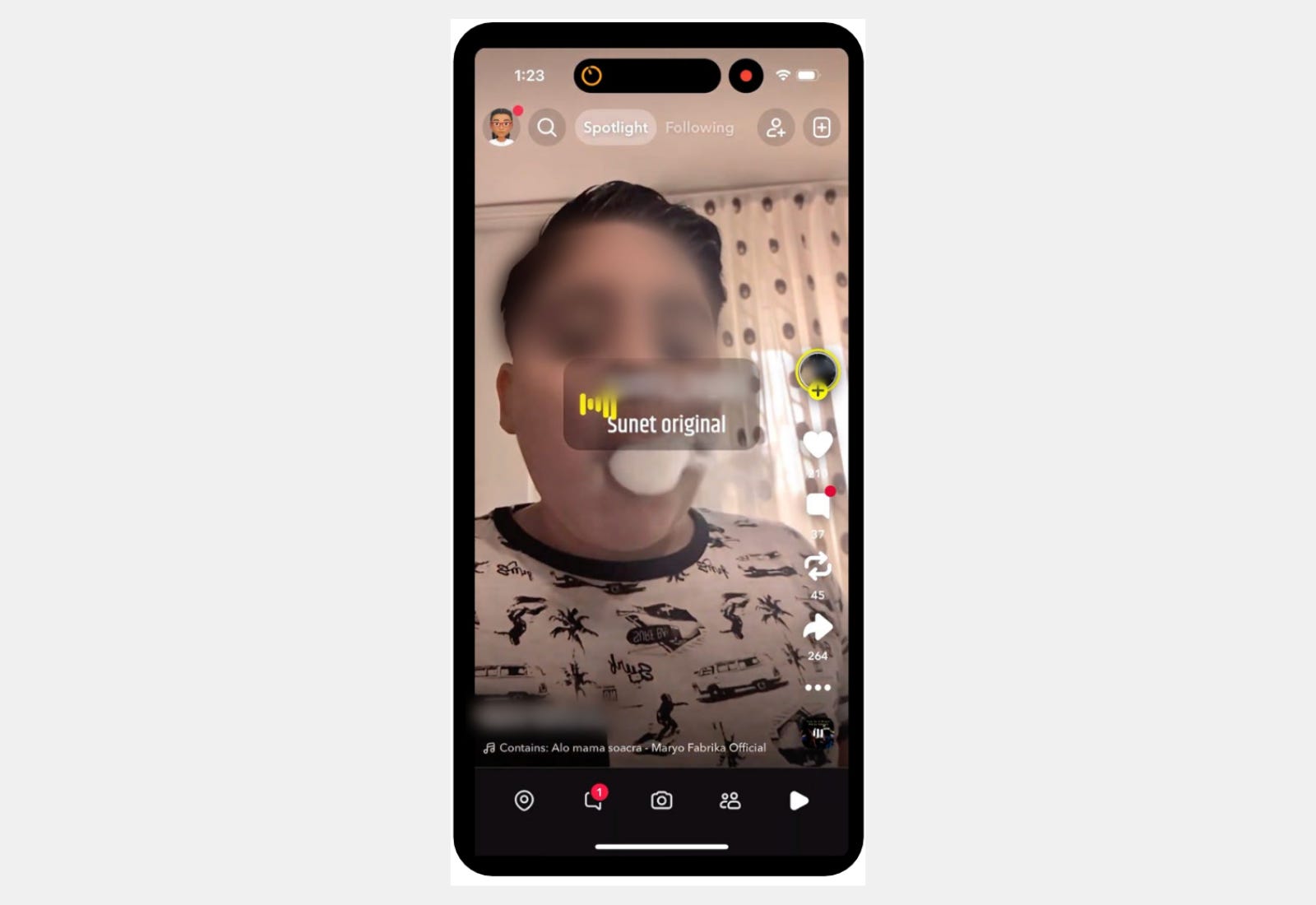
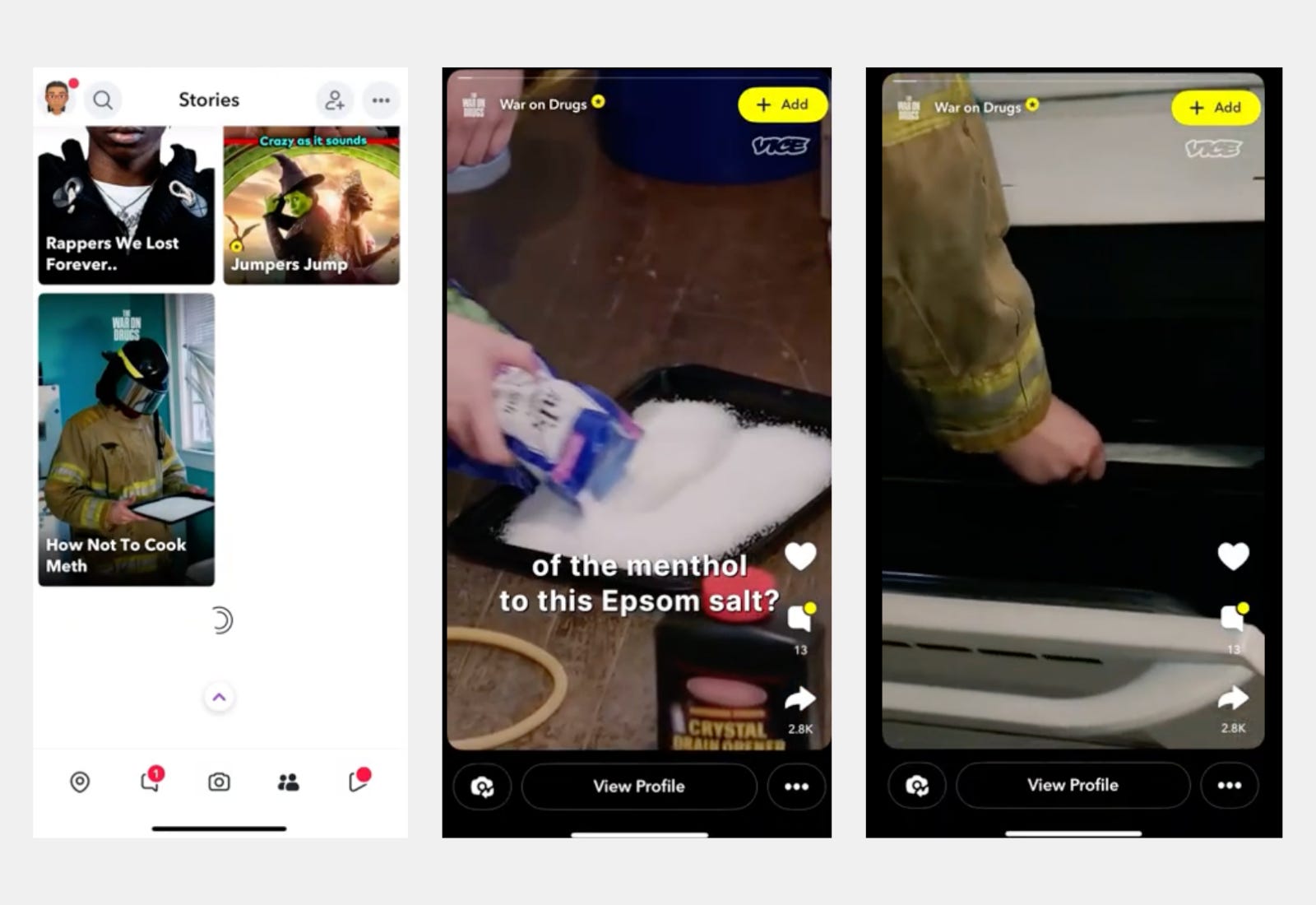
For many of the young participants in the study, this exposure was unsettling. Of the 17% who encountered this content, nearly two‑thirds said it left them feeling “uncomfortable,” more than a third found it “disturbing,” and nearly a fifth of participants reported feeling “anxious” afterward. These reactions suggest that seeing drug and alcohol content can create emotional stress. It also normalizes and even glamorizes risky behaviors that many families want to delay or discourage.
Asking for Help (or Not)
For parents who decide to allow Snapchat, the most important thing to understand is this: silence does not mean your child is fine. Many kids try to handle unsafe experiences on Snapchat by themselves, and are coping quietly and minimizing experiences that still affect them.
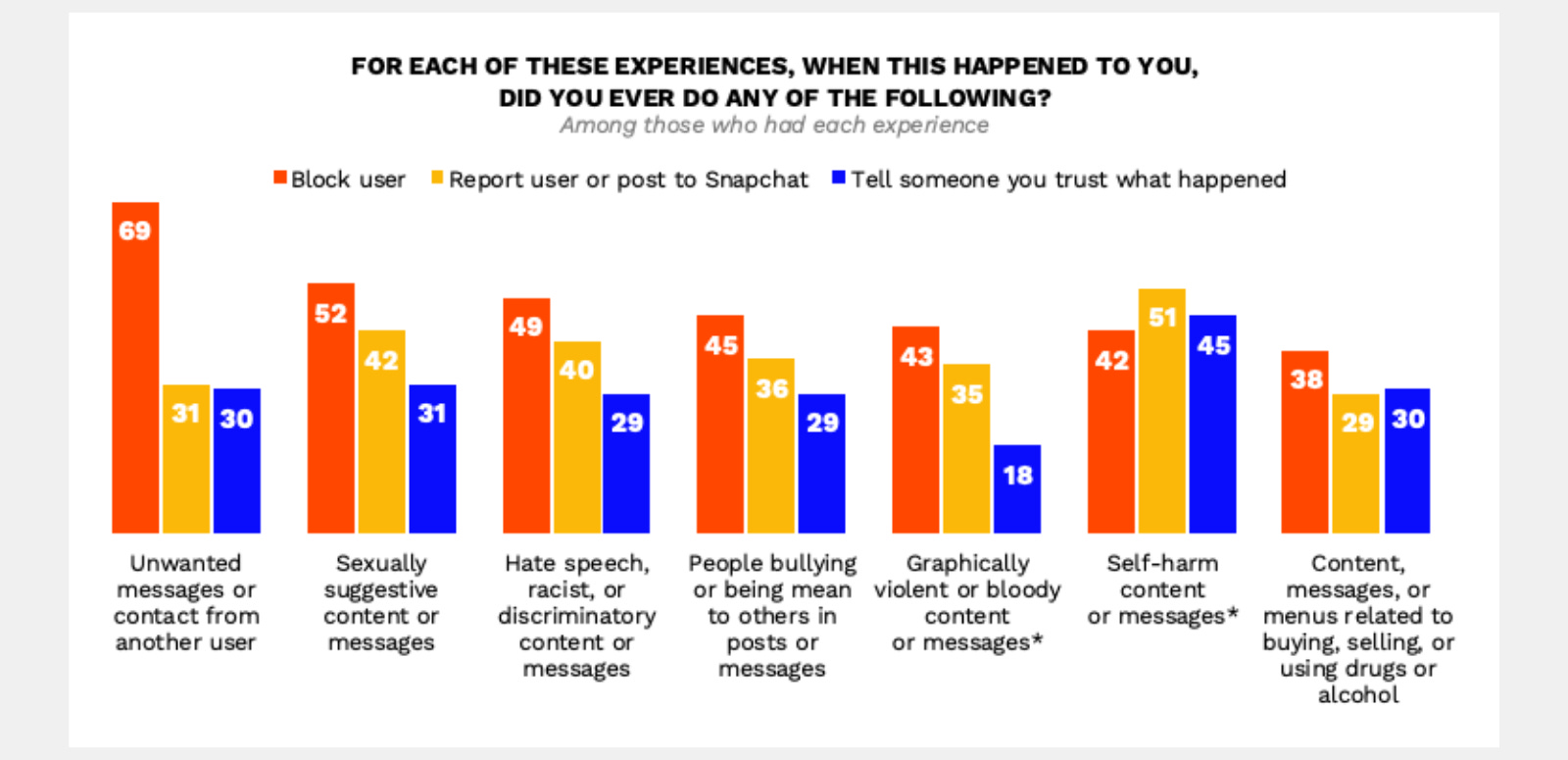
When something uncomfortable happened on the platform, only 39% of kids told someone they trusted. The majority chose to block the person, report the content, ignore it, or close the app. Nearly 4 in 10 said they simply ignored the experience altogether, especially when it involved bullying or unwanted contact. Kids were more likely to reach out to someone they trust or notify the platform when they encountered self‑harm content (45%).
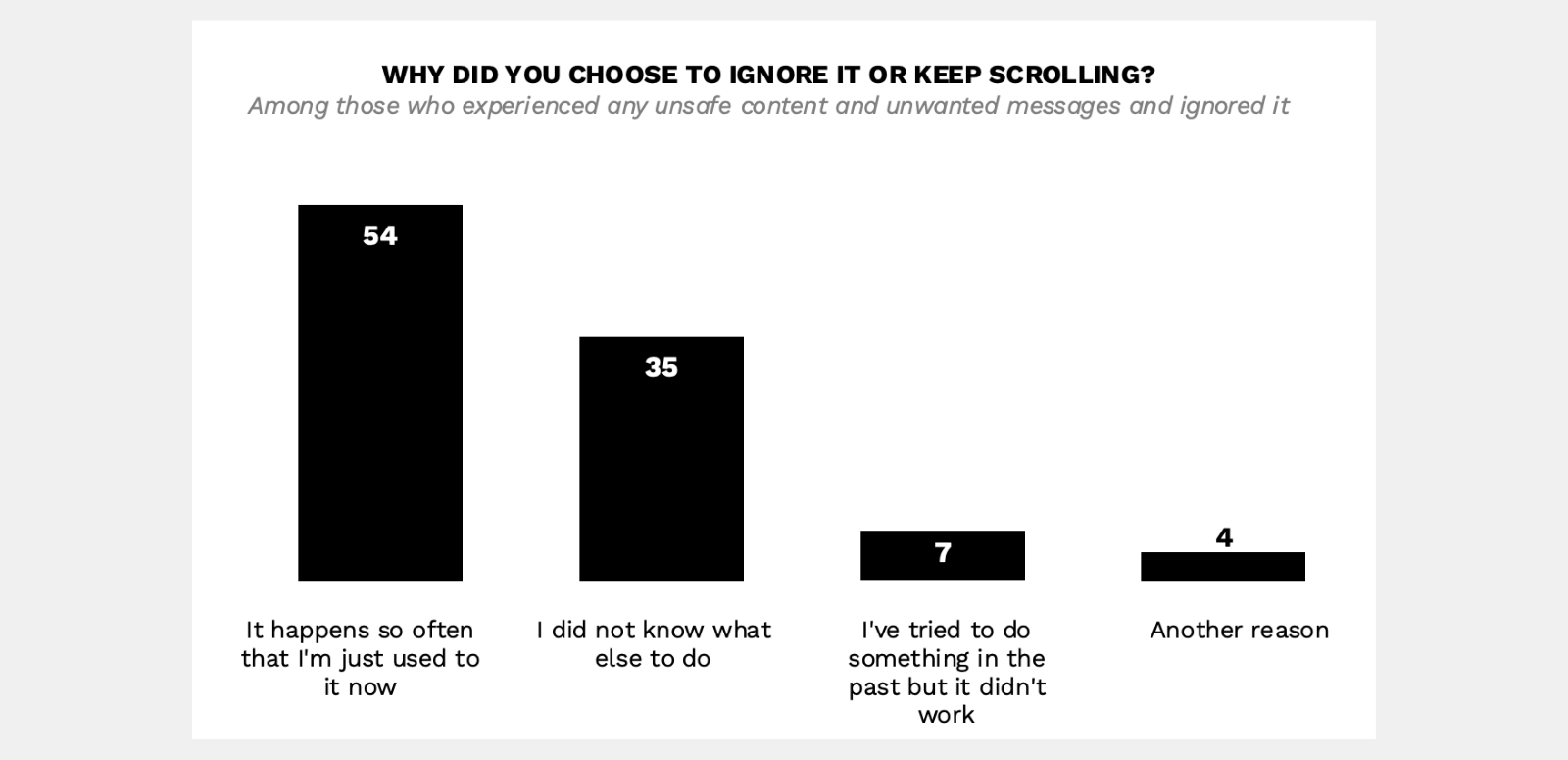
Many (54%) told us they didn’t speak up because they felt “used to it” — these encounters are so common they no longer seem worth mentioning. “I thought it was annoying, but part of life these days,” one 15-year-old respondent told us.
Conclusion
It feels crazy that any of these social media apps will just let anything on there. They let us see Charlie Kirk getting shot and they show people doing sexual things. I am used to it, but it is weird how common it is and everybody knows it is happening.
– Boy, 14, Hispanic/Latino, Northeast
Exposing children to graphic content, sexual material, exploitation, and predatory contact has never been something society accepted as normal. Opaque algorithms largely control what children see and who they encounter online, and the current safeguards are not sufficient.
Thanks largely to the vocal advocacy of parents, the tide is beginning to turn. The UK, Australia, the U.S., and other countries are working to roll out safety legislation requiring better safeguards for children on social media platforms. The recent verdict in the Los Angeles trial that found Meta and YouTube liable for addicting and harming a young user is another positive sign of change. Snap settled ahead of that trial, but nearly 5,000 families and more than 1,000 school districts continue to pursue lawsuits against major social media platforms — many naming Snap.
But we cannot ignore what kids are telling us right now. They are enduring contact from strangers with bad intentions. They’re exposed to sextortion attempts at an alarming rate. They’re encountering graphic violence, sexual content, bullying, drug use, and self‑harm material during ordinary app use — not because they seek it out, but because platforms deliver it to them through algorithmic recommendations meant to hold their attention at whatever cost.
Asking kids to be more resilient, or parents to monitor harder, is no longer realistic or fair. This is not just a parenting challenge, it is a product‑design and accountability problem. If our test accounts simulating a 13-year-old user’s experience encountered this amount of harmful content in just 12 combined hours of testing, then the picture of what kids and teens are experiencing on Snapchat is harrowing.
Harmful online spaces are not inevitable. We can push back and insist that technology used by children must meet standards worthy of them.

Thank you, Brooke and HEAT, for this tough-to-read report. What parents need to realize is that it has ALWAYS been this way on Snapchat. At its core, Snapchat is a frat boy invention designed to exploit. Our parental and societal acceptance of this level of willful corporate negligence is shocking. Personal liability was the Congressional response to ENRON in the early 2000's. Similarly, Evan Spiegel and the Board should be held personally liable for their actions.
The real problem with SnapChat isn't even mentioned in this article: the transitory nature of the site. SnapChat deletes messages almost immediately after they're read. This makes it impossible for parents to examine any content their kids are seeing after the fact (which is how almost all Internet filter software works.) The structure is obviously appealing to predators or all kinds (whether pedophiles or drug dealers). Unlike Facebook or Instagram or others, SnapChat is INTENDED to make messages impossible to trace or review.
For those who do need filter software, I teach seminars on Internet safety and currently use Qustodio in my own family. And when you get it, block snapchat and telegram and discord and reddit immediately.